Beyond launch: How in-space propulsion markets will determine winners in the $1 trillion space economyby Malik Farkhadov
|
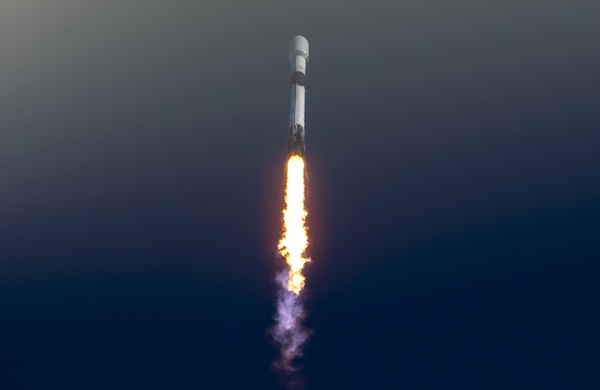
| The orbital infrastructure investment gap represents the most critical barrier to space economy growth. |
The stakes extend far beyond technical performance metrics. Electric propulsion systems, despite offering five times the efficiency of chemical alternatives, capture only a fraction of the $11.05 billion annual propulsion market. Chemical systems, with unit costs of $2–20 million compared to electric systems at $50–500 thousand, continue to dominate mission architectures despite inferior fuel efficiency. This technology-market misalignment reveals systemic market failures: coordination problems in orbital infrastructure investment, unpriced externalities in space debris generation, and information asymmetries that lock satellite operators into economically suboptimal propulsion choices.
The orbital infrastructure investment gap represents the most critical barrier to space economy growth. Profitable services like orbital refueling and satellite servicing require $500 million to $2 billion in upfront capital but face a classic chicken-and-egg problem: no customers without proven service, no service without customer commitments. NASA’s Commercial Crew Program offers a proven solution model. Anchor tenancy contracts solved similar market failures, enabling SpaceX to capture $4.2 billion in revenue by 2024. The propulsion market’s future winners will be those who crack the economic code of orbital infrastructure, not just the technical challenges of thrust and specific impulse.
The business model architecture
The economic reality
The space propulsion value chain reveals stark concentration dynamics that shape competitive outcomes. In satellite propulsion manufacturing, Northrop Grumman, Aerojet Rocketdyne, and L3Harris dominate with combined market shares exceeding 60%. Launch services show even greater concentration. SpaceX controls over 60% market share through 134 Falcon missions in 2024, generating $4.2 billion in revenue. This market power stems from SpaceX’s unique vertical integration model, producing 80% of components in-house compared to competitors like ULA, which relies on more than 1,200 suppliers.
The cost structure differences are profound. SpaceX’s manufacturing approach has reduced component costs by orders of magnitude. Onboard radios cost $5,000 versus the industry standard $100,000, while Raptor engines cost $1 million compared to competitors’ engines at $20 million or more. This vertical integration enables rapid design iterations and quality control, achieving a 99% launch success rate across 315 missions while competitors struggle with supply chain complexity and slower innovation cycles.
Cost Structure Comparison: Propulsion Systems
| System Type | Unit Cost | Specific Impulse | Market Share |
|---|---|---|---|
| Chemical | $2M-20M | ~300 seconds | 70%+ |
| Electric | $50K-500K | 1,600+ seconds | 25% |
| Nuclear-Thermal | $20M-50M | 900+ seconds | <5% |
The market power dynamics
Barriers to entry in orbital propulsion extend beyond technical complexity to systemic market structure issues. Capital requirements for propulsion development range from $10 million for electric systems to $100 million or more for chemical systems, and regulatory approval timelines extend from two to five years. Customer switching costs create additional lock-in effects. Satellite operators invest $50–200 million in mission-specific integration, making propulsion changes prohibitively expensive mid-program.
Network effects compound these barriers. SpaceX’s Starlink constellation demonstrates how vertical integration creates winner-take-most dynamics. The company uses its own launches for 66% of missions (89 Starlink-dedicated flights in 2024) and internalizes $2 billion to $3 billion in launch value while competitors pay market rates. This self-reinforcing flywheel, where launch revenue funds constellation expansion, which generates subscriber revenue of $7.7 billion in 2024, explains SpaceX’s 40–50% margins on launches versus the industry average of 15–20%.
Platform economics in propulsion markets favor integrated players. Electric propulsion systems require specialized power management, thermal control, and mission planning capabilities that create complementary service opportunities. Companies like Northrop Grumman leverage this integration and offer end-to-end satellite servicing through Mission Extension Vehicles (MEV) which provide 5 to 15 years of additional satellite life for $500 million replacement cost deferral.
The emerging actor challenge
Emerging space nations face structural disadvantages in propulsion markets despite ambitious growth targets. India projects its space economy will reach $44 billion by 2033, growing from $8.4 billion in 2022. The UAE has invested $12 billion in space development, while Luxembourg committed €200 million to space resources initiatives. However, these nations confront the fundamental challenge of building propulsion capabilities in markets dominated by established players with decades of accumulated technological and manufacturing advantages.
| The fundamental economic challenge in orbital propulsion stems from the tragedy of the commons in low Earth orbit. Individual satellite operators optimize for private profit maximization while externalizing systemic costs. |
Strategic positioning options for emerging actors reveal three distinct pathways. First, specialization in niche propulsion technologies such as green propellants, advanced ion drives, or nuclear-electric systems. Incumbents have limited advantages there. Second, government partnership models that leverage anchor tenancy for demand aggregation, such as India’s approach with ISRO’s technology transfer program and IN-SPACe’s $1 billion venture fund. Third, coalition strategies where multiple emerging nations pool demand to achieve scale economies in propulsion procurement.
The economic logic favors coalition approaches. Brazil, UAE, Indonesia, and India collectively represent more than $200 billion in projected space economy potential by 2040 and offer sufficient scale to negotiate favorable propulsion terms and justify dedicated supply chains. This mirrors successful precedents in terrestrial industries: airline alliances that aggregate purchasing power, semiconductor consortia like SEMATECH that shared R&D costs, and renewable energy cooperatives that achieved scale economies in procurement.
The orbital economics paradox
The orbital commons problem
The fundamental economic challenge in orbital propulsion stems from the tragedy of the commons in low Earth orbit. Individual satellite operators optimize for private profit maximization while externalizing systemic costs: orbital congestion, collision risk, and debris generation. This market failure becomes acute when analyzing the disconnect between private incentives and social costs in propulsion choice.
Economic research on orbital-use fees projects that optimal pricing of $235,000 per satellite-year could quadruple industry value from $600 billion to $3 trillion by 2040. The mechanism works through incentive alignment. Higher orbital fees reward efficient propulsion systems with precision deorbit capability and collision avoidance features. Current zero-price orbital access rewards disposable architectures and suboptimal propulsion selection.
The propulsion economics reveal this distortion clearly. Electric propulsion systems offer superior orbital maneuvering capability, enabling satellites to actively avoid collisions and perform controlled deorbits. Chemical propulsion systems, while providing higher thrust, often lack the precision and fuel efficiency for active debris mitigation. Yet market prices don’t reflect these externality differences, resulting in systematic underinvestment in debris-reducing propulsion technologies.
Satellite constellation economics compound this problem. Starlink’s nearly 9,000 satellites in LEO operate on five-year replacement cycles, optimizing for capital turnover rather than orbital sustainability. OneWeb’s 648 satellites at higher altitude (1,200 versus 550 kilometers) face different orbital decay dynamics but similar economic pressures to minimize propulsion costs rather than optimize for space environment protection.
The infrastructure investment gap
The orbital servicing market was valued at $2.71 billion in 2024 and is projected to reach $4.99–11.56 billion by 2032. Actual deployment remains limited to a handful of demonstration missions.
Northrop Grumman’s Mission Extension Vehicle program provides the clearest economic analysis of infrastructure investment challenges. MEV-1 and MEV-2, each providing 5 to 15 years of satellite life extension, defer $500 million in satellite replacement costs for customers. The business model appears compelling. Customers save hundreds of millions in capital expenditure while paying significantly less for servicing. Yet only two MEV missions have launched, serving just two satellites in a market with thousands of potential customers.
The investment gap stems from coordination failures rather than technical barriers. Orbital servicing requires $500 million to $2 billion in upfront capital for spacecraft development, launch, and operational infrastructure. This investment must be made before customer commitments are secured, creating classic chicken-and-egg dynamics. Satellite operators won’t commit to unproven services, while investors won’t fund services without guaranteed customers.
Orbital Infrastructure Investment Analysis
| Service Type | Capital Required | Payback Period | Coordination Barrier |
|---|---|---|---|
| Refueling | $500M-2B | 8-12 years | Customer commitments |
| Debris Removal | $100M-500M | 15+ years | Public goods problem |
| Satellite Repair | $1B-3B | 10-15 years | Technical standards |
| Orbital Manufacturing | $2B-5B | 20+ years | Demand uncertainty |
The propulsion technology-market fit mismatch
The electric versus chemical propulsion decision shows how market structure locks in economically suboptimal technologies. Electric propulsion offers five times the efficiency (1,600 seconds or more of specific impulse versus abpt 300 seconds for chemical) and dramatically lower unit costs ($50,000–500,000 versus $2–20 million). Yet 25% market share suggests market failures beyond simple technical trade-offs.
Mission economics explain this apparent paradox. Electric propulsion’s higher efficiency comes with orbital transfer times that are up to ten times longer. For geostationary communications satellites with 15-year asset lives, this trade-off favors electric propulsion. The efficiency gains compound over the satellite’s operational life. For LEO constellations with five-year replacement cycles, however, the time-to-revenue consideration dominates economic analysis.
The market structure reinforces these distortions through several mechanisms. Launch vehicle integration costs favor chemical propulsion because launch providers have standardized interfaces for chemical systems. Insurance markets penalize electric propulsion missions due to longer exposure periods during orbital transfer, despite superior on-station reliability. Regulatory frameworks often require chemical backup systems for critical maneuvers, which negates electric propulsion’s mass advantages.
The unpriced externalities
Stranded asset risk in orbital congestion
The space industry’s rapid expansion has created a stranded asset problem valued at more than $100 billion that remains largely invisible in current market pricing. As of 2024, more than 8,000 active satellites operate in LEO, with planned constellations targeting 100,000 or more satellites by 2030. This exponential growth in orbital density creates collision risks that could render entire orbital regions unusable, stranding investments in satellites, ground infrastructure, and frequency licenses.
| SpaceX’s market dominance raises critical questions about monopoly rents versus genuine efficiency gains. |
Economic analysis of orbital congestion reveals how private costs diverge from social costs in propulsion decision-making. Individual satellite operators face direct collision probabilities of 0.0002-0.0004 annually for large debris encounters. These seemingly low risks translate to insurance costs of 5–15% of satellite value, which operators internalize in their economic calculations. However, the systemic risk—cascade failures that could deny access to key orbital regions—doesn’t appear in individual operator cost-benefit analyses.
The insurance market’s response illustrates the growing recognition of these risks. Satellite insurance rates have increased 200–300% since 2020, and some orbital regions are now uninsurable at profitable rates. Insurers require detailed propulsion specifications, collision avoidance capabilities, and deorbit plans as underwriting criteria.
Monopoly rent extraction in launch services
SpaceX’s market dominance raises critical questions about monopoly rents versus genuine efficiency gains. The company’s 60% market share in launch services, combined with $7.7 billion in annual Starlink revenue, creates unprecedented market power in space infrastructure. Economic analysis suggests that SpaceX’s launch pricing extracts significant monopoly rents beyond operational cost savings.
Financial evidence supports this analysis. SpaceX’s estimated launch costs range from $857 to $1,600 per kilogram, while customer prices reach $3,543 per kilogram, a 120–300% markup. Industry analysis suggests 40–50% margins on launch services versus the traditional aerospace average of 15–20%.
The vertical integration strategy compounds monopoly effects by foreclosing market opportunities for competitors. SpaceX’s use of its own launch services for 66% of missions (89 Starlink flights in 2024) internalizes $2 billion to $3 billion in launch value that would otherwise be available to competing providers.
Public subsidy, private gain dynamics
The space industry benefits from massive public subsidies that don’t appear in private sector return calculations. NASA has invested over $50 billion in space transportation technology development since 1960; much of this now benefits commercial providers. The Commercial Crew Program alone provided $6.8 billion in development funding to SpaceX and Boeing, enabling capabilities that generate ongoing commercial revenue.
SpaceX’s development trajectory illustrates this public-private value transfer. The company received $396 million in Commercial Orbital Transportation Services (COTS) funding, $1.6 billion in Commercial Crew Development funding, and $2.6 billion in Commercial Crew Transportation contracts. These government investments de-risked SpaceX’s technology development and provided anchor tenancy that enabled private sector expansion.
Nuclear thermal propulsion development offers a current example. NASA and DARPA have committed over $100 million annually to nuclear propulsion research, with private contractors like X-energy and Lockheed Martin receiving substantial development contracts.
Business model innovation pathways
Orbital infrastructure investment vehicles
The orbital infrastructure investment gap requires innovative financing mechanisms that address coordination failures while providing appropriate risk-adjusted returns. The terrestrial infrastructure Real Estate Investment Trust (REIT) model offers a proven framework for patient capital deployment in long-payback infrastructure assets. Infrastructure REITs manage over $3 trillion globally with 5–8% annual returns, showing that utility-like assets attract institutional capital when properly structured.
| Revenue projections suggest orbital slot auctions could generate $2–5 billion annually for space traffic management infrastructure. |
An orbital infrastructure REIT would pool investor capital to fund satellite servicing platforms, orbital refueling depots, and debris removal capabilities. The economic logic mirrors terrestrial infrastructure. High upfront capital requirements, predictable operational cash flows once deployed, and essential service characteristics support stable demand. Government anchor tenancy contracts could offer initial cash flow stability for infrastructure investors, like the model public-private partnerships use in terrestrial infrastructure.
Financial modeling suggests orbital infrastructure REITs could achieve 6–10% annual returns through a combination of service fees, capacity payments, and asset appreciation. The Mission Extension Vehicle program demonstrates the unit economics: $500 million in customer cost savings from five-year satellite life extension supports service fees of $50–100 million annually. Scaling this model across hundreds of satellites could generate billions in annual revenue.
Propulsion performance bonds
Market failures in debris mitigation require financial mechanisms that internalize orbital commons costs. A propulsion performance bond system would require satellite operators to post financial guarantees covering deorbit costs, with premiums inversely related to propulsion system efficiency and debris mitigation capabilities.
Bond sizing would reflect the economic cost of debris cleanup and collision risk. NASA’s cost-benefit analysis estimates $500 million to $2 billion per major debris-generating event, depending on orbital region and fragment distribution. Performance bonds would scale with satellite mass, orbital parameters, and propulsion system characteristics. Electric propulsion systems with precision deorbit capability would require bonds 60–80% smaller than chemical systems without active debris mitigation.
Orbital slot auction mechanisms
The current first-come, first-served orbital slot allocation system creates inefficient resource allocation and foregone government revenue. Economic theory demonstrates that auction mechanisms reveal highest value uses while generating funds for space traffic management infrastructure. The Federal Communications Commission’s spectrum auctions offer a proven model and generate $121 billion in government revenue while improving spectrum allocation efficiency.
Orbital slot auctions would replace administrative allocation with market-based mechanisms that price orbital access according to economic value. High-value geostationary slots above major population centers would command premium prices, while less valuable orbits would remain accessible to smaller operators. The price discovery mechanism would reveal true orbital access values, enabling more efficient satellite deployment and constellation planning.
Revenue projections suggest orbital slot auctions could generate $2–5 billion annually for space traffic management infrastructure. These funds would support enhanced space situational awareness, collision avoidance systems, and debris removal capabilities that benefit all orbital users.
Propulsion technology development consortia
The high cost and risk of advanced propulsion development results in market failures that prevent optimal innovation investment. Nuclear thermal propulsion, fusion rockets, and advanced ion drive development require $100 million to $1 billion in investment with uncertain commercial applications. Individual companies face appropriability problems, such as first-mover disadvantages where competitors benefit from innovation spillovers without shouldering development costs.
Industry consortia modeled on SEMATECH’s semiconductor innovation success could address these coordination failures. SEMATECH pooled R&D investment from competing firms and shared development costs while enabling all participants to benefit from technological advances. The model worked because fundamental technology development benefits all industry participants, while commercial applications remain proprietary.
A propulsion technology consortium would focus on pre-commercial research: advanced materials, nuclear fuel systems, power generation, and fundamental propulsion physics. Participating companies would contribute funding proportional to their market size, with intellectual property shared among consortium members under agreed licensing terms.
Emerging actor partnership platforms
The fragmented demand from emerging space nations creates inefficient procurement and limits negotiating power with established suppliers. A multilateral partnership platform could aggregate demand from India, Brazil, UAE, Indonesia, and other emerging actors. This would achieve scale economies in propulsion procurement while fostering technology transfer and industrial cooperation.
| Current market trajectories suggest that without intervention, the space economy will face more than $100 billion in stranded assets from orbital congestion, perpetuation of debris-generating propulsion architectures, and systematic underinvestment in orbital infrastructure. |
The economic logic mirrors airline alliance strategies. Individual carriers gain negotiating power, route coordination, and cost sharing benefits through collective action. The International Space Consortium would aggregate propulsion requirements across member nations, negotiate volume discounts with suppliers, and coordinate technology transfer programs that build indigenous capabilities.
Financial analysis suggests the platform could achieve 20% to 40% cost savings through volume aggregation. Combined propulsion requirements from consortium members would total $2billion to $5 billion annually, sufficient to negotiate favorable terms with major suppliers while justifying dedicated production lines for member-specific requirements.
Conclusion
The orbital infrastructure market confronts a fundamental economic paradox. While space access costs have plummeted 95% over three decades, the propulsion systems that determine satellite utility remain trapped in suboptimal market equilibria. Electric propulsion systems offer five times the efficiency at dramatically lower unit costs, yet capture only 25% market share due to coordination failures, unpriced externalities, and technology lock-in effects.
Current market trajectories suggest that without intervention, the space economy will face more than $100 billion in stranded assets from orbital congestion, perpetuation of debris-generating propulsion architectures, and systematic underinvestment in orbital infrastructure that could support the projected $1.8 trillion space economy by 2035. The winners in space commerce will not be determined by launch capability alone. Victory will come to those who solve the economic puzzles of orbital infrastructure investment and propulsion market design.
The proposed solutions—orbital infrastructure REITs, performance bond mechanisms, auction-based orbital slot allocation, technology consortia, and emerging actor partnerships—provide economically viable pathways that align private incentives with collective value creation. These mechanisms address market failures through proven financial instruments, creating business opportunities while solving systemic problems.
The strategic imperative for business and policy leaders is clear. The next five years will determine whether the space economy develops efficient market structures that support sustainable growth or whether market failures constrain the industry far below its trillion-dollar potential. The first movers in orbital infrastructure finance and propulsion market design will not merely capture extraordinary returns. They will architect the economic foundations of humanity’s expansion into space.
Note: we are now moderating comments. There will be a delay in posting comments and no guarantee that all submitted comments will be posted.