Apollos anewby Dwayne A. Day
|
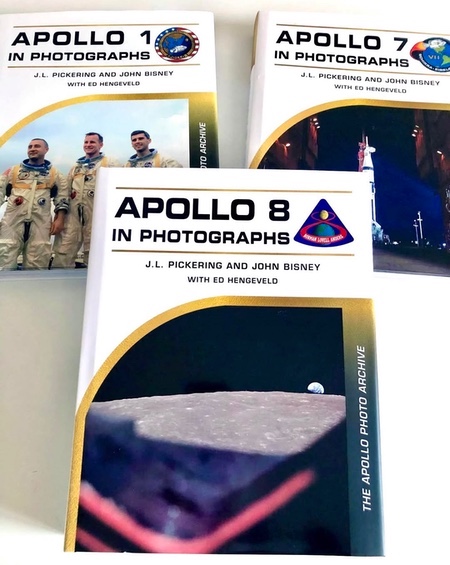
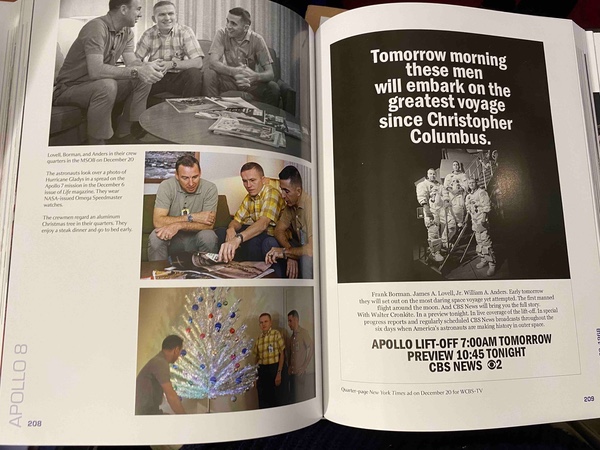 |
Each volume is hundreds of pages thick, and each page contains two or more photos from the mission: many hundreds of photos per book, and I guarantee that you have seen no more than a dozen of them. You may have seen a photo of the Apollo 8 astronauts standing outside with their rocket in the background, but it’s always been the same photograph. The authors have now included multiple photos from that publicity shoot, some of them with the astronauts smiling, others with them looking bored, or borderline annoyed. Looking at them, you realize that it must have been awkward for those guys to stand there and pose, when what they really probably wanted to do was spend more time in the simulator.
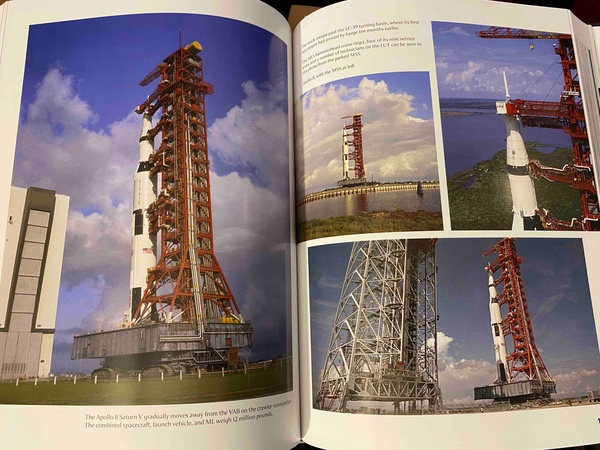 |
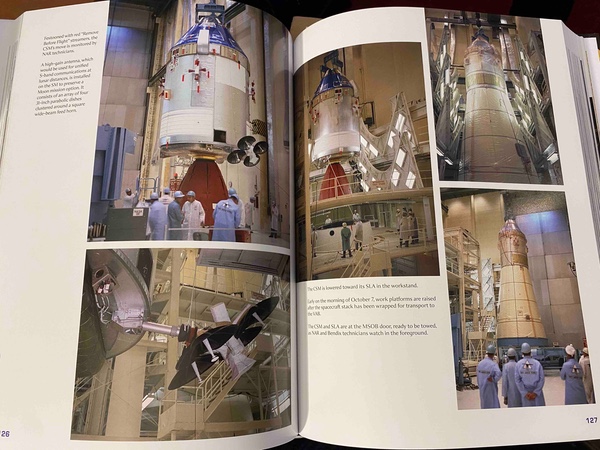
But it’s not just that they are new or have never been published before. These photos also reveal things you have never thought about or even knew existed. There are photos of hardware being tested and assembled, astronauts training for many different phases of their missions, and equipment being moved to the Cape prior to launch. Even if you are aware that atop every Apollo Command Module there was a Launch Escape System, you almost certainly never wondered how that piece of emergency equipment was assembled or placed atop the rocket. Now there are photos of that sequence of events and, looking at them, you realize that there were people assigned to that particular piece of equipment that could save the astronauts if the rocket blew up. It probably never occurred to you that long before Apollo 8 roared off its pad, construction workers installed water pipes throughout that pad and performed tests pumping millions of liters through those pipes to suppress the noise from the Saturn V’s rocket engines. Now there are photos of those tests.
 |
There are revelatory photos in these books but also depressing ones. There are multiple photos of the funeral service for the Apollo 1 astronauts—both the West Point funeral and the Arlington Cemetery service. Nothing like that has probably been published since early 1967. Seeing them is not quite as impactful today as the event was when it happened, but they do make us understand the reality a little better.
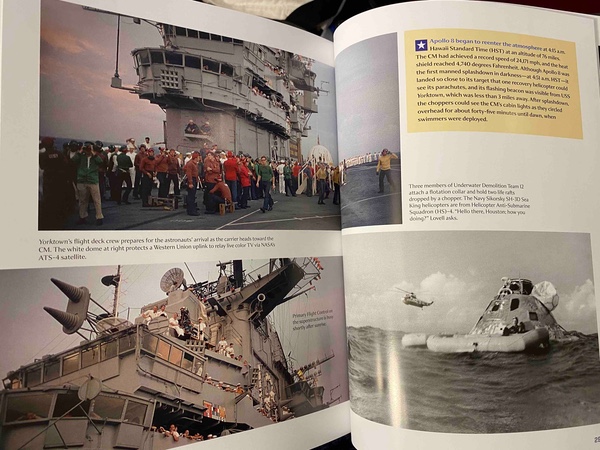 |
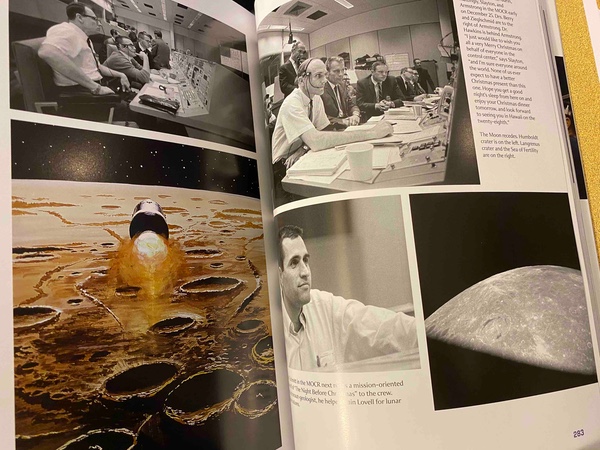
A photograph is a single point in time. But because these books contain so many photographs, you start to change your mindset. You start to view these missions not just as a single event, but years of work by hundreds of thousands of people who got up, went to work, and methodically built the machines that flew to the Moon, or the astronauts who spent day after day after year training and meeting and training and studying, all leading up to a mission that lasted only a few days. For just a brief moment, you can begin to understand that Apollo was not simply an event, or series of events, but an experience, a life, for those who were involved in it.
 |
The reproduction quality is excellent and the paper quality, although not at the level of super-expensive Taschen art books, is also very good.
The authors have plans to publish a book for each of the remaining Apollo missions. Personally, I’m more interested in some of the later missions than the earlier ones. The late Apollo missions gathered far less media interest but were much more complicated. I hope that these early issues are successful and we eventually get to see all of them. The authors have truly advanced the history of Apollo a great deal with this work.
Note: we are now moderating comments. There will be a delay in posting comments and no guarantee that all submitted comments will be posted.