The PSLV-C62 failure marks a setback for India’s space ambitionsby Ajey Lele
|
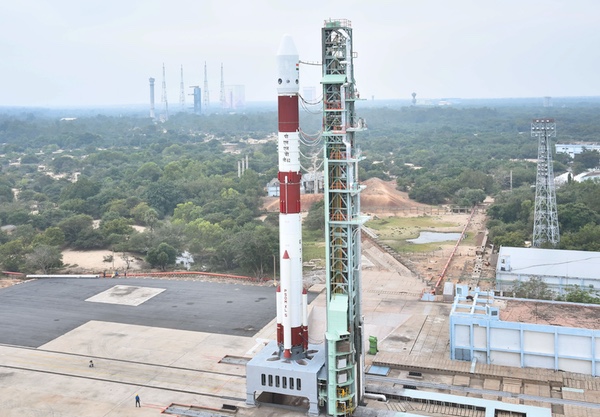
| Because the PSLV has built an excellent track record over the years, the recent failures represent a serious concern. |
The PSLV-C62/EOS-N1 mission had carried India’s EOS-N1 Earth observation satellite along with 15 co-passenger satellites from domestic and international customers. Interestingly, one of these satellites, Kestrel Initial Demonstrator (KID), a small-scale prototype of a reentry vehicle from Spanish startup Orbital Paradigm, beat the odds and managed to transmit some data.
It is important to analyse the loss of this mission at the technological, commercial, and strategic level.
ISRO has already established a fact-finding committee, the failure analysis committee, to identify the exact reasons behind this loss. Surprisingly, the fact-finding committee’s report on the loss of PSLV-C61 has not been placed in the public domain. As a result, there is little clarity on the specific lessons drawn from the 2025 failure and what corrective measures, if any, were implemented before undertaking the first PSLV mission of 2026.
The PSLV is capable of placing multiple payloads into orbit. It is a four-stage rocket that uses solid- and liquid-propulsion systems alternately. The third stage uses solid propellant and produces a maximum thrust of 250 kilonewtons, and its burn duration is bit less than two minutes. According to some reports, during the PSLV-C61 mission, there was a pressure drop, which could have impacted the acceleration. This could have been caused by a possible manufacturing defect in some unit. During its latest flight, the mission did progress normally through the first two stages and most of the third stage. However, controllers detected increased disturbances near the end of the third stage burn, followed by a deviation in the flight path. During the third stage, the rocket is largely operating on pre-programmed guidance and inertial navigation. Hence, the failure could be caused by problems with hardware, materials, ignition, or control systems.
The KID payload of Orbital Paradigm survived the PSLV-C62 launch failure. According to reports, there was a transmission of flight data for 190 seconds despite the launch vehicle’s third-stage anomaly. According to ISRO, KID was to be the last co-passenger to be injected (connected with the fourth stage of the rocket) into the orbit, after which it was slated to re-enter the Earth’s atmosphere towards splashdown in the South Pacific Ocean. Importantly, KID, a 25-kilogram football-sized space capsule, endured forces beyond design limits and returned partial telemetry. The company said various key systems like separation, power supply, and data transmission worked properly even under degraded conditions and after reentry. Their initial analysis suggests that four of the five planned mission milestones were achieved, though in an unexpected, off-nominal way. However, because customer data could not be delivered, the company is not declaring the mission as a success.
However, the main EOS-N1 payload and the other 14 payloads were lost. There were five payloads from an Indian startup, Dhruva Space, which was co-partnering with university students. The satellites were meant for technology demonstrations, including running large AI models directly on the satellite. Another Indian start-up, OrbitAID Aerospace, had a satellite designed to perform an on-orbit satellite refuelling experiment. There was one more satellite for another Indian agency. A company from Brazil, AlltoSpace, had five payloads that included IoT sensors for collection of data on agriculture and some other purposes. There was also a satellite for Nepal University.
India has been launching satellites for foreign organizations since 1999, when the first satellite was launched for Germany. India has launched 434 satellites for 36 countries so far. Importantly, until now all ISRO carrying missions foreign payloads had been successful. Recently, ISRO developed another vehicle for launching payloads of up to 500 kilograms to LEO, called Small Satellite Launch Vehicle (SSLV). It was designed to support future commercial interests.
Today, India’s share in the global space market is only about 2–3%, but the country aims to raise this to around 8–9% in the coming years. Given ISRO’s previously unblemished record in providing launch services to foreign customers, many clients worldwide had been keen to work with them. Will the failure of PSLV-C62 erode the confidence of such customers? It may be too early to draw such a conclusion, but ISRO will certainly need to tighten its processes and demonstrate renewed reliability quickly.
From an Indian perspective, the back-to-back PSLV failures have also affected military preparedness. ISRO’s first mission failure of 2026 was not only a setback for the space agency, but also for Defence Research and Development Organisation (DRDO). The mission’s primary payload, EOS-N1, was a DRDO-developed hyperspectral Earth imaging satellite intended to meet specific surveillance and infrastructure-monitoring requirements. As India’s first such strategic satellite, it was envisioned to provide near real-time intelligence for national security needs. It is worth noting that ISRO had earlier launched the Hyperspectral Imaging Satellite (HySIS) in 2018, primarily for civilian applications.
| From an Indian perspective, the back-to-back PSLV failures have also affected military preparedness. |
India’s neighborhood has become increasingly disturbed because of a combination of persistent border disputes and internal political instability in nearby states. India’s unresolved tensions with Pakistan and China, coupled with recent military operations such as Operation Sindoor (May 7-10 of last year), underline the increasingly contested security environment. The persistent border violations and sustained infrastructure buildups by adversaries along India’s international borders demonstrate the value of timely and reliable satellite imagery to support strategic assessments.
India is aware that China has successfully launched Pakistan’s first hyperspectral imaging satellite on October 19, 2025, called HS-1 (Hyperspectral Satellite-1). Pakistani officials have mentioned that the satellite data would be supporting major infrastructure initiatives having geostrategic significance, such as the China-Pakistan Economic Corridor (CPEC) linking Xinjiang to Gwadar Port. Pakistan also called the satellite’s deployment a pivotal step towards deepening strategic partnership with China. It is known that China had provided Pakistan with real-time support from space-based systems for military use during India's Operation Sindoor.
During the May 2025 PSLV-C61 mission, India lost the Earth observation satellite EOS-09, also known as RISAT-1B. It was intended to be the seventh satellite in India’s RISAT series. The satellite’s primary payload was a synthetic aperture radar (SAR), which has significant defense utility as it enables imaging at both day and night as well as under adverse weather conditions.
Unfortunately, over the past five years, two other ISRO missions involving strategic payloads also encountered setbacks. The GSLV-F10/EOS-03 mission failed in August 2021, resulting in the loss of EOS-03, a next-generation Earth-observation satellite. More recently, the GSLV-F15 mission in January 2025, which was ISRO’s 100th rocket launch from the Sriharikota spaceport, was only a partial success: the launch vehicle’s performance was precise, but the navigation satellite NVS-02 could not be maneuvered into its designated geostationary orbit.
It can be said that, in the domain of space, failure is inevitable. On December 22, 2025, the Japan Aerospace Exploration Agency (JAXA) experienced a failure of its H3 launch vehicle, while it was carrying a navigation satellite. This failure has also come as a shock to JAXA since the previous five H3 launches were all successful. By the end of 2025, China’s ambition to operationalize reusable launch vehicles encountered setbacks, with two back-to-back missions failing to recover the first-stage booster despite successful launches. This is the nature of the space business. The back-to-back failures will momentarily derail ISRO’s space ambitions, with some projected timelines for future missions likely to slip further. ISRO will need to learn from recent failures and move on.
Note: we are now moderating comments. There will be a delay in posting comments and no guarantee that all submitted comments will be posted.