Review: Becoming Martianby Jeff Foust
|
| Solomon treats this all seriously, but at times the subjects in the book come off looking a bit on the fringe. |
A year ago, a book titled Becoming Martian would seem to be a good bet. The second Trump Administration seemed more interested in human Mars missions than predecessors, with plans to shift resources from lunar to Martian exploration. Elon Musk, meanwhile, appeared as committed as ever to establishing a permanent human presence on Mars. Today, the administration has refocused on the Moon, with almost no mention on Mars in a space policy executive order last December, while Musk has turned his attention to the Moon and orbital data centers (see “Musk’s Moon mania”, The Space Review, February 16, 2026).
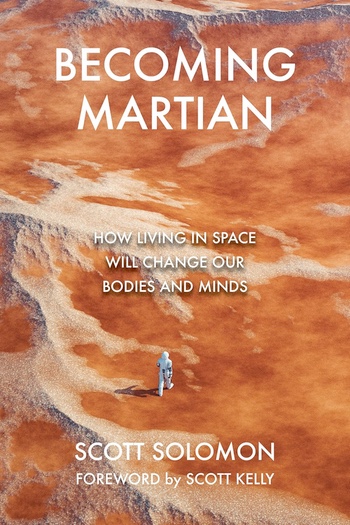
While human missions to Mars recede into the future—as the joke goes, we’ve been 20 years away from sending humans to Mars for more than 20 years—Becoming Martian hasn’t lost its relevance. Scott Solomon, a Rice University professor, explores the impacts spaceflight has on the human body, from the effects of microgravity and radiation to potential long-term genetic changes should humanity establish a permanent presence on Mars.
The book covers familiar topics, ranging from space sickness and vision changes to speculation about how humans that are born and raised on Mars might differ from their terrestrial counterparts. He augments that with his own exploration of the topics, like talking to a scientist who was involved in early bed-rest studies trying to mimic the effects of microgravity on the body, as well as attending a conference of analog astronauts—people who participate in groundbased simulations of Mars or other missions—at the infamous Biosphere 2.
Solomon treats this all seriously, but at times the subjects in the book come off looking a bit on the fringe. One chapter discusses reproduction in space with a focus on SpaceBorn United, a Dutch company that wants to demonstrate in vitro fertilization of human embryos in space, something that has serious medical and ethical issues. The book’s discussion of the company is largely based on a panel at South by Southwest three years ago; the company’s website has had few updates since then (although the company claims on LinkedIn to have tested the technology, albeit without embryos, on a spacecraft last year.) At the analog astronaut conference, he shares a room with someone who says he is building his own analog habitat using a bus with fly larvae and chicken inside to create a self-sustaining ecosystem: his ticket to going to the Moon and Mars, Solomon explains. Well, good luck.
Establishing a long-term human presence on Mars or anywhere beyond Earth will be challenging, Solomon concludes in the book, but one he doesn’t rule out achieving. He notes, though, that it’s premature to do so now, given both the various risks to human health as well as his conclusion that “we must learn how to get along with one another before creating permanent space settlements.” That might be a tough hurdle to clear, especially these days, but it seems like we have a little more time.
Note: we are now moderating comments. There will be a delay in posting comments and no guarantee that all submitted comments will be posted.