Ownership without oversight: Australia’s on-orbit supervision gapby Jeremy Kruckel
|
| The more serious risk lies ahead, when Australia becomes a launching state and the roles reverse. |
Under Article VI of the Outer Space Treaty, Australia bears international responsibility for all national activities in space, including those of its private entities, and the obligation to authorize and continually supervise them. Australian law does not currently provide the means to do so, leaving the nation internationally responsible for an activity it has no legal power to supervise. This article examines that gap and proposes a three-layer framework—mutual recognition with trusted partners, performance bonds for higher risk cases, and accountability for Australian sellers—to close it.
Australia’s existing regulatory gap
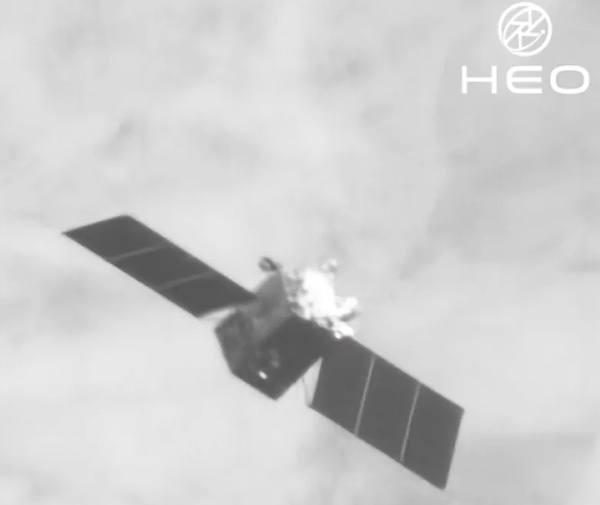
The Space Launches and Returns Act 2018 licenses launches from Australian territory, launches by Australian nationals from foreign territory, and returns to Australia. It does not license the ongoing operation of satellites that Australian entities acquire second-hand from foreign sellers, even where the original operator continues to provide support services under contract. HEO now operates Continuum-1, directing the satellite’s mission priorities, imaging modes, and maneuvers. In February 2026, HEO conducted rendezvous and proximity operations using Continuum-1, further demonstrating the need for oversight.
Article VI of the Outer Space Treaty requires Australia to authorize and continually supervise all national space activities. The Australian Space Agency therefore has an obligation to monitor what HEO does with Continuum-1. Yet under current law the agency has no standing to request information about those maneuvers, the satellite’s disposal plan, or any operational decisions that could affect safety or create debris. There is no license through which conditions could be imposed, no reporting requirement to enforce, and no legal authority to intervene if concerns arise. Any information the agency might receive would be entirely voluntary.
This is the lesser of two evils. Australia is not exposed to direct liability for damage from Continuum-1 because the United States remains the launching state under the Liability Convention. Australia is in a position where it can avoid paying compensation while still failing its treaty obligation to supervise. The more serious risk lies ahead, when Australia becomes a launching state and the roles reverse.
Sovereign responsibility without sovereign control
The term sovereign is often used loosely in space discussions, but it carries a precise meaning in Australian defense policy. A 2023 ministerial statement on sovereignty defined it as “the capacity of a people, through their government, to determine their own circumstances and to act of their own accord, free from any coercive influence.”
Sovereign capability in the defense sense means the ability to act independently without requiring another state’s permission. In the regulatory context, sovereign control means the state having legal authority over its nationals’ activities. The two are linked: without the latter, the former rests on a hollow foundation. For Australia, the primary sovereign interest is in being free from the coercive consequences of others’ actions and, more specifically, not being forced to pay for damage caused by assets it cannot control. The framework proposed here is therefore not an assertion of domination over foreign operators, but a means of managing the risk that Australia will otherwise be held liable for outcomes it cannot influence.
| This structural mismatch between treaty assumptions and commercial practice makes the gap in Australian law not a mere oversight but a symptom of a broader governance challenge. |
Ownership of a satellite by an Australian company does not, by itself, confer sovereign capability. From the perspective of Australia’s international obligations, such a company is primarily a source of liability. True sovereign control exists only when the state has the legal authority to ensure private activities align with treaty commitments and do not generate risks for which Australia must answer internationally. The distinction matters because it clarifies what the gap actually is: Australia lacks sovereign control over activities for which it bears sovereign responsibility.
When the problem reverses
The more significant risk lies ahead. Australia will soon launch its own satellites and become a launching state under the Liability Convention. Once a state becomes a launching state, it retains that status perpetually. There is no mechanism to transfer that designation to another state without a formal government-to-government agreement. If Australia later sells one of its satellites to a foreign operator, as HEO just bought from Satellogic, the roles reverse. Australia would retain permanent liability for a satellite it no longer owns, no longer controls, and has no legal power to supervise. The foreign operator could maneuver recklessly, refuse to deorbit, or cause a debris event, and Australia could face liability claims. More importantly, Australia would fail its treaty obligation to supervise a national activity, regardless of whether a claim is ever filed. Australian law provides no mechanism to require that operator to follow basic safety protocols or even to inform Australia of its activities.
The global satellite market already includes on-orbit transfers, and as commercial space activity expands, the number of actors and cross-border transactions will only grow. A satellite launched by Australia could be sold to a private operator in another country, and that operator might later sell it again to a third party. At each step, Australia’s liability as the launching state remains, but its legal authority to supervise the asset disappears. Other nations will face similar gaps as established spacefaring countries partner with emerging ones and as private assets change hands across jurisdictions. Australia is not alone in confronting this oversight. Every state that becomes a launching state will eventually face it.
The Outer Space Treaty was drafted in an era when only governments launched satellites and commercial space activity was minimal. Article VI’s assumption that a state could authorize and continually supervise “national activities” through a single point of control is strained by today’s reality of cross-border transfers and long lived assets. Launch licenses cover the moment of departure from Earth, but there is no equivalent license for the life of a satellite, especially after it has been sold to a foreign operator. This structural mismatch between treaty assumptions and commercial practice makes the gap in Australian law not a mere oversight but a symptom of a broader governance challenge.
Moreover, the complexity does not stop with simple sales. Satellites will be serviced in orbit, extending their operational lives beyond original expectations. A propulsion unit built by one country might be attached to a satellite registered by another, creating hybrid objects with no clear allocation of liability. States themselves can change: a country that launched a satellite may dissolve or split, leaving questions about who inherits the responsibility. These scenarios are not decades away; on-orbit servicing is already being demonstrated, and geopolitical changes are a perennial reality. A framework that can handle the straightforward case of a sale must also be designed to absorb these more complex situations without requiring a new treaty every time. The three-layer approach proposed here, one of mutual recognition, performance bonds, and seller accountability, is intentionally flexible, creating a foundation that can adapt as the nature of on orbit transfers evolves.
Australia is well placed to develop a framework because it sits at the intersection of allied and non-allied space actors and has no legacy regulatory baggage to unwind. A clean slate, combined with the need to solve the problem, makes Australia a natural laboratory for a model others can adapt.
A scalable three-layer framework
Any framework for supervising satellite transfers must answer a practical question: what happens if an operator ignores the rules? The answer cannot rely solely on international diplomacy or hope that operators will act responsibly out of goodwill. But it also cannot assume that every operator is a potential rogue requiring maximum oversight. The approach proposed here uses three layers of enforcement, each designed for a different category of operator and a different level of risk. Together they form a system that is neither barrier nor bluff.
| Any framework for supervising satellite transfers must answer a practical question: what happens if an operator ignores the rules? |
This would require a modest amendment to the Space Launches and Returns Act 2018 to introduce a new on-orbit transfer authorization that any Australian entity must obtain before acquiring or disposing of title or operational control of a satellite. The authorization would give the agency standing to impose conditions and would trigger the appropriate layer of oversight.
Layer 1: Mutual recognition with trusted partners
The first layer applies to operators based in jurisdictions with space licensing regimes that Australia recognizes as equivalent to its own. For these operators, the requirement would be satisfied through information sharing and notification rather than a full Australian license. The operator continues to be supervised by its home regulator, and Australia receives regular updates on the satellite’s status, maneuver plans, and disposal timeline. Where the home regulator’s oversight is genuine, this layer imposes no additional cost or administrative burden. It treats allied and trusted spacefaring nations as partners rather than subjects of regulation.
Equivalence would be determined by objective criteria, not simply geopolitical alignment. Australia would consider whether the foreign regulator has clear legal authority to license space activities, effective enforcement powers, transparent procedures, and a demonstrated record of ensuring compliance with safety and debris mitigation standards. Regimes that meet these criteria could be recognized through bilateral agreements and those that do not would default to Layer 2. This approach ensures that the first layer is available to any operator whose home regulator meets a high but verifiable standard, regardless of whether that state is a traditional ally. It also provides a pathway for emerging space nations to qualify as their regulatory capabilities mature.
The limit of this layer is that it only functions where trust is warranted and where the foreign regulator has both the authority and the resources to enforce its rules. Australia would need to negotiate these arrangements bilaterally and review them periodically to ensure they remain effective. Pending such agreements, operators from those jurisdictions would default to Layer 2 until mutual recognition is established. This transitional default is a necessary tool to maintain Australia’s control while recognition agreements are being built, and it is not intended as a permanent barrier.
Layer 2: Performance bonds for higher risk cases
The second layer applies when the operator’s home jurisdiction does not have an equivalent regime, or when Australia has not yet established a recognition agreement with that jurisdiction. In these cases, the operator would be required to lodge a performance bond with the Australian government before the transfer proceeds, as a condition of the transfer authorization. The bond would be held in escrow for the life of the satellite plus a defined period after disposal, and its amount would be determined by a risk assessment considering factors such as the operator’s track record, the satellite’s orbital regime, and the stability of the operator’s home jurisdiction. The transfer authorization would also impose standard conditions on post-transfer operations covering maneuvers, disposal, and debris mitigation that the foreign operator must accept as a condition of the deal.
If the operator breaches those conditions or causes damage for which Australia must pay compensation, the bond is forfeited to cover costs. If the satellite is disposed of safely and no claims arise, the bond is returned with interest. This layer gives Australia financial security upfront and removes the need to pursue a foreign entity across borders. The operator retains the freedom to proceed, and the bond amount simply reflects the risk Australia is being asked to assume.
A performance bond imposes a cost, and that cost will be higher for operators that present higher risk. This is a mechanism by which Australia ensures that accepting perpetual liability for a foreign-controlled asset is accompanied by financial security. If the bond prices some operators out of the market, those are precisely the operators for whom Australia should not be assuming liability in the first place. The framework is not designed to maximize transfers, but rather to ensure that when transfers occur, Australia is protected. Industry concerns about liquidity can be addressed by allowing operators to satisfy the bond requirement through insurance products such as surety bonds, ensuring cash is not left idle unnecessarily.
Risk assessment for foreign operators inevitably involves information asymmetries. Australia may have limited visibility into an operator’s practices or the effectiveness of its home regulator. The framework would draw on established methods used by export credit agencies and financial regulators, supplemented by information from the operator’s jurisdiction where available. Where information is insufficient, the bond would be set conservatively to reflect uncertainty. To avoid imposing a prohibitive barrier on operators with limited track records but genuine intent, a phased approach could be adopted such as an initial lower bond that increases if the operator demonstrates poor performance, or a bond that decreases over time as the operator builds a compliance history. Such flexibility would balance risk management with the need to allow legitimate operators from all regions to participate in the on orbit market.
The criteria used in risk assessment, including the stability of the operator’s home jurisdiction, should be reviewed periodically to ensure they do not systematically disadvantage operators based on factors unrelated to operational safety. A transparent review process would help maintain the framework’s credibility and ensure that its application remains proportionate to actual risk.
Layer 3: Accountability for Australian sellers
The third layer operates alongside the first two and applies to Australian entities involved in the transfer. An Australian company selling a satellite to a foreign operator remains subject to Australian corporate law and the jurisdiction of Australian regulators. If that company fails to ensure the transfer complies with the framework, or if it provides false information in the risk assessment, the existing tools of fines, license suspension, and director liability come into play. These consequences depend on the company valuing its Australian registration, its access to the Australian market, and its directors’ freedom from personal liability. This is the only real leverage Australia retains once the hardware is in a foreign jurisdiction, and for a reputable Australian company it is sufficient. It ensures that the Australian seller, who is best positioned to verify the operator and structure the transfer, has a strong incentive to get it right.
| Any framework for supervising satellite transfers must answer a practical question: what happens if an operator ignores the rules? |
To prevent a seller from dissolving or restructuring after the sale to avoid ongoing accountability, the transfer authorization could require the seller to maintain a legal presence in Australia or provide a parent company guarantee for the life of the satellite. This would ensure that the entity that profited from the transfer remains available to answer for any compliance failures, closing a potential loophole without imposing undue burden on legitimate operators. Should the seller dissolve after the transfer, the individuals who made the decision, its directors, remain personally liable for any breaches committed while the company was under Australian jurisdiction, ensuring that accountability follows the people responsible, not just the corporate shell.
To prevent circumvention through foreign intermediaries, the transfer authorization would apply whenever an Australian entity has effective control over the satellite or the transaction, regardless of the formal corporate structure used. This ensures that structuring a sale through a foreign subsidiary cannot defeat the purpose of the framework.
An Australian company considering a sale might ask whether it could simply reincorporate overseas to avoid Australian oversight. It would gain nothing. Australia’s liability as the launching state is not tied to the company’s domicile. It attaches to the satellite itself and follows from Australia’s role in its launch. No change in corporate registration can unwind that. The only way for Australia to escape liability is to find another state willing to assume it through a formal government-to-government agreement. No private company can arrange that.
Any regulatory framework creates some friction. The question is whether the friction is justified by the risk it mitigates. For a perpetual liability, a mechanism that ensures some financial security is proportionate.
Closing the gap before the first test arrives
These three layers are not mutually exclusive, as an operator from a non-recognized jurisdiction could be required to lodge a bond, and the Australian seller of that satellite would also be subject to the third layer’s accountability. A transfer to an operator in a recognized jurisdiction would use only the first and third layers, with no bond required. The system scales with the operator and the risk, rather than applying a uniform rule that fits no one well. It gives the Australian Space Agency flexibility while maintaining clear standards. And it ensures that for every transfer, there is a mechanism, financial or regulatory, that gives Australia some form of recourse if things go wrong.
The HEO transaction is not a crisis, but it is a warning. Australian companies now acquire foreign assets in orbit, and soon Australian-launched satellites will be sold abroad. The law must be prepared for a future where satellites are not merely bought and sold but also serviced, refueled, and repurposed beyond their original design life. Closing the gap now creates the foundation on which answers to those harder questions can be built.
Note: we are now moderating comments. There will be a delay in posting comments and no guarantee that all submitted comments will be posted.