Who watches the birds? Cold War era launch vehicle photographsby Dwayne A. Day
|
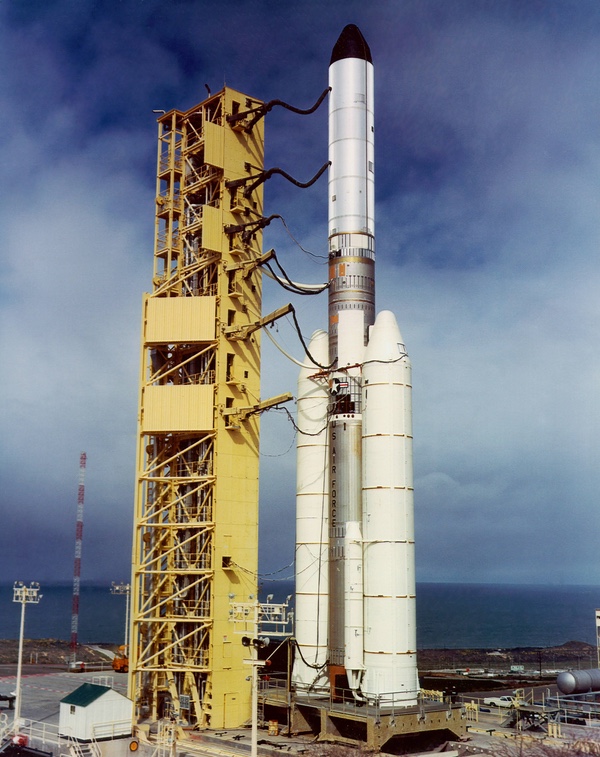
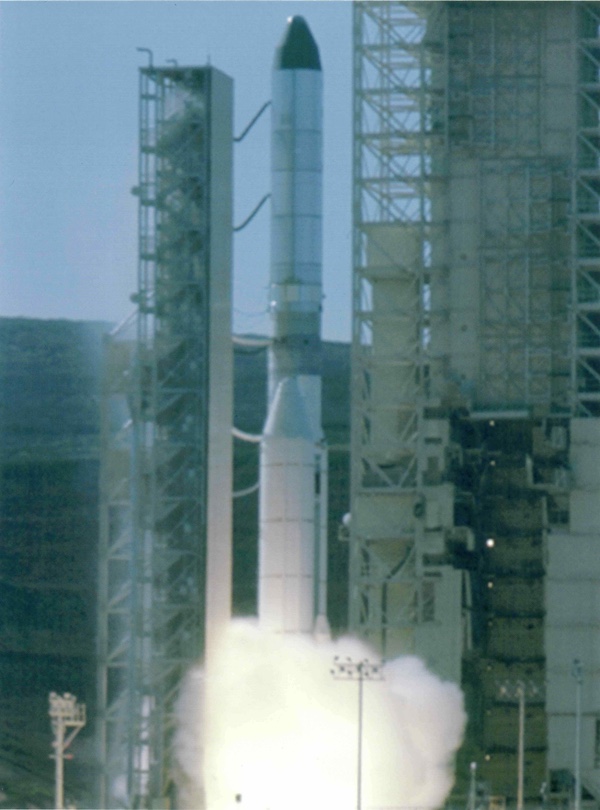 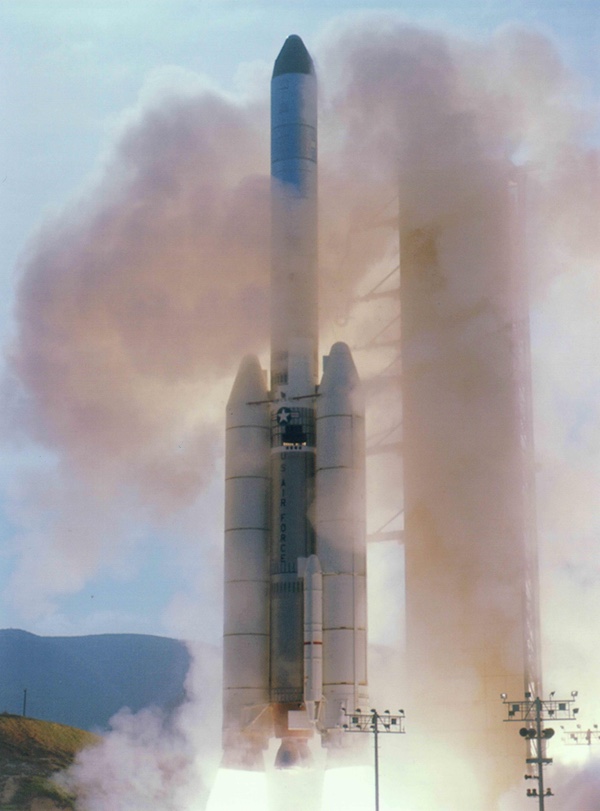 The second HEXAGON satellite, launched in January 1972. Early in the program the plan was to launch multiple times per year. As the satellite lifetimes increased, the launch rate decreased. (credit: John Hilliard Collection) |
The value of Peter Hunter’s work was significant for writers of military missile and space history, because it enabled writers and publishers to be more varied in what they showed, rather than using the same officially released publicity photos over and over again. His collection also demonstrated that the military had some talented photographers, particularly during the early 1960s, who captured the moodiness and the isolation of a fog-shrouded rocket on the California coast, or a rocket sitting a short distance from a sandy beach in a Florida sunrise. There was also historical value to some of the photos, which indicated payload or configuration changes that were not reflected in the public record.
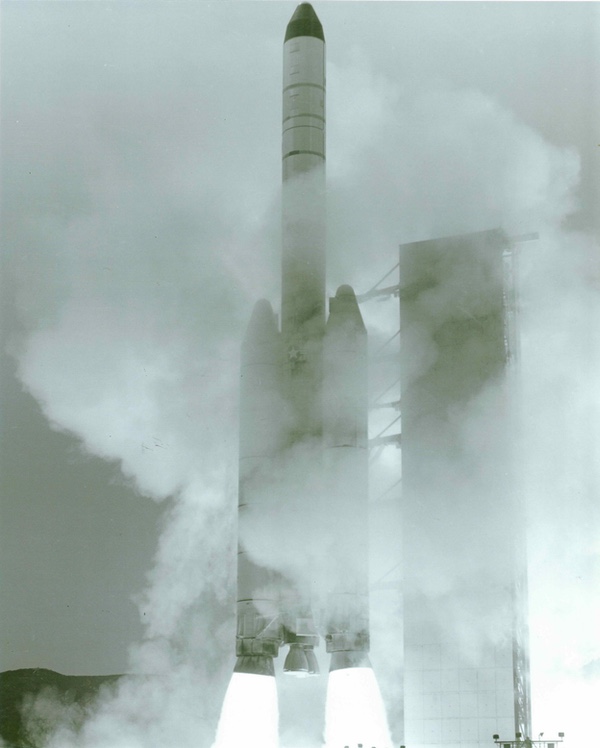 The third HEXAGON reconnaissance launch, in July 1973. (credit: John Hilliard Collection) |
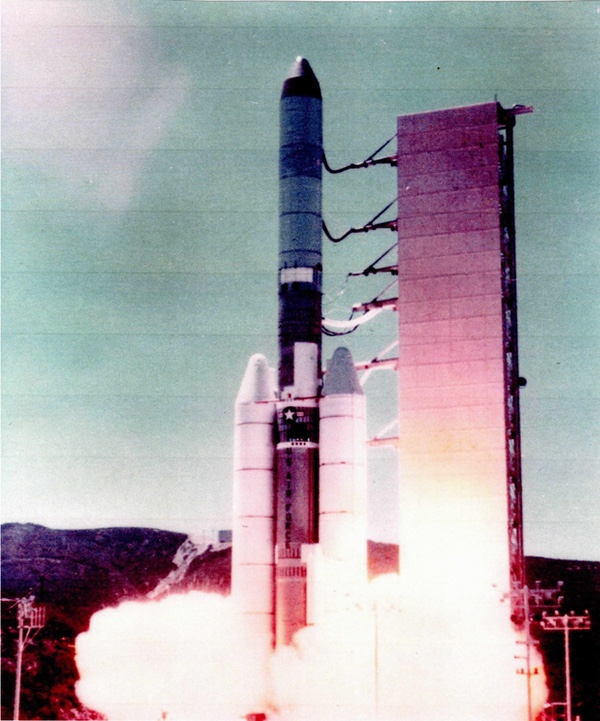 The 13th HEXAGON launch, in June 1977. By 1976, the NRO had reduced the HEXAGON launch rate to one per year. (credit: John Hilliard Collection) |
Hunter was not able to find every rocket and every launch, however. There were still gaps in the collection. The Air Force certainly photographed and filmed every launch, but not all of those images were saved in the same place, or even saved at all. Now, a new collection of launch photographs has closed some of the gaps. John Hilliard had worked for the National Reconnaissance Office before he retired and began collecting rocket launch photos. His collection includes some of the missing photos in Peter Hunter’s collection.
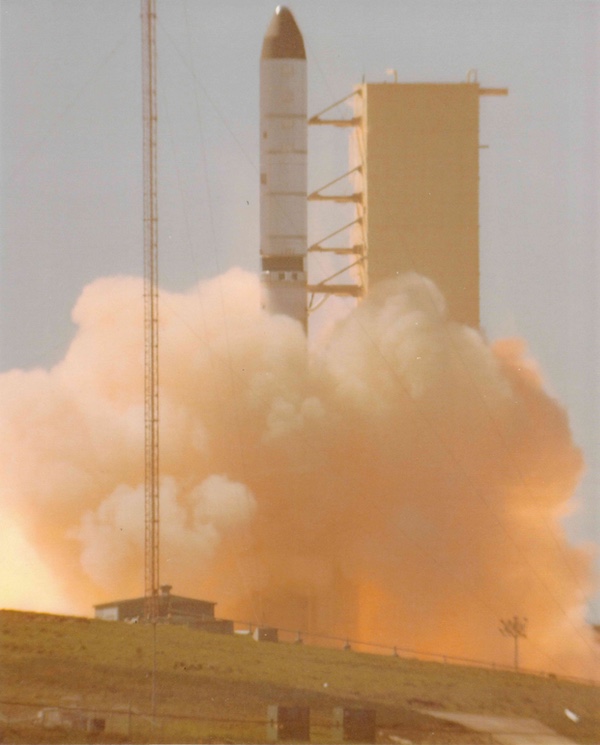 The 14th launch, in March 1978. (credit: John Hilliard Collection) |
Thanks to Hunter and Hilliard, we now have launch photos of over half of the 20 HEXAGON reconnaissance satellites launched between 1971 and 1986. Before Hilliard’s collection, only about half as many were available. We also have more photos of the KH-11 KENNEN satellites and their successors. There are other photos of other missing launches in Hunter’s collection, including some rare missions, and I’ll share some of them in the future. But Hunter and Hilliard, through their hard work, have made it possible to chronicle more of these important reconnaissance programs.
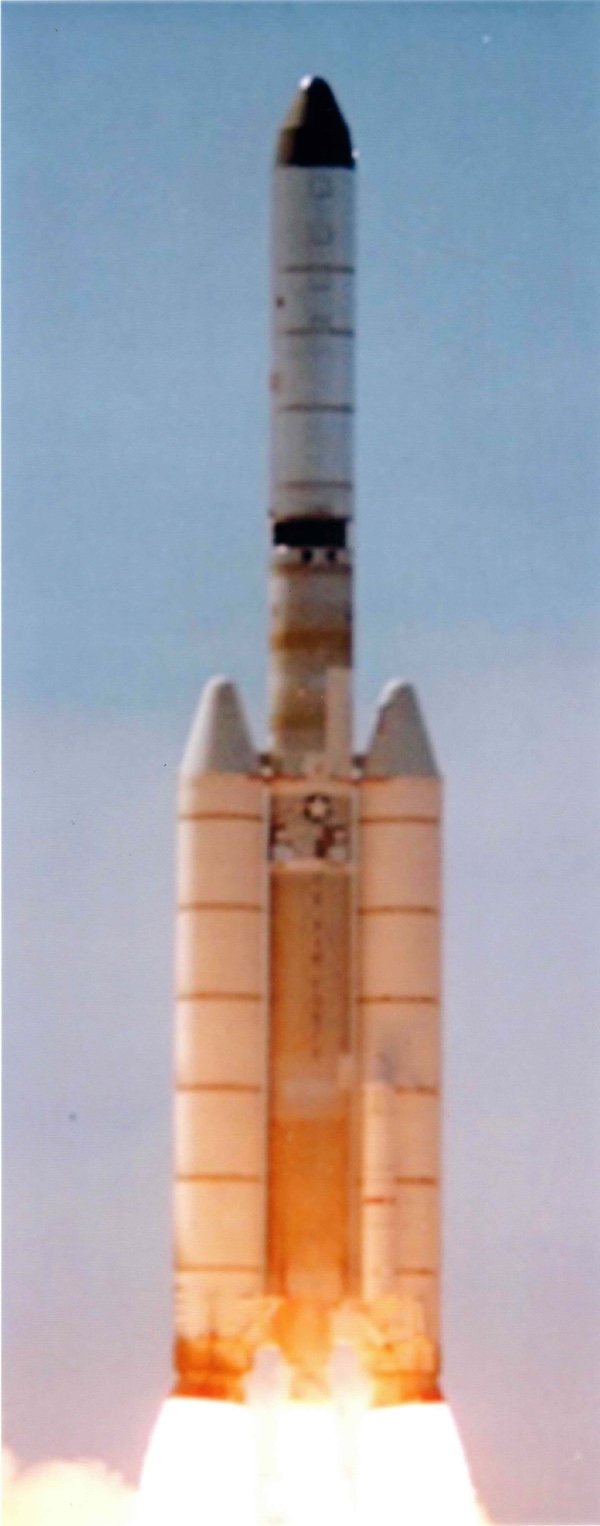 The 15th launch, in March 1979. (credit: John Hilliard Collection) |
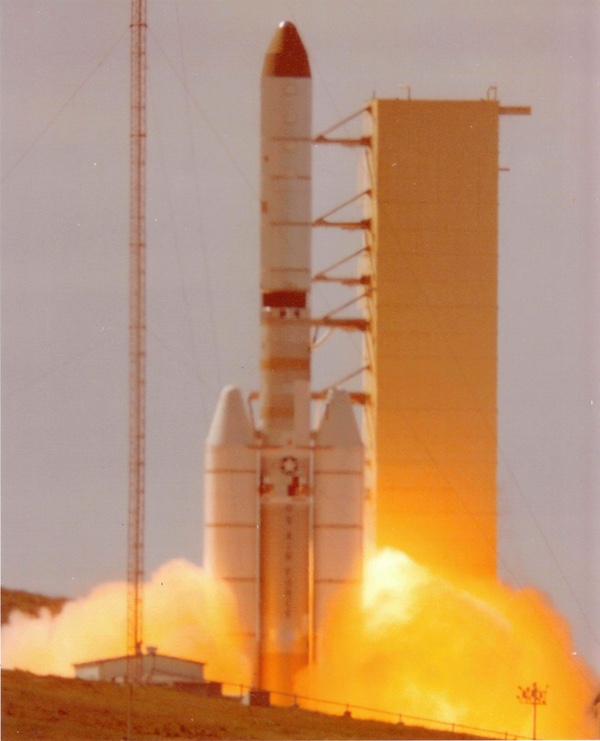 The 15th launch, in March 1979. (credit: John Hilliard Collection) |
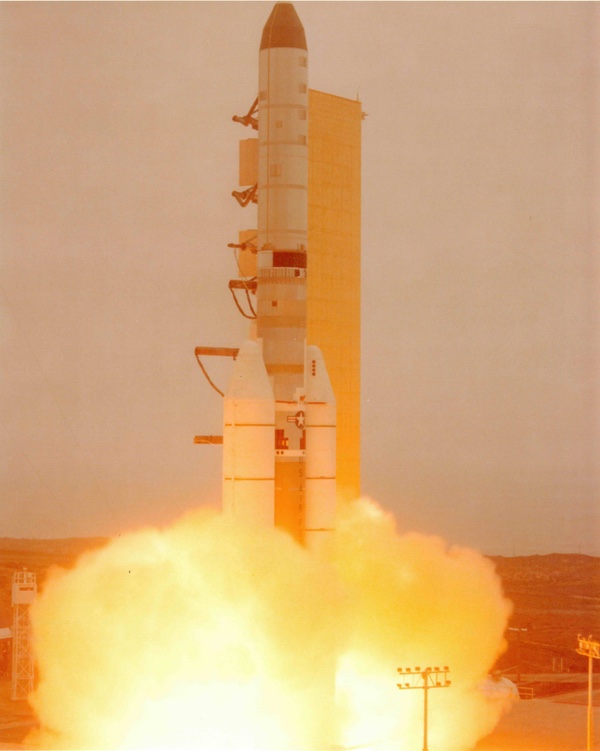 The 16th launch, in June 1980. By this time, the program was scheduled to end, although it was not replaced with an equivalent capability. (credit: John Hilliard Collection) |
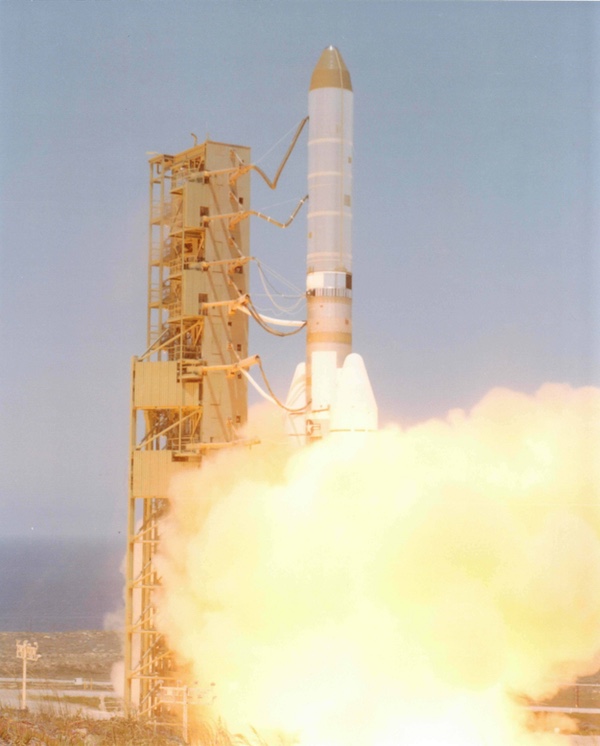 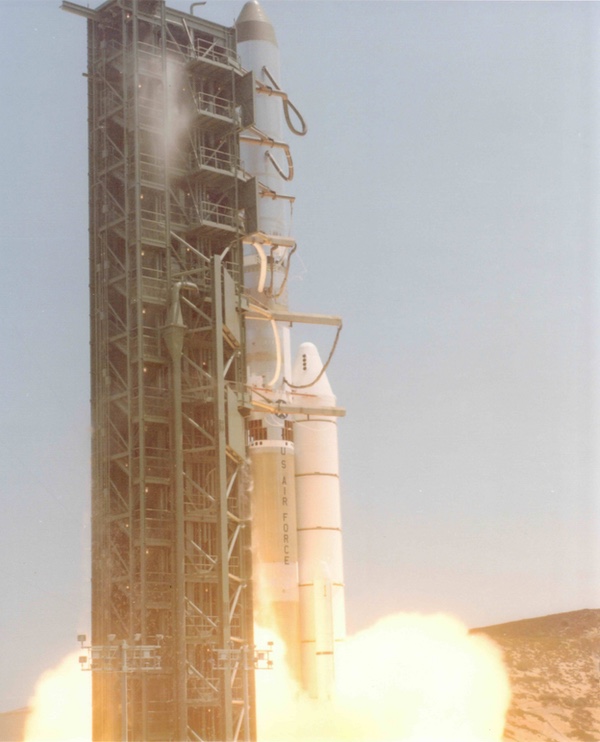 The 17th launch, in May 1982. Before this launch, National Reconnaissance Office officials had considered ways to retrieve a spent spacecraft using the Space Shuttle, with the goal of refurbishing it and re-launching it a final time. (credit: John Hilliard Collection) |
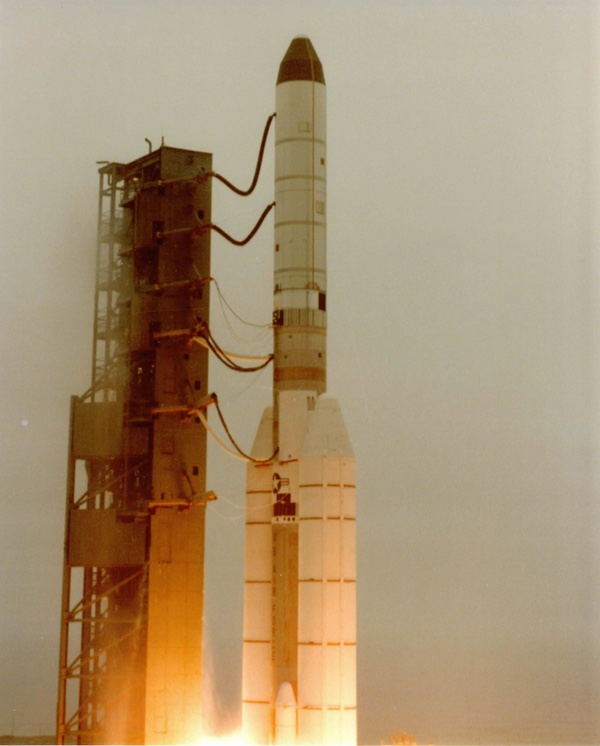 The 18th launch, in June 1983. (credit: John Hilliard Collection) |
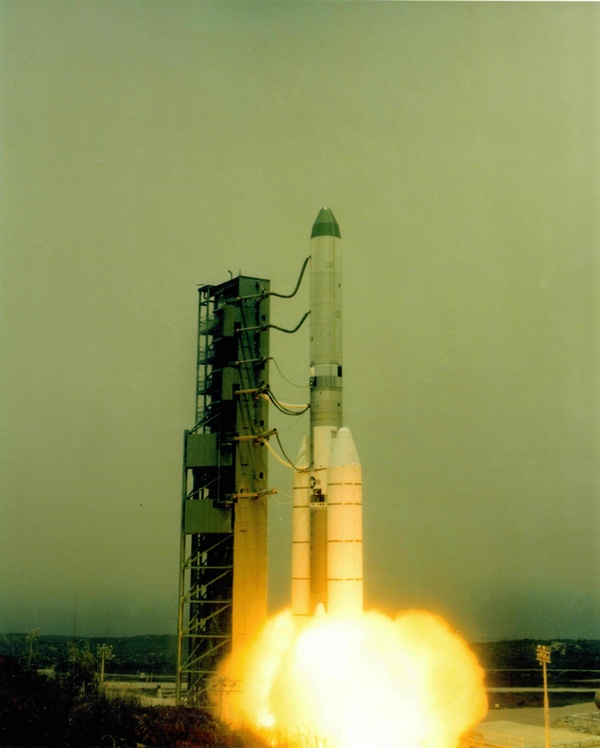 The 19th launch, in June 1984. (credit: John Hilliard Collection) |
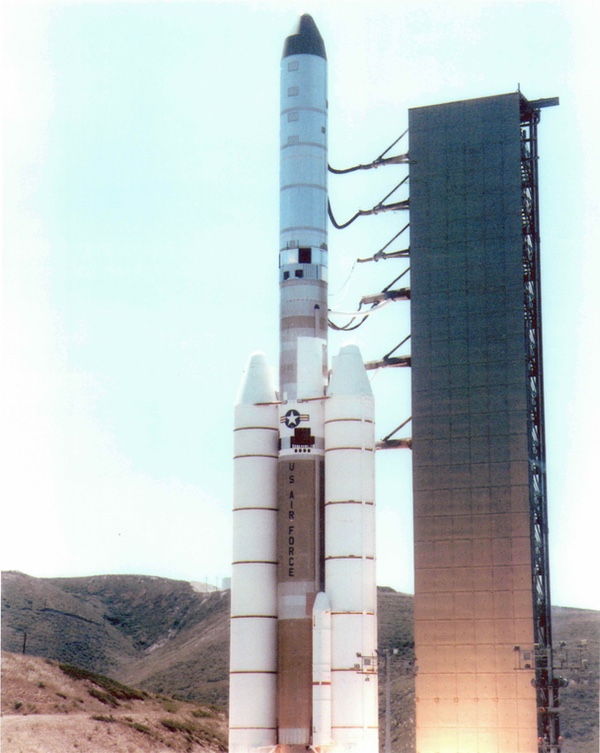 The 20th, and last HEXAGON launch, in April 1986, ended with a spectacular explosion above the launch pad. It was the only failure of the program. (credit: John Hilliard Collection) |
Note: we are now moderating comments. There will be a delay in posting comments and no guarantee that all submitted comments will be posted.