Big little rocket: The N1 Moon rocket and the cognitive dissonance of spy satellite photographyby Dwayne A. Day
|
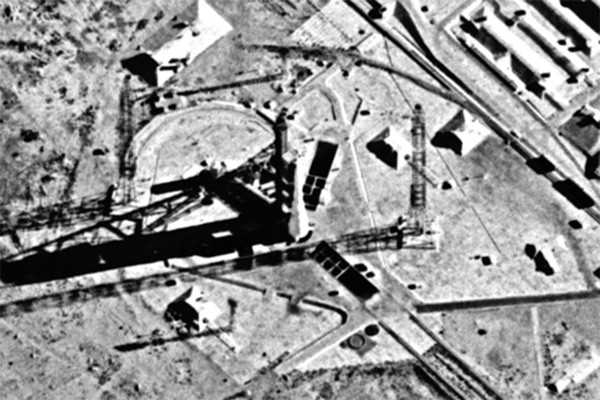
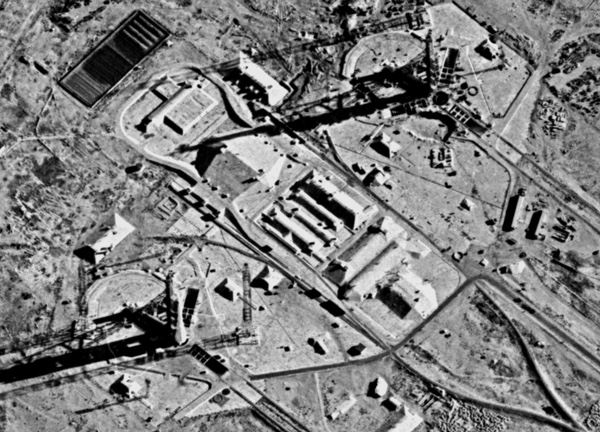 Starting in 1963, the Soviet Union built two large pads for launching the N1. One of the pads was badly damaged in a 1969 launch explosion. (credit: via Harry Stranger) |
The first indication that something new and substantial was going on was the erection of dormitories for thousands of construction troops. This was followed by excavation activities and the creation of concrete production plants. Over time, satellites photographed massive excavations and the construction of a large building. It is easy to get carried away with the adjectives—huge, massive, large—but they all apply. It was clear that what the Soviets were building was a facility for a big rocket, possibly as big as NASA’s Saturn V. The CIA labeled this “Complex J” at Tyuratam, after labeling previous locations A thru I; Complex A was the original Sputnik launch pad. Intelligence analysts tried to be careful in drawing conclusions, but the most likely project was a Moon rocket to challenge the Apollo program. Eventually, the big rocket itself (actually an engineering test model) made an appearance, and satellites photographed that as well. The CIA labeled it “the J vehicle,” although it eventually got other designations.
For nearly a decade, nearly all the information that the United States gathered about this project came from satellite photographs. There were possibly some interceptions of Soviet communications about the project. Maybe there was a human source that confirmed some information. But there is no indication in declassified CIA reports that the US intelligence community ever saw the rocket from the ground, or saw its component parts, or had a view inside the big assembly building. Satellites provided the bulk of the intelligence.
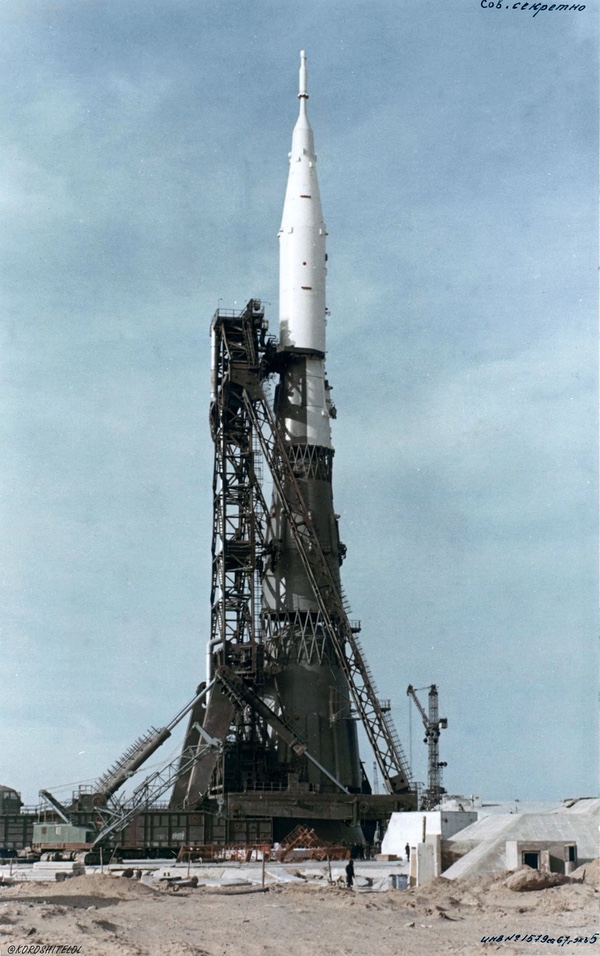 The Soviet Union launched four N1 rockets, all ending in failures. The rocket was massive, similar in size to the Saturn V. But the Soviet Union did not acknowledge it existed, and photos of the rocket taken from the ground did not start becoming available until the late 1980s. (credit: via Nick Stevens) |
Starting in the 1990s, many reconnaissance satellite photos of the launch complex have been declassified. Although the quality of the released photos has increased over the decades, the best satellite photos have still not been released. But we know what they were seeing from above. We also know that the CIA and other US intelligence agencies had become incredibly skilled by the 1970s with understanding construction timelines and technical capabilities of Soviet rocket programs. They did not get everything right—for a time the analysts suspected that the Soviets, like NASA, were using high-energy propellants—but they were still remarkably good.
It was not until 1989 that the Soviet Union released the first grainy, low-quality photos of their rocket, which was designated the N1. But it has taken three decades for increasingly better photos of the N1 hardware to be released. Soviet-era secrecy has tremendous inertia. Every few years a few more photos appear. Recently, Yuri Shakhov released on Twitter high-res scans of an album prepared by design bureau TsKBEM in 1969. The album contained a couple of dozen photos of the first N1 engineering mockup, including photos of its stages and fairing inside the assembly building. Most of these have been released before, although not in good quality. Several of them are all new.
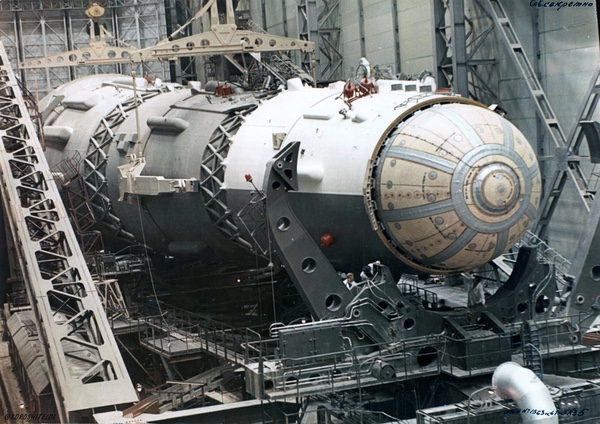 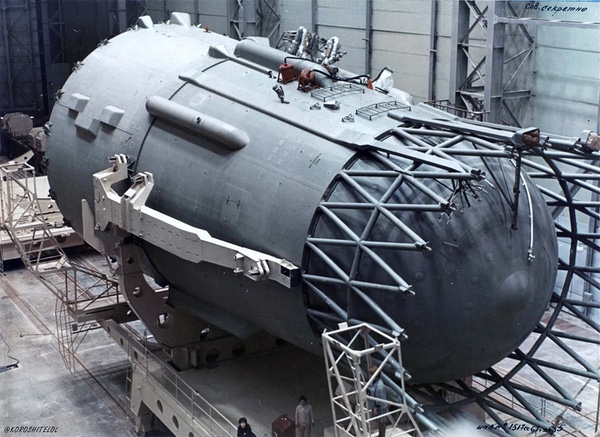 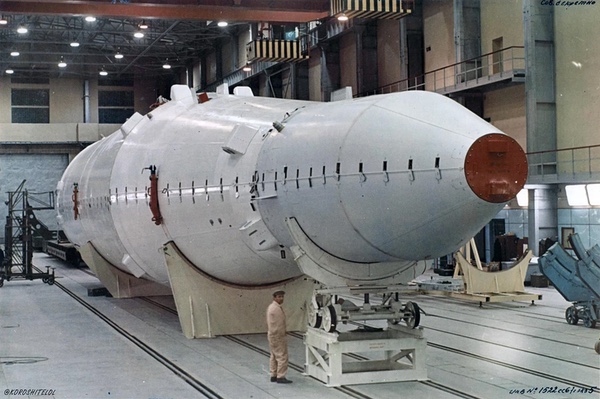 The N1 rocket was assembled within a large assembly building, and the CIA had no photos like this to assess its construction. To date, a few dozen photos of the ground assembly and operations have been released by Russian sources, but up to a hundred more remain classified. (credit: via Nick Stevens) |
Fordham University professor and space historian Asif Siddiqi first learned about the photos years ago. “A guy named Pavel Shubin originally found the album in the RGANTD archive in 2017 or 2018,” Siddiqi explained, “and he published a big-size booklet based on his scans. These include images of both the ground test article (1M1) and the first flight model (3L) launched in February 1969. But he didn't include all the scans and the remaining 3-4 pics have appeared in this burst last week.” The new release also includes better scans. “There were apparently two other full color albums produced of the N1,” Siddiqi says, “but those were not donated by Energia to the RGANTD archive and thus are still classified. Supposedly there are about a hundred more high quality color pictures of the N1 that are still classified, but people have seen them.”
Looking at the reconnaissance satellite photos and then the ground-level photos taken by people who worked on the rocket is strange. It is a reminder that thousands of people built these big rockets, which never succeeded in reaching orbit, let alone reaching the Moon. Every day they welded parts, wired electronics, forged the steel, connected the components, and tested the systems. But they did it all in their own secrecy bubble. The Americans, who were desperate to know what was going on, could only look from hundreds of kilometers above, and make educated deductions about what was going on. They too did that in secrecy. But for both sides, the photos—from space and from the ground—remained locked away in secret. Like the old saying, “if a tree falls in the forest does it make a sound?” secret projects from the past exist in a liminal world: neither real, nor unreal, until revealed.
Special thanks to Nick Stevens for the color corrected versions of the photos. Visit his Substack.
Note: we are now moderating comments. There will be a delay in posting comments and no guarantee that all submitted comments will be posted.