Three steps forward but one step backby Dale Skran
|
| Artemis transformed from something often viewed as a pointless jobs program with a few good elements to an important effort to build a lunar surface base. |
As a result, the space community sustained continuing cognitive dissonance. On one hand, Orion, the SLS, and Gateway employed thousands of dedicated engineers and scientists. On the other, it was increasingly obvious that, as the New Glenn and Starship programs evolved, and with amazing success of SpaceX’s Falcon 9 and Falcon Heavy, reusable rockets were the future, and that the single-use SLS would never be competitive with the rising tide of new heavy lift vehicles. Yet the SLS, Orion, and Gateway had strong defenders in Congress, and skeptics for the most part avoided direct attacks on these programs.
Into this long-standing conundrum came the new NASA administrator, Jared Isaacman. Despite skepticism that he possessed the political chops for the job, Isaacman reformed the Artemis concept of operations and goals dramatically and extremely rapidly. In the blink of an eye, the Gateway was cancelled and its initial component, the Power and Propulsion Element (PPE), was repurposed as part of a nuclear-electric journey to Mars. The Exploration Upper Stage (EUS) of the SLS and its associated taller mobile launch system, years late and billions over budget, were also cancelled. The reliable and fully operational Centaur V is set to replace the Interim Cryogenic Propulsion System (ICPS), the current upper stage of the SLS vehicle.
With these simplifications, the SLS/Orion launch cadence will increase, and the Artemis 3 lunar landing mission has been reset as an Earth-orbital rendezvous between Orion and one or both of the Human Landing System (HLS) landers, currently being pursued by SpaceX and Blue Origin. This pushes out the first return to the Moon until Artemis 4. The lunar orbit for Artemis 4 will also be modified to reduce the change in velocity needed to accomplish the mission.
Finally, the primary goal of Artemis became the construction of a lunar base, a milestone long sought by space advocates. To support the new lunar surface base, Isaacman called for a large increase in the number of Commercial Lunar Payload Services (CLPS) missions to deliver, in part, cargo and materials for the new lunar base.
All in all, these changes are magnificent. Not just two steps forward–more like three! Artemis transformed from something often viewed as a pointless jobs program with a few good elements to an important effort to build a lunar surface base. The SLS moved from being the rocket NASA planned to fly for 50 years (a wholly unrealistic idea) to a transitional program element with capped development. Bravo Jared Isaacman!
| Perhaps the greatest damage done by the core module proposal, beyond a decade or more setback in the development of a commercial LEO economy, is to NASA’s reputation as a reliable partner for commercial firms. |
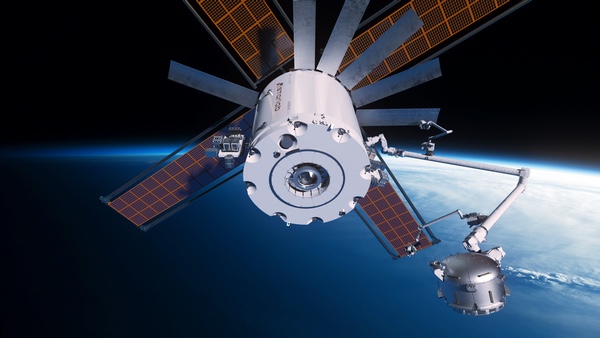
Unfortunately, NASA also proposed to replace the Commercial LEO Destinations (CLD) program with a “core” module owned and operated by NASA, to which “commercial” modules would be attached to form a mini-ISS. This proposed direction would devastate the CLD competitors. These companies have raised billions of dollars from investors, and their plans would be kicked aside by the “core” module.
As one example, the Starlab space station, currently being built by Voyager Technologies, would be crippled by the requirement that CLD stations start their operational lives attached to the ISS. The CLD companies are fighting back but are limited in what they can do or say since they must work with NASA one way or another. The core module is a big step backward for the broader goals of space development and settlement.
Perhaps the greatest damage done by the core module proposal, beyond a decade or more setback in the development of a commercial LEO economy, is to NASA’s reputation as a reliable partner for commercial firms. If CLD firms that have raised and invested billions in pursuit of a goal set by NASA are then deliberately undermined by a radical and dubious change of direction, this suggests that NASA will not deliver on public-private partnership (PPP) commitments. Since the Artemis program contains several vital PPPs, including HLS, the core module proposal directly threatens the success of Artemis.
NASA needs to immediately drop the core module proposal and issue the long overdue request for proposals for the next stage in the CLD program. Additionally, NASA needs to step up to the bar and commit to being a long-term anchor tenant on the CLD stations, with funding between 25% and 50% of the current ISS operational budget.
Finally, NASA needs to get out of the business of determining when the LEO market is “ready.” It is not reasonable to expect the full blooming of the LEO economy until NASA no longer functions as a gatekeeper limiting the scope of commercial operations in orbit. As one example, some at NASA have complained that a vibrant orbital tourism industry has yet to emerge, but it is impossible to see how such a thing could happen with NASA limiting the private astronaut missions to the ISS to two per year, while also restricting crew size to four, and requiring CLD companies to fill one of the four seats with a former NASA astronaut (although this has just been changed.) Additionally, the ISS was not designed as a tourist destination.
If NASA continues with a core module owned and operated by itself, we can look forward to Chinese dominance of LEO operations for the ten years or more following the deorbit of the ISS. Hopefully Congress will step back from this unwise direction and stay the course toward the development of a vibrant LEO economy based on true commercial LEO stations.
Note: we are now moderating comments. There will be a delay in posting comments and no guarantee that all submitted comments will be posted.