Space launch and reentry environmental concerns are real, but can be mitigatedby Michael Puckett
|
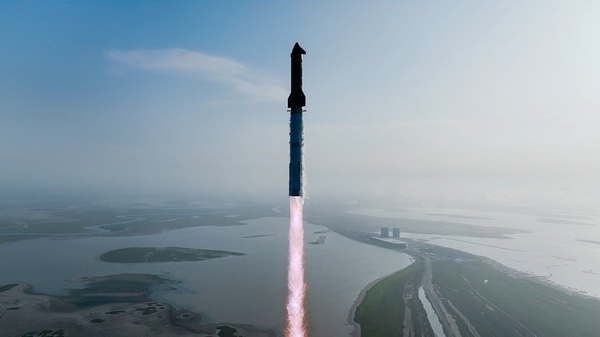
| The launch industry is undergoing a rapid technological transition that is already eliminating many of the specific emission sources identified in these studies. |
Unlike surface emissions, rocket exhaust is deposited at altitudes where atmospheric mixing is slower and particle residence times are longer. Modeling studies have found that black carbon emitted by hydrocarbon-fueled rockets can persist in the stratosphere and contribute to localized radiative forcing and ozone chemistry effects.[3][4] Observational and modeling work has also identified aluminum oxide and metallic particles produced both by solid rocket motor exhaust and by the reentry of aluminum-alloy upper stages along with other spacecraft components.[1][4]
These findings represent an inquiry into a previously understudied phenomenon. However, much of the public discussion surrounding these studies has extrapolated their results in ways that implicitly assume that current rocket technologies will remain unchanged even as launch cadence increases. That assumption is unlikely to hold. The launch industry is undergoing a rapid technological transition that is already eliminating many of the specific emission sources identified in these studies.
While the current environmental concerns associated with rocket launches are real, projections of their long-term impact often misrepresent the true nature of the problem and misses other potential impacts.
Understanding the sources of rocket emissions
The atmospheric effects identified in recent research arise primarily from three specific sources: solid rocket motor exhaust, heavy hydrocarbon combustion, and the reentry of expendable aluminum-alloy based upper stages.
Solid rocket motors produce exhaust containing aluminum oxide particles and chlorine-bearing compounds. These emissions were historically significant in systems such as the Space Shuttle and remain present in some existing launch vehicles. Aluminum oxide particles can persist in the stratosphere and participate in heterogeneous chemical reactions that influence ozone chemistry.[4]
Liquid-fueled rockets using heavy hydrocarbon fuels such as RP-1 kerosene produce black carbon during combustion. Because rockets inject soot directly into the upper atmosphere, its radiative impact per unit mass is greater than soot emitted at lower altitudes.[2] Even so, the total quantity remains small in absolute terms. Global rocket activity produces on the order of one thousand metric tons of black carbon annually, compared to millions of tons from terrestrial sources.[3][5]
| The rapid adoption of motor vehicles eliminated the underlying source of the problem far more effectively than any attempt to manage horse waste at ever greater scale. |
A third source of atmospheric particulate deposition occurs during reentry. Expendable aluminum-alloy based upper stages partially vaporize during atmospheric reentry, producing aluminum oxide and other metallic particles that are deposited in the upper atmosphere.[1] Recent observational work has directly detected metallic species associated with rocket stage reentry, confirming this mechanism.[1] These emissions are measurable and scientifically significant. However, they are also closely tied to technologies that are already being phased out.
Of horse manure and the internal combustion engine
Many projections of rocket environmental impact implicitly assume that current propulsion systems, materials, and vehicle architectures will persist indefinitely. This assumption reflects a broader analytical pattern that has repeatedly produced misleading projections in the past.
In the late 19th century, urban planners and commentators warned of an impending urban sanitation crisis caused by horse manure. Based on then-current transportation trends, some projections suggested that city streets could eventually be buried under several yards of accumulated feces by the middle of the 20th century. These forecasts were not irrational. They were based on visible growth in horse-drawn transportation and on a straightforward extrapolation of existing conditions. What they failed to anticipate was technological replacement. The rapid adoption of motor vehicles eliminated the underlying source of the problem far more effectively than any attempt to manage horse waste at ever greater scale.[6]
A similar transition is now underway in rocketry. Many of the emission sources highlighted in current atmospheric studies—solid rocket motor exhaust, kerosene soot, and particulates from expendable aluminum-alloy based upper stages—are associated with technologies that are already being displaced. The key question is therefore not simply what current rockets emit, but whether the systems producing those emissions will continue to dominate the launch sector in the decades ahead.
The declining role of solid rocket motors
Solid rocket motors (SRMs) were historically attractive because of their simplicity and storability. However, they produce exhaust containing aluminum oxide particles and chlorine-bearing compounds that can participate in heterogeneous chemical reactions affecting ozone chemistry.[4]
These emissions were significant in systems such as the Space Shuttle and remain present in several existing launch vehicles. Because most solid propellant incorporates aluminum powder and oxidizers such as ammonium perchlorate, their combustion products include aluminum oxide particulates and chlorine species that can persist.
SRMs are a concern for the upper atmosphere because they inject chlorine-bearing gases and alumina particles directly into the stratosphere. Chlorine species can participate in catalytic ozone-destruction cycles, while alumina particles provide surfaces for heterogeneous reactions that can further disturb ozone chemistry. The strongest observed effects, however, have generally been local and plume-specific rather than global: one often-cited measurement of a Titan solid-rocket plume found more than 40% ozone depletion within the plume itself roughly 13 minutes after launch at about 18 kilometers altitude.[12] By contrast, the larger harms discussed in recent literature are mainly model-based projections of cumulative future launch activity, not observations of large present-day global ozone damage from solid rockets.
Solid propulsion will likely not play a major role in the development of new orbital launch systems going forward. No major new launchers incorporating solid rocket boosters or solid first stages are under development by advanced spacefaring nations, including the United States, European nations, Japan, with the possible exception of China, and then as a lateral means of boosting the production of solid propellant for military applications. Existing and recently developed systems that employ solid boosters represent legacy or transitional designs rather than the direction of future launch vehicle development and constitute an economic dead-end.
The global use of large solid rocket motors reached its historical peak during the mid-1980s at the height of the Space Shuttle program. From January 24, 1985, through January 12, 1986, Western launch systems burned more than ten thousand metric tons of solid propellant, with the shuttle accounting for the overwhelming majority of that total.[7][8][9] Since then, the industry’s center of gravity has shifted toward liquid-fueled launch systems, and the next major step in that evolution is the rise of reusable methane-fueled boosters and upper stages that avoid the principal emissions associated with both large solids and kerosene-burning expendable architectures.
As the global launch fleet evolves toward reusable liquid-fueled propulsion systems, the emissions associated with solid rocket motors will correspondingly decline. The bottom line is SRMs are inherently incompatible with a reusable architecture and for their economic limitations, will be selected against for future development.
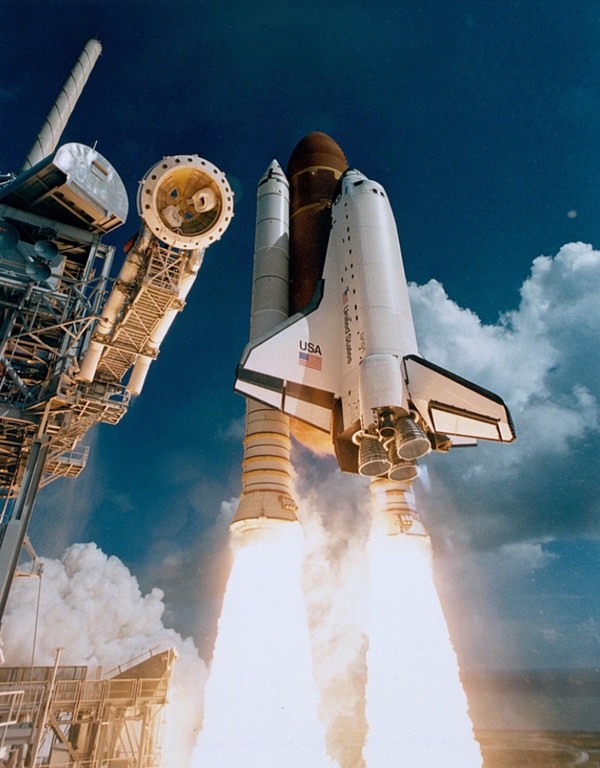 First flight of Atlantis, STS-51-J, October 3rd, 1985 (credit: NASA) |
The transition away from heavy hydrocarbon fuels
Led by reusable rocket designs, the launch industry is also transitioning away from heavy hydrocarbon fuels such as RP-1 toward methane. This shift is driven primarily by engineering requirements associated with rapid reuse.
| As reusbale upper stages enter operational service, one of the primary sources of particulate emissions identified in atmospheric studies will be eliminated. |
Kerosene combustion produces carbon deposits inside engine components, such as the nozzle wall cooling channels, in a process known as coking. These deposits must be removed between flights, increasing refurbishment time and limiting reuse cadence. Methane produces virtually no carbon deposits, completely eliminating the necessity for de-coking. Laboratory combustion studies show methane has dramatically lower soot formation propensity than heavier hydrocarbons like kerosene because of its simpler molecular structure and reaction pathways.[10][11] As methane-fueled vehicles replace kerosene-based systems, rocket soot emissions will decline.
The coming elimination of expendable upper stages and a new concern
Expendable aluminum-alloy based upper stages represent another transitional technology. Historically, due to mass fraction considerations, expendable upper stages were necessary to achieve acceptable payload performance. Starting with SpaceX, super-heavy lift vehicles with fully reusable upper stages are now under development. This trend will likely accelerate due to competitive economic forces, as many current designs are already copying first-stage reusability concepts and technologies from their Falcon 9 series.
Reusable upper stages eliminate destructive atmospheric reentry. As these systems enter operational service, one of the primary sources of particulate emissions identified in atmospheric studies will be eliminated.
The flight rate of current systems such as the SpaceX Falcon 9 is already approaching the practical limits imposed by existing infrastructure. Significant increases in launch capacity will require new vehicle systems designed from the outset for rapid reuse and operational efficiency. These next-generation systems will incorporate propulsion and vehicle architectures that end up reducing emissions as a second-order effect.
At sufficiently high flight rates, reentry-driven nitrogen oxide (NOx) production becomes a highly significant impact of spaceflight. NOx in the upper atmosphere is considered harmful because it can cause degradation of the ozone layer. Current literature already suggests that reentry heating may account for the majority of spaceflight-related NOx emissions, with estimates indicating that reentry—not launch—could dominate this category under realistic future scenarios.[17]
Quantitative modeling underscores the scale of this effect. In high-cadence scenarios involving thousands of large reusable vehicles, annual NOx production from reentry could reach on the order of hundreds of thousands of metric tons, depending on vehicle mass, trajectory, and emission assumptions.
Recent public statements by Elon Musk have outlined a long-term vision involving on the order of 10,000 Starship flights per year to support large-scale space transportation architectures. At that cadence, both launch and reentry would occur at frequencies far beyond historical experience. If such a scenario comes to pass, NOx production from reentry heating—not particulate emissions from legacy propulsion systems—would define the atmospheric impact of spaceflight.
Reentry of constellation satellites and orbital infrastructure
The environmental concerns associated with rocket launches are real. But they are also transitional. Projections that assume their indefinite continuation risk extrapolating present technologies into a future that will be shaped by their replacement. However, a greater area of concern is the end-of-life management strategies for projected megaconstellations and other orbital assets.
The most plausible pathway to large-scale atmospheric impact from space activity is not launch exhaust, but the reentry of high volumes of orbital hardware. The rapid growth of satellite constellations, combined with emerging concepts for orbital data processing infrastructure, introduces a future in which substantial mass is routinely cycled through the upper atmosphere.
Recent analyses indicate that anthropogenic space debris reentry is already a measurable component of upper-atmospheric material flux. A 2026 study by the German Aerospace Center estimates that approximately 1.6 kilotons of space-related mass entered the upper atmosphere in 2024, with roughly 887 ± 123 metric tons of material injected after ablation processes.[13] While still below the total natural meteoritic influx, anthropogenic sources are already dominant for certain elements, particularly aluminum, which is a primary constituent of satellite structures.
Observational evidence supports this trend. A 2023 study published in Proceedings of the National Academy of Sciences found that approximately 10% of stratospheric sulfuric-acid aerosol particles larger than 120 nanometers contain aluminum and other metals associated with spacecraft reentry.[13] This represents a direct detection of anthropogenic material in the stratospheric aerosol system, indicating that reentry products are no longer negligible at current activity levels.
The scale of this effect is expected to increase substantially with the continued deployment of large satellite constellations. According to a 2024 technical memorandum by NASA, projected constellation growth could require the launch and disposal of more than 10,000 satellites per year by 2040.[15] Even with relatively small satellite masses, such turnover rates imply a sustained and growing flux of reentry material distributed globally along orbital ground tracks.
Modeling work further suggests that this material may have nontrivial atmospheric effects. A 2025 study summarized by NOAA examined a scenario involving 10 gigagrams per year of alumina injection from satellite reentry and found that such levels could produce measurable perturbations in stratospheric temperature structure and circulation, including localized temperature increases of up to approximately 1.5 kelvin and weakening of polar vortex dynamics.[16] While uncertainties remain significant, the results indicate that reentry-derived alumina may become climatically relevant at sufficiently large scales.
| The history of technological development demonstrates that environmental problems associated with early industrial systems are often resolved through technological replacement rather than permanent constraint. |
In addition to particulate formation, reentry processes generate nitrogen oxides (NOx) through high-temperature shock chemistry. Current literature indicates that reentry heating may already represent the dominant source of spaceflight-related NOx emissions, though quantitative estimates remain uncertain and highly sensitive to assumptions about vehicle mass, material composition, and reentry frequency.[17] As constellation turnover rates increase, NOx production associated with reentry is expected to rise correspondingly.
The potential emergence of orbital data center infrastructure introduces an additional scaling factor. Unlike individual satellites, such systems may involve large, power-intensive platforms with substantial structural mass and more frequent component replacement cycles. If these systems are retired through atmospheric reentry, they would increase both the total mass flux and the diversity of materials entering the upper atmosphere, amplifying the effects already observed in constellation-driven reentry.
This class of emissions differs fundamentally from those associated with launch activity. As with other projected impacts, however, the outcome depends on how orbital systems are designed, maintained, and retired.
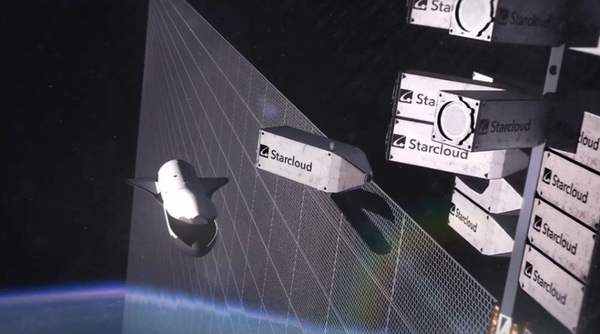 Starcloud Orbital Data Center (credit: Starcloud) |
An area of growing concern
Rocket launches do introduce pollutants into the upper atmosphere, and continued monitoring and research are appropriate. However, the scale of these emissions still remains small relative to other human activities, and the technological trajectory of the launch industry is toward systems that reduce environmental impact in the short run.
The history of technological development demonstrates that environmental problems associated with early industrial systems are often resolved through technological replacement rather than permanent constraint. Just as motor vehicles eliminated the environmental limitations of horse-based transportation, reusable methane-fueled rockets and reusable upper stages will eliminate many of the emission sources associated with earlier launch technologies.
The Inside Climate News article is most persuasive when it argues that upper-atmospheric pollution from space activity is now measurable and underregulated.[2] It is least persuasive when it encourages readers to treat observed plume-scale phenomena and speculative high-growth scenario outputs as evidence of large present-day or durable future global harm. The case has, at a minimum, been made for further research.
Potential minimization and mitigation strategies
The emergence of reentry-driven nitrogen oxide (NOx) emissions as the dominant atmospheric impact at high flight rates reframes the mitigation problem. Unlike particulate emissions tied to specific legacy propulsion technologies, NOx production arises from fundamental thermodynamic processes associated with high-speed atmospheric entry. As a result, mitigation is a question of managing total mass flow, reentry frequency, and vehicle energy profiles. Not all projected reentry mass is intrinsic to space activity; a significant portion will arise from propellant logistics, including tanker flights. About 78–85% of propellant launch mass is oxygen. If oxygen delivery to LEO alone were decoupled from the launch and propellant tanker architecture, it would allow the number of launches beyond earth orbit to be reduced by, at a minimum, three-quarters. Technologies such as lunar in situ resource utilization (ISRU) and propellant harvesting in very low Earth orbit offer pathways to reduce the amount of material that must be launched from Earth and the requirements for total number of launches that must be subsequently cycled through the atmosphere.[18][19]
To address the other remaining area of concern, refurbishment and upgrading in orbit can extend spacecraft life and reduce replacement rates, limiting the frequency with which hardware must be deorbited. On-orbit servicing, refueling, and modular upgrade architectures have been studied extensively and are already being demonstrated in early commercial and government programs.[20]
A complementary approach is the deliberate return of selected high-impact material as downmass on the deadhead leg of launches. Rather than allowing aluminum-rich structures and other components to ablate, these materials can be recovered and returned in a controlled manner using partially or fully empty returning reusable spacecraft.[21]
By reducing tanker demand, extending hardware life, recycling or servicing assets in orbit, and selectively bringing material back rather than allowing it to burn, the industry can reduce not only the environmental pressures created by a very high launch cadence but also the downstream reentry mass that ultimately drives atmospheric injection. In this sense, the scale of the problem is not fixed, but contingent on architectural choices.
References
- Robin Wing et al., “Measurement of a lithium plume from the uncontrolled re-entry of a Falcon 9 rocket,” Nature, February 19th, 2026.
- Bob Berwyn, “Commercial space travel poses environmental threat,” Inside Climate News, February 19, 2026. Republished by Ars Technica as “Study shows how rocket launches pollute the atmosphere.”
- Christopher M. Maloney, Robert W. Portmann, Martin N. Ross, and Karen H. Rosenlof, “The Climate and Ozone Impacts of Black Carbon Emissions From Global Rocket Launches,” Journal of Geophysical Research: Atmospheres, Vol. 127, No. 12 (2022), e2021JD036373.
- Martin Ross, Darin Toohey, Manfred Peinemann, and Patrick Ross, “Limits on the Space Launch Market Related to Stratospheric Ozone Depletion,” Astropolitics, Vol. 7, No. 1 (2009).
- Ioannis W. Kokkinakis and Dimitris Drikakis, “Atmospheric Pollution from Rockets,” Physics of Fluids, Vol. 34 (2022).
- Stephen Davies, “The Great Horse Manure Crisis of 1894,” Foundation for Economic Education, September 1st, 2004.
- NASA, “Solid Rocket Booster Flight System,” NASA Technical Reports Server. This source gives approximately 1,100,000 pounds of propellant per Shuttle solid rocket booster.
- “Titan 34D,” vehicle data for the UA1206 solid boosters used on the Titan 34D, including gross and empty masses used to derive propellant load.
- CNES, “History of launches,” for Ariane launch dates, together with “Ariane 3” vehicle data for the SPB 7.35 strap-on boosters.
- Holger Burkhardt, Martin Sippel, Armin Herbertz, and Josef Klevanski, “Kerosene vs. Methane: A Propellant Tradeoff for Reusable Liquid Booster Stages,” Journal of Spacecraft and Rockets, Vol. 41, No. 5 (2004), pp. 762–769.
- Ye Hong, Zhanyi Liu, Simona Silvestri, Maria P. Celano, Oskar J. Haidn, and Zhendong Yu, “An experimental and modelling study of heat loads on a subscale methane rocket motor,” Acta Astronautica, Vol. 164 (2019), pp. 112–120.
- Scientific Assessment of Ozone Depletion: 1991, Chapter 10, citing Pergament et al. (1977), which reported ozone reductions greater than 40 percent in the exhaust trail of a Titan III solid rocket at about 18 km altitude, observed roughly 13 minutes after launch.
- German Aerospace Center (DLR), “Anthropogenic mass flux into the upper atmosphere,” Acta Astronautica (2026).
- Murphy, D. M. et al., “Spacecraft reentry contributes metals to the stratosphere,” Proceedings of the National Academy of Sciences (2023).
- S. P. Sharma et al., “Impact of Spaceflight on Earth’s Atmosphere,” NASA Technical Memorandum 20240013276 (2024).
- National Oceanic and Atmospheric Administration, “Study shows atmospheric impacts of satellite reentry alumina,” (2025 summary).
- Laura E. Revell et al., “Near-future rocket launches could slow ozone recovery,” npj Climate and Atmospheric Science (2025).
- Anand, M. et al., “A brief review of chemical and mineralogical resources on the Moon and likely initial in situ resource utilization (ISRU) applications,” Planetary and Space Science, Vol. 74 (2012), pp. 42–48.
- L. A. Singh, “Very Low Earth Orbit Propellant Collection Feasibility Assessment.”
- NASA, “On-Orbit Servicing, Assembly, and Manufacturing 1 (OSAM-1) Mission Overview,” NASA program documentation.
- Jason Rainbow, “Riding the Orbital Data Center Wave,” SpaceNews, May 6, 2026.
Note: we are now moderating comments. There will be a delay in posting comments and no guarantee that all submitted comments will be posted.