Review: The Ultraview Effectby Jeff Foust
|
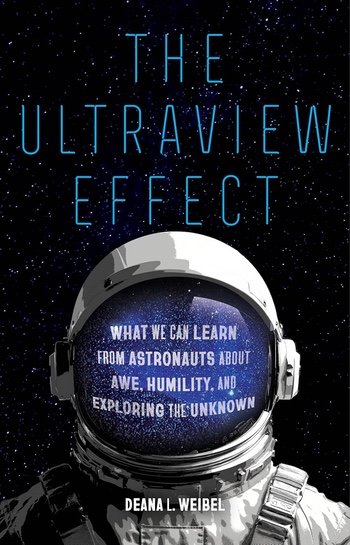
| As one astronaut put it, “We don’t know crap about anything. We really don’t.” |
She calls this experience the ultraview effect, as it is beyond, or ultra, the overview effect. Only a few astronauts she has talked to said they have experienced something like it. An Apollo-era astronaut she calls Zack—she uses pseudonyms to protect the identities of those she interviews—discussed how, while on the other side of the Moon from both the Sun and Earth, he could see a “sheet of light” as his eyes adjusted to the darkness. A shuttle astronaut said he saw a “hard white wall” when looking out into the sky from within a darkened orbiter cabin, while another was able to better see the colors of stars and planets.
That experience of seeing an unfiltered universe provided a perspective shift for those astronauts, she writes, an “overwhelming sensation” that comes from “confronting humanity’s profound ignorance and the immense unknowns of the universe.” As Zack put it, “We don’t know crap about anything. We really don’t.”
The ultraview effect is a combination of three effects. One is the awe astronauts feel after seeing the universe in this new way, what 18th century philosopher Edmund Burke described as a “delightful horror” from the overwhelming nature of the experience. It’s followed by humility as they appreciate how little we know about that universe they have glimpsed in a new way, and curiosity to learn more about it.
The effect is rare: it is surprisingly difficult to get a good view of the universe while in space, given the brightness of the Sun and the Earth and even the glare of internal lights reflecting off windows in spacecraft. With only a few people reporting it, one might be skeptical if the ultraview effect is a real phenomenon, but Weibel makes a compelling case that there is something happening.
The Artemis 2 astronauts provide a bit of additional evidence for this. “It’s very hard to grasp what we just went through,” commander Reid Wiseman said at a press conference days after their return. He recalled, though, turning to his three crewmates when the Orion spacecraft entered into eclipse, passing behind the far side of the Moon with the Sun and Earth out of view, and saying, “I don’t think humanity has evolved to the point of being able to comprehend what we are looking at right now, because it was otherworldly and it was amazing.”
As humans return to the Moon, there may be more opportunities for such “otherworldly” views that create the cascade of awe, humility and curiosity that The Ultraview Effect describes. It may be just as profound as the overview effect has been on putting our planet into perspective.
Note: we are now moderating comments. There will be a delay in posting comments and no guarantee that all submitted comments will be posted.