Security and sustainability in space: a proposed cap-and-trade model for orbital debris mitigationby Isha Gupta
|
||||||||||||||||||||||
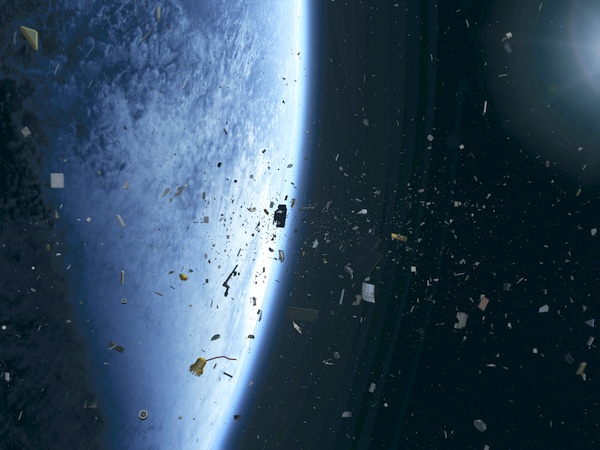
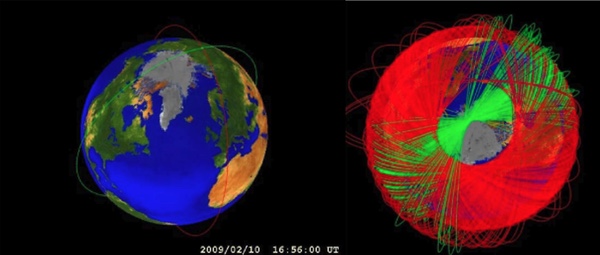 Figure 1: Debris paths of Iridium 33 and Cosmos 2251 from moment of collision to one year after collision.[2] |
The growing presence of debris also contributes to the risk of Kessler Syndrome, where a critical mass of debris leads to cascading collisions and renders orbits no longer viable.[3] Its effects go beyond the physical satellites, impacting crisis management capabilities and security stability. As space is a shared domain, it is important to take collective action transcending sovereignty concerns. Countries rely on space for military operations, economic systems, and civil society needs. As countries advance space-based infrastructure over time, the threat and impact of debris will undoubtedly grow.
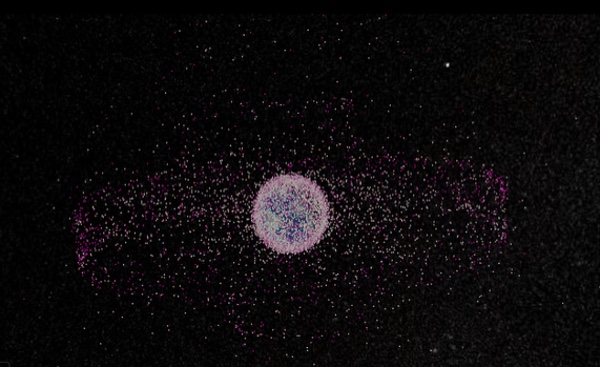 Figure 2: Depiction of inactive satellites, rocket bodies, and debris in orbit.[4] |
Existing legal frameworks do not adequately address debris mitigation but do offer a base for policy. While liability exists through launching states responsibility clauses in the Outer Space Treaty (OST), enforcement is weak due to voluntary participation. The US, European Union, and India have gone beyond international structures to implement domestic regulatory measures in an effort to mitigate debris production by its own space agencies. However, regulations are not binding for commercial entities and are not widespread for all spacefaring nations. Approaches to addressing debris are therefore reactive. While states are legally bound to the impact of debris, they lack incentives to proactively mitigate it. Compliance, at a global scale, is also lower than necessary. Despite action by specific countries, governance regulations have failed to frame debris as an important enough issue to adequately address.
| A binding, market-based cap-and-trade system would offer a scalable solution to orbital debris that preserves critical infrastructure and national security in cislunar space. |
Debris can, therefore, be categorized as a market failure, contributing to negative externalities, the tragedy of the commons problem, and free-riding. Launching costs and decisions do not reflect both the fiscal and social costs of debris creation. This highlights the need for an alternate approach to debris mitigation and the opportunity for a market-based incentive model.
A binding, market-based cap-and-trade system would offer a scalable solution to orbital debris that preserves critical infrastructure and national security in cislunar space. This article evaluates the threat of orbital debris, assessing it as a market failure. It draws specifically from the EU Emissions Trading System (ETS) by comparing emissions and orbital debris from the perspective of policy solutions. It then proposes a four-phase cap-and-trade model alongside steps for implementation, addressing political, legal, and strategic challenges. As reliance on space infrastructure and the threat of orbital debris simultaneously grow, it is instrumental that governments and commercial entities take action to protect cislunar space in the long-term.
Background
The OST of 1967 and the United Nations Office for Outer Space Affairs (UNOOSA) are the two international structures guiding debris mitigation. The OST is a binding treaty governing the activities of states in space. Article VI of the OST requires state parties to “bear international responsibility for national activities in outer space [...] by governmental agencies or by non-governmental entities.”[5] It infers that governments are responsible for actions in space by both national space agencies and by commercial entities. Building on this, Article VII attributes damages in space to launching states, stating that launching states are “internationally liable for damage to another state party.”[6]
The OST provides a framework for activities in space, deeming states as liable for any damages towards other parties. So, debris created in orbit is the responsibility of launching states and the OST holds them liable for any damage caused to other state parties. In 2010, UNOOSA’s Committee on the Peaceful Uses of Outer Space (COPUOS) published its space debris mitigation guidelines, which urges member states to voluntarily implement measures to mitigate debris. It includes seven guidelines:
- Limit debris released during normal operations
- Minimize potential for breakups in operational phases
- Limit the probability of accidental collision in orbit
- Avoid intentional destruction and other harmful activities
- Minimize potential for post-mission break-ups resulting from stored energy
- Limit the long-term presence of spacecraft and launch vehicle orbital stages in the low-Earth orbit (LEO) region after the end of their mission
- Limit the long-term interference of spacecraft and launch vehicle orbital stages with the geosynchronous Earth orbit (GEO) region after the end of their mission.[7]
While these guidelines are not binding, they provide states with general mitigation goals that target debris creation phenomena.
The US, EU, and India have all established national debris mitigation techniques that build on the UN COPUOS guidelines. Primarily, the US Space Force’s Joint Space Operations Center operates the US Space Surveillance Network, which is the most advanced debris tracking system, and holds a catalog of objects in orbit.[8] In addition to its tracking capabilities, the US established its own Orbital Debris Mitigation Standard Practices in 2001, which aims to limit the generation of long-lived debris during operations. These practices are mandatory for federal space missions and included updates in 2019 which improved “quantitative limits on debris released during normal operations, a probability limit on accidental explosions, probability limits on accidental collisions with large and small debris, and a reliability threshold for successful post-mission disposal.”[9] These practices have helped NASA’s compliance rate for end-of-mission disposal within 25 years reach 96% during the 2010s, well above the global compliance rate.[10]
ESA introduced its Zero Debris Approach in 2023, which is the agency’s broad goal to significantly limit debris production in orbit by 2030. It is mandated for the agency itself and includes eight recommendations: guarantee successful disposal, improve orbital clearance, avoid in-orbit collisions, avoid internal break-ups, prevent intentional release of space debris, improve on-ground casualty risk assessment, guarantee dark and quiet skies, and adapt recommendations beyond the protected regions.[11] Alongside the approach, ESA established joint targets through the Zero Debris Charter, a non-binding pledge for the broader space sector (see Figure 3). It outlines specific commitments to limiting debris production and satellite casualty risks while promoting information sharing and data access.[12]
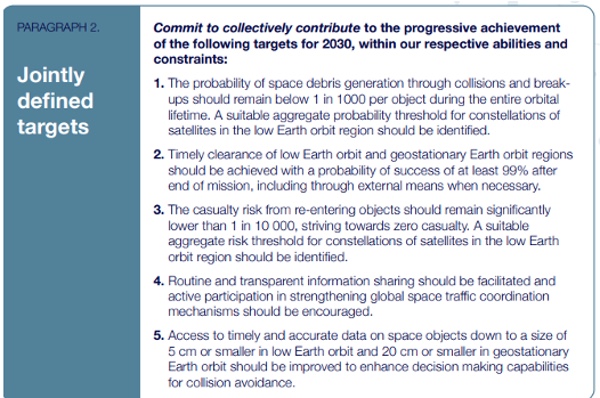 Figure 3: Zero Debris Charter Jointly Defined Targets.[13] |
India aims to achieve debris free space missions by 2030. In 2024, the Indian Space Research Organisation (ISRO) announced that one of its satellite missions “practically left zero debris in orbit” after its rocket stage was lowered to burn up in Earth’s atmosphere.[14] This technique is part of India’s initiative to achieve debris-free space missions by 2030 for all governmental and non-governmental actors.[15] India has encouraged other countries to join its initiative in the collective interest of all spacefaring nations. Debris mitigation techniques set by state governments have built on international voluntary guidelines, reflecting orbital debris as a policy priority. However, there are no economic incentives or market mechanisms set by states to promote debris mitigation.
Cap-and-trade models
The proposed cap-and-trade model here draws from the EU ETS to use market mechanisms as a tool for debris mitigation. The EU ETS is a cap-and-trade model that requires businesses to pay for greenhouse gas (GHG) emissions. Through its four phases, it aims to reduce emissions while simultaneously financing a green transition by capping emissions allowances and allowing businesses to trade allowances. The EU ETS began in 2005 with mostly free allowances and an established non-compliance fee.[16] The subsequent phases reduced free allowance allocations, broadened the types of emissions capped, and increased the non-compliance penalty. The system is now in phase four, which will last until 2030.[17]
| Applying a cap-and-trade model to orbital debris through offset credits is a market-based approach to mitigating debris, protecting national security, and maintaining peaceful uses of outer space. |
As the longest standing climate cap-and-trade system, the EU ETS “helped bring down emissions from European power and industry plants by approximately 47%, from 2023 levels compared to 2005 levels.”[18] Additionally, it has raised over €175 billion since 2013.[19] Shares from ETS revenues feed into the Innovation Fund and Modernization Fund, supporting low-carbon innovation and the EU’s energy transition.[20] The EU ETS has proven to be successful in using market mechanisms to reduce emissions and raise funds for energy innovation, inspiring its applicability to orbital debris.
Analysis
Applying a cap-and-trade model to orbital debris through offset credits is a market-based approach to mitigating debris, protecting national security, and maintaining peaceful uses of outer space. Modeling by space agencies including NASA demonstrates that actors must remove five to ten large debris objects, such as inoperative satellites, annually to prevent debris collisions that cause exponential growth.[21] However, current international voluntary structures are inefficient. Modeling from the ESA depicts Earth’s orbits in 2209 if voluntary structures persist versus if states implement more stringent space debris mitigation frameworks (Figure 4). There is a clear difference between the continuation of current efforts as opposed to implementing binding measures and maintaining healthy orbits.
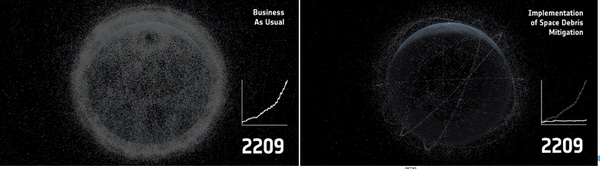 Figure 4: Debris comparison.[22] |
Additionally, the global compliance rate for end-of-mission disposal “has only averaged between 20% to 30%, much lower than the 90% required to slow the rate at which debris is generated.”[23] With voluntary guidelines, states don’t meet the necessary debris mitigation requirements to protect orbits. As it is in the collective interest of all spacefaring nations to participate, it is important that mitigation efforts are widespread and binding.
Orbital debris as a market failure
Space is a common domain since no country can claim sovereignty, leaving debris to be a collective issue. Orbits are vulnerable to the tragedy of the commons as it is a shared resource system, but countries prioritize their own benefit, deeming orbital debris as a negative externality. For example, satellites provide private benefits but contribute to collective risks. Alternatively, mitigation efforts by certain states can lead to the free-rider problem where actors benefit from debris mitigation without paying for it. This problem “cannot be overcome unless agreements are binding and there are incentives and disincentives that induce the parties to take actions that yield socially efficient outcomes.”[24] Since state-specific priorities to maintain clean orbits don’t align with collective interests, orbital debris can also be seen as a market failure.
| Since state-specific priorities to maintain clean orbits don’t align with collective interests, orbital debris can also be seen as a market failure. |
Even though launching states are responsible for debris, it can harm the infrastructure of other states. This cost is a known risk but is generally not reflected in operating budgets or decisions, contributing to collective risk. Each state and commercial entity has its own threshold for risk in a cost-benefit analysis.[25] Once that threshold is reached, spacefaring actors will attribute too much risk to operating in orbit due to debris, which threatens existing reliance on space infrastructure.
Applicability of a cap-and-trade model
A cap-and-trade model provides an alternative to the current models of national regulation, seen with the US, EU, and India. These regulations impede innovation and therefore national competitiveness in space.[26] A cap-and-trade model, on the other hand, still incentivizes innovation through debris collection and mitigation techniques while boosting economic activity. So, this market incentivizing mechanism offers a more beneficial approach to regulation.
Specifically, it incentivizes commercial entities to drive innovative mitigation techniques and trade credits. Rather than relying on state space agencies, which are vulnerable to bureaucratic timelines, the model incentivizes companies to collect and deter debris. With a growing commercial space sector, it also capitalizes on commercial contributions to economic activity and growth. The cap-and-trade model simultaneously leverages commercial capabilities while benefiting national security infrastructure in space.
A cap-and-trade model is particularly relevant because of similarities between emissions and debris. Both are vulnerable to market failures such as the tragedy of the commons, free-riding, and negative externalities. Emissions and debris are also accumulative issues, building up long-term damage over time. They aren’t national issues constrained by sovereignty but contribute to global spillovers. Like emissions, debris can be measured or estimated through the US Space Surveillance Network. A cap-and-trade model also adjusts to the proportional presence of different countries in space. While emissions allowances are adjusted for companies based on their contribution to pollution, debris allowances can also be adjusted for companies or states based on their cislunar presence.
Proposed model
The proposed cap-and-trade model is assumed to be a binding network with three main components: credits, trade, and caps (see Figure 5). In this context, credits pertain to debris production. Countries receive credits to produce a specific amount of debris. This differs from allowances, which are directly provided by the managing organization but are also for debris production. Allowances are typically provided to small or medium companies and emerging spacefaring nations.
| Model Components | |
|---|---|
| Credits | Provided to launching states for domestic allocation |
| Trade | Allowed for space agencies and commercial entities |
| Caps | Placed on launching states |
Figure 5: Components of the proposed cap-and-trade model.
While launching states receive credits, individual entities have the liberty to trade them. In compliance with OST covering launching state responsibility, debris production credits are provided to launching states because debris falls under their legal responsibility. However, since commercial entities grow their presence in space, they will likely be the actors contributing to debris and can adapt to regulation on a quicker timeline than state agencies. As states distribute credits to agencies and private actors, they can then trade credits, incentivizing them to create debris mitigation mechanisms and drive innovation. States can also generate credits through active debris removal, deorbit compliance, on-orbit servicing that hinders debris creation, and other prevention initiatives.
These measures are adaptable to each country’s space sector. For example, the Wolf Amendment prohibits NASA from bilaterally engaging with the Chinese government, so NASA would likely be prohibited from trading credits with China. This model, though, allows US private sector space companies to still trade credits with China. China’s space sector is largely made up of the China National Space Administration (CNSA) and state-owned enterprises (SOEs). The Chinese government, in this case, would receive credits to distribute to the CNSA and SOEs, which are all allowed to trade. For emerging spacefaring nations who only have a national space agency or some private sector companies, either actor would still be able to trade credits. Overall, states would be incentivized to promote commercial companies to trade credits rather than just their state agencies because they are able to both drive and adapt mitigation techniques faster than governments.
| The model prioritizes financial incentives and focuses on debris-creating states, proportionally influencing them to minimize creation for collective benefit. |
This model also allows state governments to develop their own national strategies for participation in the cap-and-trade system. Where the US would likely keep its free-market model to allow commercial entities to drive innovation, China would likely implement a government-driven strategy to align mitigation techniques between CNSA and its SOEs. States can also organize national strategies in the interest of national security “because satellites and rocket technology are proprietary, and nations and firms want to protect their military and trade” priorities.[27]
Caps are a restriction on the number of debris pieces produced. Caps are placed on launching states since debris is legally associated with them through the OST. Actors in space should have debris mitigation plans, but unintentional debris creation is realistic. So, caps account for uncontrollable debris creation while pushing for preventative measures like debris removal, on-orbit servicing, or reusable launch vehicles. States that go over debris caps will face a non-compliance fee that gradually increases over phases. As state governments are responsible for the fee, they can either implement domestic regulations or a reflective fee for private actors.
The model prioritizes financial incentives and focuses on debris-creating states, proportionally influencing them to minimize creation for collective benefit. It leads to a decline in overall debris risk through existing capabilities and technological development. Debris-creating states can buy credits from smaller spacefaring nations, providing them with funding to develop their own space programs. Additionally, non-compliance fees on excess debris go into a collective fund for remediation research or mitigation efforts. This model also benefits actors that prioritize debris removal. Those that “do not contribute to offsets will have no influence over the selection of debris removal targets,” meaning that states must take initiative to remove high-risk debris that threaten their constellations.[28]
It also promotes a circular economy model, contributing to space sustainability efforts. The model advocates for reusable and recyclable satellites, spacecraft, and infrastructure. Integrating modular or interoperable components could significantly reduce debris. This predominantly applies to rocket fragmentations and payload fragmentations which are the largest contributors to orbital debris.[29] States and commercial entities should move towards a circular economy with reusable components, therefore mitigating debris.[30] American company SpaceX has demonstrated the feasibility of reusable rocket components through its Falcon 9 rocket, which significantly reduces environmental impacts of space launches and saves costs.[31] This also will likely facilitate private sector competition and investment to develop the space economy. As companies produce sustainable rocket components, implement debris prevention initiatives, or trade credits, they engage in competition and contribute to economic growth.
Phases
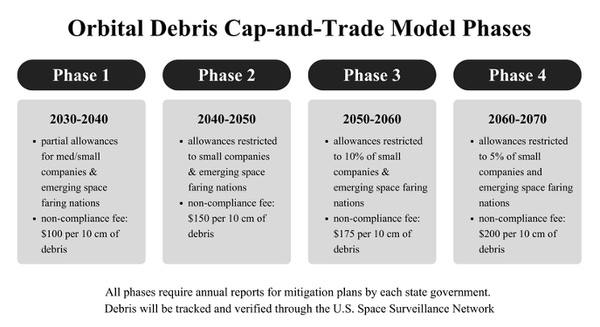 Figure 6: Phases of the proposed cap-and-trade model. |
Building off the EU ETS, the proposed model has four phases, shown in Figure 6. Each phase increases caps, reduced allowances, and increases non-compliance fees. Standard credits are provided to each country, and additional credits can be earned through debris mitigation measures or compliance. The end of a phase requires re-evaluation and adjustments over time. Additionally, states are required to submit annual reports for debris mitigation. Debris is verified and tracked through the US Space Surveillance System because it is the most advanced debris tracking system available. To account for the adoption and implementation timeline of the model, the first phase begins in 2030.
Phase One lasts from 2030 to 2040. The EU ETS is at differing increment levels, varying from two to nine years. [32] However, adaptations in space require longer timelines for planning and costs, so each phase is set for ten years with room for adjustments. Credits will be provided to each country while allowances, which are not tradable, are provided to medium and small companies as well as companies from emerging spacefaring nations. These allowances are provided to not inhibit participation in space from small countries or companies, encouraging them to still participate in the space economy.
The first phase also establishes a non-compliance fee of $100 per ten-centimeter debris since ten centimeters is the minimum amount to track measurable debris. Considering credits distributed and allowances provided, the non-compliance fee is expected to only impact countries with major space companies. Additionally, $100 is an estimated amount to deter these countries and companies from contributing to debris. The goals of Phase One are to establish a price for debris through the non-compliance fee, encourage trade through credits, not dissuade emerging spacefaring nations from participating in the space sector, and establish verification and reporting mechanisms.
Phase Two builds on Phase One, going from 2040 to 2050. It retains the same operations of credits, trade, reporting, and verification. The second phase restricts allowances to small companies and those from emerging spacefaring nations. It also increases the non-compliance fee to $150 per ten-centimeter debris.
Phase Three continues from 2050 to 2060. It further restricts allowances to 10% of small space companies and emerging spacefaring nations. This assumes that common debris mitigation techniques will develop within the next 25 years, and there will likely be a greater number of small space companies operating for specific objects. Therefore, it is reasonable to exponentially reduce allowances provided to just 10% of small companies. The third phase also increases the non-compliance penalty to $175 per ten-centimeter debris.
Finally, Phase Four runs from 2060 to 2070. It restricts allowances to 5% of small space companies and emerging spacefaring nations. It also increases the non-compliance penalty to $200 per ten-centimeter debris. The four phases influence a gradual decline in debris production. They focus on inhibiting large debris-producing entities while welcoming small companies and continuously engaging emerging spacefaring nations.
Implementation plan
Instituting an orbital debris offset system will require coordination between domestic actions, through Congress and the Executive Branch, and international actions, through the Artemis Accords and the UN. The US should lead the creation and implementation of the cap-and-trade model through NASA because the US has the greatest footprint in space. Additionally, the model will rely on the US Space Surveillance Network, making the US a key stakeholder in maintaining the model. Caps will also likely have the greatest effect on major US space companies, putting the US in the most prominent position to drive global adoption of the model. Domestically, the US government will likely require approval from Congress to both lead and adopt the proposed model.
| Although significant political, diplomatic, and legal challenges may limit the creation of a formal system, its prioritization of economic tools and security preservation is favorable for adoption. |
The relevant congressional committees to consider when proposing this model include the Senate Commerce, Science, and Transportation Committee and the House Space, Science, and Technology Committee. Approval from Congress, specifically through the House and Senate Appropriations Committees, would provide direction and funds for the executive branch to structure an orbital debris cap-and-trade system.
Considering its relevance to space, NASA is likely the best agency to lead US involvement in this offset system. However, the Department of Treasury, Department of Commerce, Department of State, Department of Defense, Department of Transportation, and Department of Energy are also relevant agencies for participation. Specifically, Commerce would lead on market regulations, the Pentagon would ensure security for American presence in space, and the State Department would lead international collaboration through the model. Interagency coordination on this matter is essential through both the National Security Council and the National Space Council. Through US leadership, the cap-and-trade model can become binding through existing institutions.
International coordination should begin with the Inter-Agency Space Debris Coordination Committee (IADC) is a group of space agencies from 13 major spacefaring nations.[33] The intergovernmental forum exchanges research on space debris, reviews cooperation, and discusses mitigation strategies.[34] The IADC is the ideal organization to formulate the details of a space debris cap-and-trade model that is agreeable for all 13 nations. It also provides a more informal setting that can analyze input from commercial actors, as compared to a multilateral organization.
Next, the model should turn to UN COPUOS, which would further refine it through its more than 100 member states. This would bring in perspectives from both spacefaring nations and emerging spacefaring nations. UN COPUOS would lead the facilitation and drafting of a resolution. It would also govern the cap-and-trade model itself as the most unbiased and largest multilateral space organization.
The cap-and-trade model resolution would then move to the UN General Assembly (UNGA), which has 193 member states. The model is unlikely to pass as a binding resolution and can face more challenges going through the UN Security Council (UNSC). So, it is more likely to pass as a non-binding resolution through the UNGA, which would require a simple majority vote.[35] This would likely garner more support from all states while looking towards spacefaring nations for ratification.
Finally, the space debris cap-and-trade model would become binding through domestic ratification, following a similar process to the OST. Since the model would have been discussed and developed by the IADC, it would likely already have support from the 13 IADC member agencies. So, the major spacefaring nations would be expected to fulfill domestic ratification. Since it also would go through the UN COPUOS, other emerging spacefaring nations would likely agree to ratification as well following their own input to the resolution. This allows the model to be implemented for relevant nations while not impeding on all nations through the UNSC resolution. Finally, a critical mass of ratification would then incentivize other nations to participate in the cap-and-trade model in the best interest of orbits as a collective good.
Rebuttal
Although significant political, diplomatic, and legal challenges may limit the creation of a formal system, its prioritization of economic tools and security preservation is favorable for adoption. Those with alternative perspectives may argue that the US is unlikely to establish a cap-and-trade model with no existing domestic system. While members of Congress have proposed climate-focused models, they never gained traction for adoption. However, cap-and-trade for GHGs is a highly politicized topic associated with climate change issues. The threat of orbital debris is directly tied to national security, which is a largely bipartisan topic. Since the commercial space sector is dominated by American companies, it does not diminish the competitive advantage for these companies. It, instead, offers an opportunity for technological innovation and potential profits based on orbital debris mitigation strategies while simultaneously protecting space-based infrastructure.
Second, administration priorities shift often in the US with presidential elections every four years. Some value space but not sustainability while others do not, leaving debris deprioritized or risking the reversal of ratification for the model. However, debris is an interdisciplinary topic that contributes to the issues of oscillating administrations, including the economy, sustainability, and national security. Additionally, binding participation for the US would require congressional approval. So, ratification and prioritization would depend on Congress rather than shifting views of administrations, providing stability to US commitment to debris mitigation.
| The proposed model represents a shift from reactive to proactive space governance. It also sets a precedent for the use of economic tools in space and identifies major advancements of the space economy. |
Third, some may argue that it is unlikely for countries, specifically US adversaries, to sign on to an agreement for a novel economic system, especially for a sector that the US dominates. However, these countries have a similar stake in national security infrastructure based in space, particularly China and Russia. It is also in their best interest to protect their critical infrastructure, military capabilities, and intelligence collection services. For China, it promotes development opportunities for their SOEs and opens avenues for private sector investment. Since credits are proportional to large spacefaring nations, commercial entities are incentivized to base operations or launches out of larger countries. It is therefore beneficial for spacefaring nations to adopt the cap-and-trade model, leading to development for their space sectors.
Fourth, launching states that are also developing countries could be disproportionately affected as they are responsible for debris but do not necessarily benefit from domestic production of space materials. Countries like Brazil are hubs for launches from foreign space agencies. However, this incentivizes these countries to act on their legal responsibility. Whether they include provisions on agreements with foreign space agencies or push for domestic contribution from foreign commercial entities, countries like Brazil can take advantage of the model to boost their domestic economy.
Conclusion
A cap-and-trade model offers an incentive-based solution to orbital debris, which is an accumulative, long-term issue. With current mitigation strategies, debris would grow exponentially. Intervention is essential and a market-based structure provides economic opportunities while simultaneously reducing debris in cislunar space. While it poses an immediate threat to national security, it will also lead to long-term degradation of Earth’s orbital environment. Debris is a governance and market failure, requiring economic incentive structures and technological innovation.
The proposed cap-and-trade model internalizes the cost of debris while incentivizing mitigation and removal. It remains compliant with the OST by placing caps on launching states and promotes private sector innovation by allowing commercial entities to trade credits. The model pulls from the EU ETS as both emissions and debris invoke accumulative harm, are measurable, and contribute to global spillovers. The market mechanisms applied from the EU ETS align economic rationale with security priorities. The model consists of four phases that reduce allowances and increase non-compliance penalties over time. It relies on the US Space Surveillance Network for tracking and verification while requiring annual mitigation plans from each country. The model also refrains from deterring participation in the space sector by small and medium companies as well as emerging spacefaring nations.
The proposed model represents a shift from reactive to proactive space governance, prioritizing the protection of critical infrastructure in space. It also sets a precedent for the use of economic tools in space and identifies major advancements of the space economy. While it creates an independent economic structure, it also has broader implications for the circular space economy, sustainability in cislunar space, commercialization, and peaceful uses of outer space. A failure to take collective, binding action on debris risks major societal and security implications for the world. Orbital debris mitigation is not just about limiting access to space but preserving it. A cap-and-trade mode offers a choice to deliberatively and proactively govern orbital debris mitigation as opposed to the risk of irreversible damage.
Endnotes
- NASA, “The Collision of Iridium 33 and Cosmos 2251: The Shape of Things to Come,” NASA, October 16, 2009, 4.
- NASA, “The Collision of Iridium 33 and Cosmos 2251: The Shape of Things to Come,” 3-4.
- NASA, “Micrometeoroids and Orbital Debris (MMOD),” June 14, 2016.
- “Privateer Wayfinder,” accessed December 17, 2025.
- “Outer Space Treaty,” United Nations Office for Outer Space Affairs, 1967.
- “Outer Space Treaty.”
- “Space Debris Mitigation Guidelines of the Committee on the Peaceful Uses of Outer Space,” United Nations Office for Outer Space Affairs, 2010, 2–4.
- “Space Debris 101,” Aerospace Corporation, November 13, 2025.
- “U.S. Government Orbital Debris Mitigation Standard Practices,” NASA, 2019, 1.
- “NASA’S Efforts to Mitigate the Risks Posed by Orbital Debris,” NASA, January 27, 2021, 3.
- “ESA’s Zero Debris Approach,” ESA, accessed December 17, 2025.
- “Zero Debris Charter,” ESA, n.d., 2.
- “Zero Debris Charter,” 2.
- Sharmila Kuthunur, “India Aims to Achieve ‘Debris-Free’ Space Missions by 2030,” Space, accessed December 17, 2025.
- “India’s Intent on Debris-Free Space Missions,” ISRO, accessed December 17, 2025.
- “Development of EU ETS (2005-2020) - Climate Action,” European Commission, accessed December 17, 2025.
- “Start of Phase 4 of the EU ETS in 2021,” European Commission, accessed December 17, 2025.
- “About the EU ETS - Climate Action,” European Commission, accessed December 17, 2025.
- European Commission, “About the EU ETS - Climate Action.”
- European Commission, “About the EU ETS - Climate Action.”
- Brian Weeden, “How America Can Become a Leader in Cleaning Up Space,” SpaceNews, February 16, 2022; Boer Deng, “Dodgeball in Space,” Slate, November 13, 2014.
- “Analysis and Prediction,” ESA, accessed December 17, 2025.
- “NASA’S Efforts to Mitigate the Risks Posed by Orbital Debris,” 3.
- Nodie Adilov et al., “Climate Change Policy as a Guide for Orbital Debris Policy,” London School of Economics and Political Science, accessed December 17, 2025.
- Shriya Yarlagadda, “Sustainability in Space Infrastructure: Interview with Charity Weeden,” Harvard International Review, April 27, 2022.
- Nodir Adilov et al., Understanding the Economics of Orbital Pollution Through the Lens of Terrestrial Climate Change, June 2, 2021, 15.
- Adilov et al., Understanding the Economics of Orbital Pollution Through the Lens of Terrestrial Climate Change, 16.
- Proc. 9th European Conference on Space Debris, Bonn, Germany, 1–4 April 2025, published by the ESA Space Debris Office Editors: S. Lemmens, T. Flohrer & F. Schmitz, (http://conference.sdo.esoc.esa.int, April 2025)
- ESA DISCOS Database, “DISCOSweb.”
- Moriba Jah, “Space Environmentalism: Toward a Circular Economy Approach for Orbital Space,” National Academies, accessed December 17, 2025.
- Jah, “Space Environmentalism.”
- European Commission, “Development of EU ETS (2005-2020) - Climate Action.”
- “Inter-Agency Space Debris Coordination Committee,” IADC, accessed December 17, 2025.
- IADC, “Inter-Agency Space Debris Coordination Committee.”
- “United Nations General Assembly Rules of Procedure,” United Nations General Assembly, United Nations, accessed December 17, 2025.
Note: we are now moderating comments. There will be a delay in posting comments and no guarantee that all submitted comments will be posted.