Review: Little Blue Dotby Jeff Foust
|
| The book sidesteps one of the big controversies regarding GPS: who deserves credit for inventing it? |
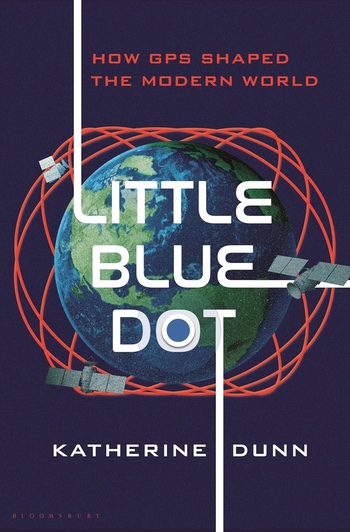
How GPS became such a dominant force in society, and the risks of reliance on it, are the themes of Little Blue Dot by Katherine Dunn. The book is not, strictly speaking, a history of the GPS program: she noted in the prologue that would require an “enormous book” devoted primarily to physics, engineering, and “US military internecine rivalry.” She argues the book takes a different approach, in particular how GPS shaped the modern world.
That results in a book that is devoted more to the highlights of GPS development, rich with vignettes if lacking in some historical details. It starts long before GPS, with the opening sections devoted to British efforts in 1940 to understand how the Germans were using radio signals to provide navigation for their bombers and come up with ways to counter them. It then leads tracking of the first satellites and the realization by engineers at the Applied Physics Lab that satellites could be used for terrestrial navigation, which resulted in Transit, a satellite navigation system that was a forerunner to GPS.
When it comes to GPS itself, Dunn dips in and out of the history of the program. That includes some discussion of its origins but also key events later, like the Soviet shootdown of an off-course Korean Air Lines jet in 1983 and, later, the first Gulf War that raised the profile of the system. It also tracks the rise of commercial users of the system, starting with systems developed by Charles Trimble and his eponymous company and concluding with a GPS chip incorporated into the iPhone. That section of the book, though, skips over many details in between: while passages hint at funding struggles for GPS in its early years, Dunn does not go into details about those problems or how the program and its advocates overcame them.
The book also sidesteps one of the big controversies regarding GPS: who deserves credit for inventing it? “In recent years, this debate has clearly hardened into a zero-sum version of GPS’s history,” Dunn writes, pitting those who believe credit should go to the Air Force and Brad Parkinson versus those who believe it should go to the Navy and Richard Easton. She defers the debate to a brief appendix, but ultimately doesn’t take a side. (“No doubt you will have an opportunity to throw gasoline on this fire, if that’s your want,” Parkinson told her of that debate, but it’s clear she declined.)
The final, and most interesting, part of the book examines the challenges facing GPS now that it has become widely accepted. GPS faces growing problems with both jamming, denying users access to signals, as well as spoofing, presenting false data. That can have obvious impacts to aviation and shipping but also in the myriad other ways GPS is used. Dunn writes GPS spoofing in the Middle East since the conflict in Gaza started in 2023 affected ridesharing apps and even dating services: “people in Lebanon were shown potential matches in Tel Aviv and Israelis were shown matches in Beirut.”
The book acknowledges that GPS has struggled to keep up with these problems, and suggests it may be falling behind other global navigation satellite systems, like China’s Beidou, but does not go into detail about that or other solutions, which could include commercial alternatives. (On Monday, Xona Space Systems, a startup with plans for a low Earth orbit navigation satellite system whose stronger signals will be more resistant to jamming and spoofing, announced it had secured FCC approval for the spectrum its satellites will use.) A reader will finish Little Blue Dot perhaps better aware of the value of GPS, but also perhaps a little less willing to trust the accuracy of that little blue dot on their phone.
Note: we are now moderating comments. There will be a delay in posting comments and no guarantee that all submitted comments will be posted.