The Soviet space program as seen from Washington, 1964–1968by Andrea Zullo
|
| The answer that emerges from a handful of now-declassified documents, read as far as possible without the illusion of hindsight, is neither that of a blind intelligence service nor that of an omniscient one. |
It is worth starting here because this small fact illuminates a more general feature of the way the United States observed the Soviet space program in the 1960s. The superpower that the popular imagination painted as closed and self-sufficient was buying part of its own training infrastructure on the Western market, and its adversary recorded the fact with a bookkeeper’s precision. The question that runs through this article is how well, in concrete terms, American intelligence managed to read that program: what it saw clearly, what remained closed to it, and where it went wrong.
The answer that emerges from a handful of now-declassified documents, read as far as possible without the illusion of hindsight, is neither that of a blind intelligence service nor that of an omniscient one. It is rather that of an observer highly skilled at mapping what the Soviet system was forced to expose, disciplined in inferring from a few material clues, but structurally incapable of penetrating the core that the system truly protected, and periodically exposed, in the public sphere, to the noise of rumor.
What could be seen
The December 1964 report under examination devoted to Soviet biomedical research and the human spaceflight program, is largely a map of people and places, with an information cutoff set at September 1 of that year.[1] In it, the analysts reconstructed with considerable accuracy the skeleton of the medical and training complex: the cosmonaut training center northeast of Moscow, an institute of aviation medicine, an engineering academy where the cosmonauts received their theoretical instruction, and a research site where the space suit and the emergency ejection system were developed. They had the names of the leading medical and scientific figures, with their posts and affiliations, from the head of the cosmonauts’ medical services to the vice president of the Academy of Medical Sciences. They knew about the aircraft flights used to simulate weightlessness briefly, about the isolation chamber, the vestibular training, the centrifuge.
It is worth asking how they had arrived there, because the answer explains their successes as much as their limits. Almost everything came from what the Soviet system, paradoxically, was forced to let out: the open scientific literature, the medical journals, the official photographs, the proceedings of the international congresses that Soviet scientists attended. Space medicine was, by its nature, an academic activity that produced publications and well-known figures. It was visible because it had to be. For precisely this reason Washington knew a great deal about it: the 1964 report lists dozens of institutes and more than a hundred researchers, together with their locations.
The fact about the equipment bought in the West deserves emphasis because it is the kind of information that is taken for granted today and that, at the time, was a small analytical achievement. To establish that the centrifuge on which Gagarin had been tested was West German and operational from March 1961, and that a Swedish centrifuge had served for Tereshkova, meant having tracked contracts, shipments, and installations of industrial equipment across the Iron Curtain. This was economic and technical intelligence of good quality, concrete and, as far as today’s sources allow one to judge, substantially correct.
The void at the center of the map
Yet the same report that described the medical complex with such care admitted, on the decisive point, that it knew almost nothing. To the question of who directed the Soviet space program, the answer was an admission of ignorance: the top authority was believed to sit under the Council of Ministers, but, the analysts wrote, very little information existed about its existence and its composition. In the attached organizational chart, that apex was a box the CIA itself labeled as hypothetical.
| The CIA knew the doctors because the doctors published. It did not know the engineers because the engineers were buried inside anonymous design bureaus. |
A distinction is needed here because it is easy to confuse two different things. The analysts were not unaware that a chief designer existed. The name of Sergei Korolev, the engineer who was the true driving force of the entire enterprise, appears in the report only once and almost in passing, as the presumed designer of the launch vehicle used for the manned flights. What was missing was not the name but an understanding of his weight: no perception of his absolute centrality, no notion of the system of experimental design bureaus, first among them the one Korolev directed, that held up the entire program. The engineering heart was invisible to Washington and remained so for a long time. Korolev’s identity was, in any case, a state secret until his death during surgery in January 1966; until then the Soviet press referred to him only as “the chief designer.”
The contrast is instructive. The CIA knew the doctors because the doctors published. It did not know the engineers because the engineers were buried inside anonymous design bureaus, identified in the documents only by plant numbers. American intelligence, in other words, saw very clearly the part of the program that was, by definition, exposed and stayed in the dark about the part that was, by definition, protected. The analytical risk in such a situation is subtle but real: to mistake the visible portion for the whole, and to reconstruct the program’s physiognomy from its academic shell rather than from its industrial core. This is not a failure of skill but instead the consequence of the geometry of secrecy.
Reading the words, guessing the intentions
A second document, a confidential chronology of Soviet public statements on a possible manned lunar landing, gathering declarations from January 1965 onward, shows another tool of the trade: the analysis of rhetoric.[2] In it, the analysts had collected and translated a sequence of statements by academics and officials that appeared in the Soviet press in the spring of 1965, just after the Voskhod 2 flight during which Aleksei Leonov had carried out the first spacewalk in history. The tone was triumphal and forward-looking: the docking of spacecraft in orbit, the building of stations, man soon setting foot on the Moon.
Tracking that rhetoric was useful, but it was also a double-edged blade, and here one should be cautious in judging its value. The public statements of a closed system are not a window into its plans but rather an instrument of those plans. In 1965, the Soviet leadership spoke of the Moon with confidence precisely while its real lunar program was in deep difficulty and would later fail. To measure intentions by the volume of propaganda meant risking the overestimation of an undertaking that the propaganda served, among other things, to inflate. This is a limit of method that should be noted, without turning it into an accusation: in the absence of access to the engineering core, rhetoric was one of the few available signals, and had to be treated for what it was, a clue to be weighed and not a confession.
Intelligence at its best
If 1964 shows the limits of observation, other documents show it at its best. A February 29, 1968, assessment, plainly titled after the Soviet manned space program, is an exercise in disciplined inference from limited evidence, and it ages remarkably well.[3]
In it, the analysts correctly read the slowdown of the program after the death in April 1967 of the cosmonaut Vladimir Komarov, who perished on the reentry of Soyuz 1, and they attributed that slowdown partly to the development of a new spacecraft and partly to the shock of the accident. They then pointed to the automatic docking of two Soyuz-type vehicles in October 1967, under the cover designations Cosmos 186 and Cosmos 188, as proof of the Soviet ability to carry out complex and fully automatic operations in space. From this they drew the inference that the next phase of the program would consist of longer and more complex operations in Earth orbi—a path not far, in logic, from the one the Americans had followed with Gemini.[3] That is what happened: first came the first docking of crewed spacecraft and the transfer of cosmonauts, in January 1969, then the Salyut stations.
| The intelligence service that had correctly foreseen, years earlier, the arrival of a rocket far larger than the Proton failed to notice its first flight. |
There is a second thread, even more surprising, and it must be followed to the end precisely because it begins earlier. Back in 1965 the analysts had reasoned about the heavy launch vehicle.[2] They estimated that the new Proton launcher had a thrust on the order of two and a half million pounds, and they held that a manned lunar landing would require a much larger rocket, of about five million pounds of thrust: the kind of vehicle that the Saturn V was for the Americans. That rocket had not yet been seen in flight, but its necessity was deduced from the limits of what could be seen. It really existed: it was the N1, the gigantic Soviet lunar launcher. Years before its first flight, intelligence had correctly deduced its existence and its function.
That line of reasoning honestly sums up the method and its boundaries. The analysts knew they could not see the engineering core until it moved: the development of Soviet space hardware remained hidden until the flight tests. For this reason, they built their conclusions on the few objects the program was forced to expose: a heavy satellite in orbit, two automatic spacecraft docking, a spacecraft that fell silent after an accident. From those few points they traced a trajectory that time would confirm.
The noise
One last part of the story remains, and it is the one in which the United States got things most wrong, even if those who erred were not the intelligence analysts. In the autumn of 1967, a few months after Komarov’s death, the American public sphere was crossed by a persistent rumor: that the Soviet Union had lost far more men in flight than it admitted, and that Washington knew it and kept silent. An article by the researcher Julius Epstein, of Stanford’s Hoover Institution, published in the American press in October 1967,[4] claimed that the Soviets had lost 11 men in space in addition to Komarov, and attributed the confirmation of those numbers to a classified document delivered to the White House. The article dusted off the best-known rumors of the kind, from the alleged cosmonaut announced by the communist press in April 1961 to the insinuations contained in the so-called Penkovsky Papers, and denounced a supposed agreement of January 13, 1961, between the defense apparatus and the civilian side not to disclose failures.
Almost nothing in that funereal accounting holds up to the test of facts: these were rumors, not data, and time has disproved them. But the contrast with the intelligence documents is precisely what makes the episode instructive. While the public sphere let itself be carried away by the myth of the lost cosmonauts, the sober 1968 assessment treated Komarov’s death for what it was, the only serious known setback of the program, without endorsing any count of imaginary victims.[3] The institutional part of the American apparatus, the one that reasoned from data, was more accurate than the public part, the one that reasoned from fears. The US was right and wrong at the same moment, depending on which room one looked at.
The overall picture, and a final irony
Lined up together, these documents tell a coherent story. American intelligence was extraordinarily good at mapping what the Soviet system was forced to expose, from the medical complex to the academic figures to the equipment bought in the West. It was disciplined and often right when it inferred from a few material clues, as in 1965 and in 1968. But it was structurally blind to the core that the system truly protected, the design bureaus and their chiefs. This blindness was not a failure of skill but a consequence of what the adversary did or did not let out. And in the moments when the data was missing, the empty space filled with rumor.
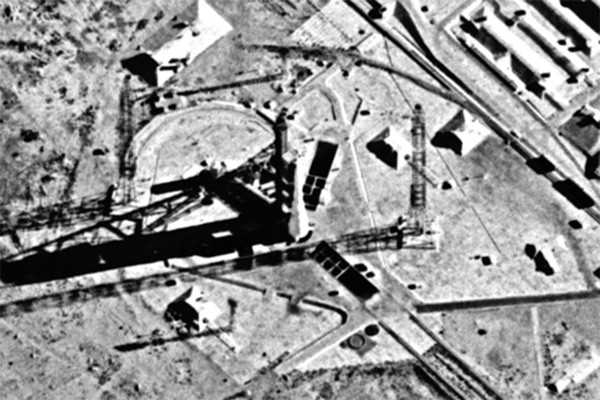
There is, finally, an irony that closes the circle. The launch vehicle that intelligence had deduced to be necessary as early as 1965, the N1 lunar rocket, made its first launch attempt on February 21, 1969, and it was a failure. According to the reconstructions of later historiography, American technical surveillance did not catch that first launch, and for years its occurrence was denied, while it was British intelligence that recorded it; the same American systems would, by contrast, detect the three subsequent launches. It is a detail that describes with precision the limit discussed here: the intelligence service that had correctly foreseen, years earlier, the arrival of a rocket far larger than the Proton, yet failed to notice its first flight. It is there, in the gap between what can be deduced and what can be seen, that one best measures what it truly meant to observe the Soviet space program from Washington.
References
- Central Intelligence Agency, Office of Scientific Intelligence, “The Soviet Bioastronautic Research and Manned Space Program,” OSI-RA/64-4, 22 December 1964 (CIA-RDP78T05439A000400350028-3).
- Central Intelligence Agency, Office of National Estimates, “Review of Estimate on Soviet Manned Lunar Landing,” with the appended “Chronology of Selected Soviet Statements on a Manned Lunar Landing, Since January 1965,” 13 September 1965 (CIA-RDP79R00904A001200030027-9 and CIA-RDP79R00904A001200030042-2).
- Central Intelligence Agency, Directorate of Intelligence, “The Soviet Man in Space Program,” 29 February 1968 (CIA-RDP70B00338R000200130021-9).
- Julius Epstein, “Russia probably has lost 11 men in space,” Houston Chronicle, 5 October 1967 (CIA-RDP69B00369R000200240026-0).
Note: we are now moderating comments. There will be a delay in posting comments and no guarantee that all submitted comments will be posted.