Wishing for rocketsby Jeff Foust
|
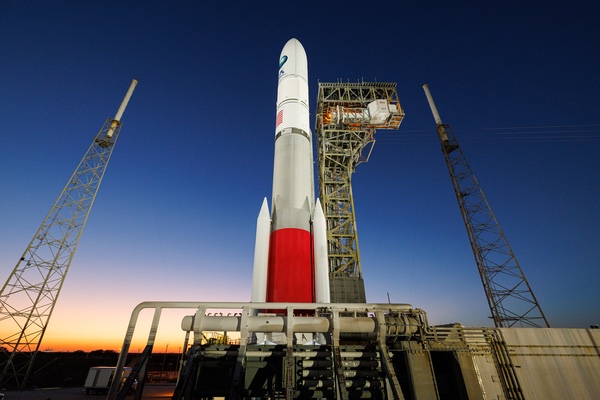
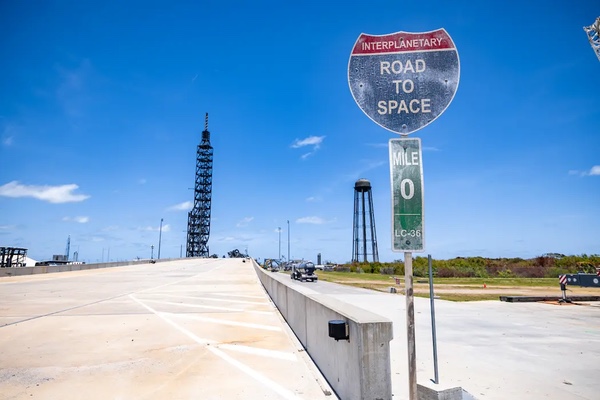 Blue Origin continues to rebuild Launch Complex 36 and return New Glenn to flight after an explosion in May. (credit: Blue Origin) |
Wishing for rockets to resume launches
The lineup of rockets currently grounded is impressive—or would be, if it wasn’t maddening to customers. Blue Origin’s New Glenn, of course, is out of service since an explosion during a static-fire test in May that seriously damaged its Cape Canaveral launch pad. ULA’s Vulcan has not flown since February, when a solid rocket booster on a launch suffered a “significant performance anomaly,” although the rocket was able to successfully complete its mission. India’s PSLV rocket, a workhorse for India’s space program and a popular option for some companies, has suffered back-to-back failures. Last week, Japan’s H3 performed its first operational launch since a failure last December (it did conduct a successful test flight in June of a different variant of the vehicle, which carried only a few smallsats.)
That is significant capacity sidelined, to the detriment of customers ranging from the US Space Force to Amazon, whose Amazon Leo constellation is relying in large part on New Glenn and Vulcan.
| “They’re targeting this year. We’re not betting on that necessarily,” said AST SpaceMobile’s Wisniewski on New Glenn’s return to flight. |
How long those vehicles will remain out of service remains unclear. India has provided few details about the two PSLV failures, other than both involved the rocket’s third stage; some recent media reports indicate the vehicle could return to flight in September. Blue Origin has been consistently stated since shortly after the pad explosion that it is trying to get New Glenn flying again by the end of the year, which requires both resolving the issue that caused the explosion and rebuilding the pad.
Blue Origin said earlier this month it traced the pad explosion to a liquid oxygen valve in a BE-4 engine in the rocket’s first stage, and was taking steps to fix that problem. It is also working effectively 24/7 to rebuild the pad, incorporating changes in the pad design rather than do a straight rebuild to speed things along.
Customers are cheering Blue Origin on, but are not necessarily counting on having New Glenn flying by the end of the year. “They’re targeting this year. We’re not betting on that necessarily,” said Scott Wisniewski, president of AST SpaceMobile, in his company’s earnings call last week. AST SpaceMobile is counting on New Glenn to launch its constellation of broadband direct-to-device satellites, along with SpaceX’s smaller Falcon 9. “We’ll be happy if they do it, but we’re not betting on that in our numbers.”
ULA has not announced when it expects Vulcan to resume launches. In an earnings call last month, Northrop Grumman, which makes Vulcan’s solid rocket boosters, said it had implemented corrective actions but suggested redesigned boosters might not be ready until the end of the year. Vulcan can launch smaller missions without any boosters, but most missions on its manifest require two or more. Its return to flight is further complicated by the BE-4 engine issue discovered by the New Glenn explosion.
That has put financial pressure on the company, which early this year said it expected to launch Vulcan 16 to 18 times this year. In July, Lockheed Martin and Boeing, which each own 50% of ULA, said in SEC filings that they provided loan guarantees to ULA because the grounding was “negatively affecting ULA’s financial condition,” as Lockheed stated.
| “While the window for an end-of-year [Neutron] launch is narrowing, the work we’re doing now is about risk trading, balancing the timing of our first launch against how quickly and seamlessly we can scale our 10th launch,” Beck said. |
Even rockets that have returned to flight have been slow to do so. In March, Firefly Aerospace successfully launched its Alpha rocket for the first time since an April 2025 launch failure. (The company also suffered the loss of an Alpha booster during a static-fire test in September of 2025, delaying the vehicle’s return to flight.) Firefly said then it would move on to an enhanced “Block II” version of Alpha, with stretched first and second stages and upgraded subsystems, set to start flying in late summer.
In an earnings call last week, the company said it was now targeting the fourth quarter for that next Alpha launch. It also said it would conduct just one more launch this year after that, rather than two previously planned.
Firefly’s CEO, Jason Kim, said in the call that the company has sold out the majority of its manifest of Alpha launches in 2027, but declined to say how many launches that would be. “We’re not going to talk about guidance for 2027,” he said when asked about the cadence of Alpha launches.
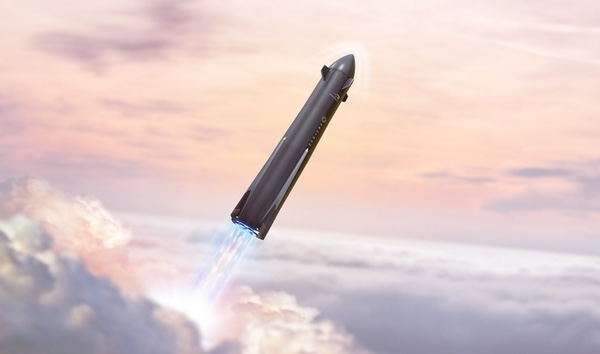 Rocket Lab’s Neutron, originally planned to begin launches in 2024, could see its first launch slip to 2027. (credit: Rocket Lab) |
Wishing for rockets to begin launches
A similar industry lament involves rockets in development. There is a wave of vehicles that promise to introduce more capacity for customers, if they ever make it to, and off of, a launch pad.
One of them is another Firefly vehicle, Eclipse. In 2022, Northrop Grumman announced it would partner with Firefly to develop a new first stage for Northrop’s Antares rocket—replacing one built in Ukraine with Russian engines—as a step towards a new medium-lift rocket. The companies said at the time they expected the revised Antares vehicle with the Firefly first stage, called Antares 330, to begin launches as soon as 2024, with the medium-lift vehicle to follow in 2025.
As of August 2026, though, that vehicle, now called Eclipse, has yet to launch. In the earnings call, Kim discussed progress the company was making on Eclipse but provided few details about the schedule. “We’re just working toward our first launch,” he said, which he estimated to be no earlier than 2027.
Rocket Lab is in a similar situation with its Neutron medium-lift rocket. Announced in 2021, Rocket Lab originally planned to conduct its first launch in 2024. A year ago, the company said it was pushing to carry out that launch by the end of 2025, but said it was on a “green light” schedule with little schedule margin to achieve that.
That launch then slipped to 2026, but in an earnings call last week, CEO Peter Beck said the window for launching Neutron this year was “narrowing.”
“While the window for an end-of-year launch is narrowing, the work we’re doing now is about risk trading, balancing the timing of our first launch against how quickly and seamlessly we can scale our 10th launch,” he said. In the call, he committed only to getting the first Neutron on the pad at Wallops Island, Virginia, in the fourth quarter of this year, with significant testing of the rocket planned there before a launch attempt.
| “We expect the cadence of flights to be increasing rapidly and, probably a year from now, we will be doing at least one flight a day, possibly more,” Musk said of Starship. |
Schedule slips are also issues at both ends of the launch vehicle spectrum. In Europe, there is a race among several startups working on small launchers to be the first to reach orbit, one with no clear leader. Isar Aerospace launched its first Spectrum rocket in March 2025, only for it to malfunction and crash shortly after liftoff. The company was gearing up for a second orbital launch in January, but that launch has been repeatedly delayed by technical issues (including one last-second launch scrub in March) with no clear launch date.
Rocket Factory Augsburg, meanwhile, has been working on its RFA ONE rocket, planning a first orbital launch attempt in August, two years after it lost a first stage in a static-fire test. (Notice a trend here?) However, the company postponed the launch attempt because of issues with the rocket that required destacking it from the pad at SaxaVord Spaceport in the Shetland Islands. OHB, the German aerospace company that owns a majority stake of RFA, said earlier this month it still expects a first launch some time this year.
At the opposite end of the spectrum is SpaceX’s Starship, which has now performed 13 suborbital test flights over more than three years without yet attempting an orbital flight. In a company earnings call earlier this month, its first since going public in June, CEO Elon Musk said the flight next will be an orbital one, deploying Starlink satellites to an “operational orbit” while attempting a catch of the Starship upper stage at Starbase. He said then the launch was planned for the end of August, although NASA administrator Jared Isaacman said Fridya he expected that launch in early September.
“We expect the cadence of flights to be increasing rapidly and, probably a year from now, we will be doing at least one flight a day, possibly more,” he stated. Given Musk’s propensity for aspirational timelines, few in the industry expect Starship to be flying daily in a year.
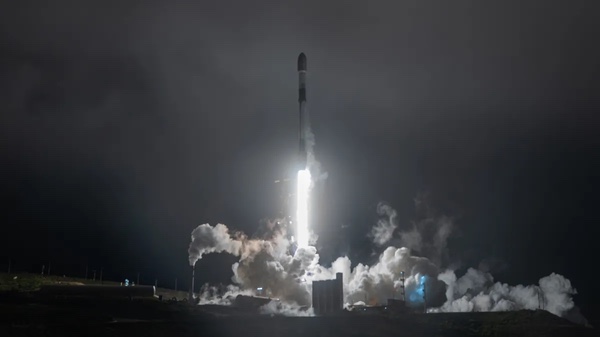 A Falcon 9 lifts off on the Transporter-17 rideshare mission in July. (credit: SpaceX) |
Wishing for rideshare launches
Those doubts about a rapid increase in Starship launches are rooted in the experience of SpaceX’s Falcon 9, which launched 165 times—a little less than once every two days—in 2025, 15 years after the rocket’s debut. That was still a record for the company and accounted for half of all orbital launches worldwide last year.
While Falcon 9 has a been a godsend for most of the space industry, not to mention NASA and the US national security space community, there are questions about its future as SpaceX shifts to Starship.
Those concerns started to come to light a few months ago, as companies that have used SpaceX’s rideshare missions, including Transporter launches to Sun-synchronous orbit and Bandwagon flights to mid-inclination orbits, reported no availability for missions after 2028. While SpaceX has not commented publicly on the long-term future of those rideshare launches, companies that relied on them for regular and affordable access to orbit now worry those missions will go away.
| “It is not something that is keeping us up at night right now,” sSerafini said of the future of SpaceX rideshare launches. |
Other companies are stepping in, offering their own rideshare launches by working directly with SpaceX. In May, Exolaunch, a German company that has arranged launches of hundreds of satellites on SpaceX rideshare missions, said it had purchased two Falcon 9 launches which it will use for its own rideshare missions to Sun-synchronous orbits. SEOPS, another aggregator, announced at the same time it purchased its own Falcon 9 for a Sun-synchronous rideshare mission called Waymaker.
SEOPS announced on Monday that, given the high demand for that first Waymaker, it will fly another to a mid-inclination orbit. Both are scheduled for 2028, while Exolaunch’s missions are planned for 2027 and 2028.
Evan Hoyt, president of SEOPS, said in an interview that the first Waymaker mission is “90-plus percent” sold out after less than three months. The second Waymaker, he said, will use a Falcon 9 SEOPS previously ordered for a geostationary orbit rideshare mission; demand for the LEO missions, he noted, is far higher than for GEO.
Some companies have emphasized that, amid the uncertainty about the future of those rideshare launches, they have locked in capacity for the foreseeable future. Executives with HawkEye 360 and Spire Global, two satellite operators who have made extensive use of SpaceX rideshare launches, noted last week they have secured launches through 2028.
“It is not something that is keeping us up at night right now,” said John Serafini, CEO of HawkEye 360, which uses satellites for radiofrequency geolocation services, primarily for government agencies. “We have the benefit of being locked down for the next two years, but we are looking at and we are considering different options.”
Those different options, he said, include looking at launch vehicles under development from companies like Firefly and Stoke Space, as well as Rocket Lab, whose Electron rocket has launched several HawkEye 360 satellites. “Fortunately, if this is two-plus years out, that gives more time for other platforms to become viable,” he said.
Hoyt said that companies need to start planning further ahead than they used to, looking out two to three years in advance for launch services. “They don’t seem to be operating in any kind of panic,” he said of customers. “They’re just responding to what they see and what they assess the market’s doing.”
The end of SpaceX rideshare services—at least those operated by SpaceX itself, rather than companies that purchase Falcon 9 launches for rideshare missions—would be a precursor to the gradual phaseout of the Falcon 9 itself as SpaceX moves to Starship.
“While we have steadily increased our Falcon 9 launch cadence over recent years, we expect Falcon 9 launches to decrease over time,” the company stated in May in the prospectus for its IPO. “While Falcon 9 currently drives the majority of our launch activity, we expect Starship, which is designed to be the world’s first fully, rapidly, reusable launch vehicle, to become a larger contributor to our launch volume as it enters operational service.”
| “I can’t stress enough that the demand for launch capacity is amplified right now. We’ve never seen launch capacity so constrained,” said Firefly’s Kim. |
The company didn’t give a schedule for retiring the rocket, but company executives said last year that SpaceX was approaching the peak of Falcon 9 launches in anticipation of moving to Starship. However, the company hinted it would continue to operate the Falcon 9 for some customers, particularly the government, for the foreseeable future.
“As Starship progresses toward full operational utilization, the Falcon 9 and Falcon Heavy platforms will remain key assets for specialized missions, including NASA crew rotations and national security payloads,” the company stated in its prospectus.
Even without the debate about Falcon 9’s long-term future, it’s clear that the current state of the market is one where supply of vehicles is constrained by developmental delays and technical problems and doesn’t match the growing demand.
“I can’t stress enough that the demand for launch capacity is amplified right now. We’ve never seen launch capacity so constrained,” said Firefly’s Kim.
“I’ve personally never seen launch so constrained in pretty much ever,” said Rocket Lab’s Beck. “The amount of launch that's left in the industry is really, really tight.”
That suggests the Cambridge academics should revise their price forecasts, at least in the near term.
Note: we are now moderating comments. There will be a delay in posting comments and no guarantee that all submitted comments will be posted.