Three wires, three zerosThree failed space-tech investments and the warning signs I paid to ignoreby Florian Gutzwiller
|
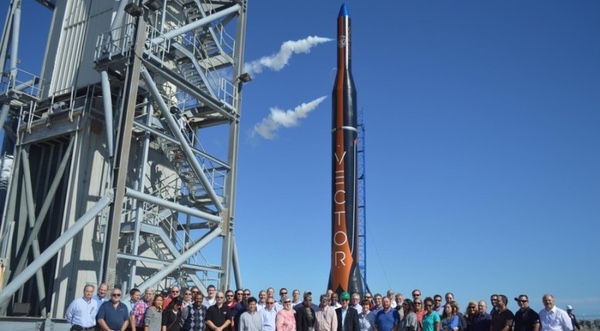
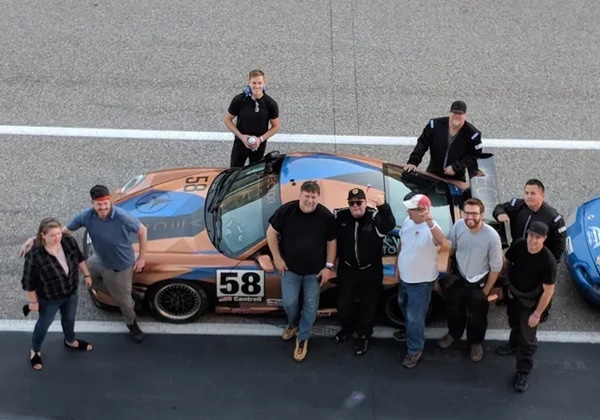 James Cantrell (center), founder of Vector Launch. |
Vector Launch: one job
Vector had one job: put a rocket into orbit. It raised more than $100 million, assembled a strong customer list, and promised an orbital launch in 2018. That launch never came. Two suborbital hops, but nothing reached orbit.
| I wired money into a founder I knew through a deck, a reputation, and someone else’s signature. That was not bad luck. It was skipped work. |
Instead of directing every available dollar toward that milestone, Vector expanded across three sites and pursued a second product line. Manufacturing was in Tucson, rockets in Huntington Beach, and satellites in San Jose. Executives turned over, internal factions formed, and the rocket stood still.
By August 2019, the financing broke. Sequoia withdrew its support, lenders froze the accounts, and employees found the doors locked. Jim Cantrell left, and Chapter 11 followed in December. Lockheed Martin acquired parts of the satellite business. The launch company—the reason Vector existed—disappeared.
Cantrell is the reason: he chose sprawl over orbit. But my mistake came earlier. I never met him. His SpaceX credentials opened the door, and Sequoia’s investment held it open. I let another investor’s conviction replace my diligence.
One meeting would have told me. I wired money into a founder I knew through a deck, a reputation, and someone else’s signature. That was not bad luck. It was skipped work.
 Phased array antennas are “magic in the hands of the right people” |
ALL.SPACE: activity without arrival
ALL.SPACE began in 2013 as Isotropic Systems with a thesis I still believe was sound: one software-defined terminal able to connect across bands and orbits.
Over the next decade, the company raised roughly $200 million. It produced demonstrations, partnerships, memoranda of understanding, thousands of possible configurations, and a new name. What it did not produce was a repeatable commercial product.
Eleven years after its founding, the company was still raising money to fund the launch of its first terminal. That sentence should have ended the discussion.
| In hardware, technically superior and four years late is not “nearly there.” It is late. |
By then, founder John Finney had been replaced, costs were being cut, and the company was trying to finance its way into a market that had moved on without it. A rescue round failed. The remaining recapitalization required existing investors to put in more money or accept severe dilution. I declined.
Months later, York Space Systems acquired the company in a transaction reported at $355 million. My return was zero. The headline value did not matter; the capital structure did. Whatever value remained flowed to claims senior to mine.
That was the financial lesson, but my operating mistake was simpler: I studied the technology and ignored the clock. Competitors were shipping while ALL.SPACE was still refining configurations. In hardware, technically superior and four years late is not “nearly there.” It is late.
The management is the reason: it spent a decade converting interest into announcements instead of contracts. I mistook activity for progress and technical possibility for commercial timing.
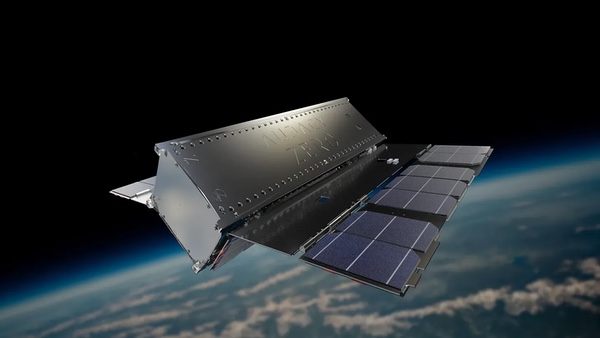 The Audacy Zero demonstrator |
Audacy: the diagram
Audacy was an architecture before it was a company, and I fell in love with the architecture.
Ralph Ewig, formerly of SpaceX, proposed an always-on relay network in medium Earth orbit: three large satellites, ground teleports, and an internet for space. The roadmap extended naturally to the Moon and Mars. It was a nine-figure infrastructure project financed from a seed-stage base.
That gap was the company. Audacy announced customers, service dates, and future coverage. The only hardware it flew was a small demonstrator launched in December 2018. It never established contact.
Two cofounders left, the offices closed, and the debt defaulted. A secured lender foreclosed on the assets and sold them to a defense contractor, which later abandoned its version of the network.
My investment was a subordinated convertible note. The word subordinated eventually became the entire outcome.
The secured lender, lawyers, and priority claims were paid first. I recovered only a small fraction of the principal. A final installment was said to be coming. Years later, it remains unpaid.
| A founder who won’t accept help building the thing is not building the thing; he is protecting the dream of it. |
But the warning had appeared well before the default. At Steins Beer Garden in Mountain View, I introduced Ewig to the CEO of another portfolio company—a satellite team with real flight heritage that could have helped build the hardware.
Ewig rejected it. Not the idea—the consideration. A founder who won’t accept help building the thing is not building the thing; he is protecting the dream of it.
Ewig is the reason: he mistook grandeur for a business, and Mars-scale ambition for a plan. I saw the signal and wired anyway. I bought the diagram, not the company.
The pattern
The companies failed through different mechanisms, but the operating mistake was the same: scale before proof.
Vector had three sites and two product lines before orbit. ALL.SPACE had thousands of configurations before a repeatable commercial terminal. Audacy had a roadmap to Mars before a working link.
Each company had one milestone that mattered: a rocket in orbit, a terminal in a customer’s hands, or a signal that closed. Everything else was scenery. Announcements filled the space where milestones should have been. Promise dates moved, but publicity continued. I read that cadence as momentum. Press releases are what a company emits when it has nothing to ship.
The boards acted only after the companies had become financing emergencies. Yet in every case, value survived the original equity. Assets were sold, technology was acquired, and spectrum or intellectual property remained useful. The value simply flowed past me.
That is what early investing in capital-intensive companies means. You do not merely take technical and market risk. You sit behind lenders, rescue capital, structured preferences, and whoever still has cash when the company runs out of it.
A strategic acquisition can validate the technology and still return nothing to the investors who funded its development. Being early is a subordinated position.
What changed
The losses did not become gifts. Instead, they became rules.
| I did not lose money betting against space. I lost it backing founders who loved the size of the idea more than the boring work of finishing one thing. |
Before money moves, there must be one binary milestone, named and dated. A second product line before the first ships is a veto. Multiple sites before one shipped product are overhead, not scale. Shipments matter more than announcements.
I now model the recap before the exit. I assume the next capital will arrive senior and ask what my position would be worth beneath it. I judge founders by what they have finished, not by the companies they once stood near. And, I meet the person.
The three losses were three versions of the same failure on my side. At Vector, I outsourced conviction to Sequoia. At Audacy, I saw the warning and paid to ignore it. At ALL.SPACE, I diligenced the technology and skipped the market clock.
I did not lose money betting against space. The same physics produced companies that worked. I lost it backing founders who loved the size of the idea more than the boring work of finishing one thing. It’s people. Always.
Note: we are now moderating comments. There will be a delay in posting comments and no guarantee that all submitted comments will be posted.