Cross the sea by deceiving the sky: Rethinking China’s 2026 debris eventsby Christopher Stone
|
| Could China exploit the effects of repeated apparent accidents as part of a broader counterspace strategy? |
Modern Chinese gray-zone operations demonstrate why this remains relevant. China’s maritime militia uses ostensibly civilian fishing vessels to establish persistent presence in disputed waters. Survey vessels can conduct apparently peaceful activities while producing strategic access and information. Coast guard encounters can be characterized as routine law enforcement while normalizing a more coercive presence. The objective is not necessarily to conceal the action, but to conceal its strategic purpose. That distinction matters across domains, especially in space.
Orbital debris as a stratagem?
The conventional explanation for China’s recurring upper-stage and satellite breakups is engineering failure, inadequate passivation, or poor debris management. That explanation may be correct. But another question deserves examination: could China exploit the effects of repeated apparent accidents as part of a broader counterspace strategy?
Chinese researchers have explicitly discussed the need to “kill” Starlink. A 2022 paper by researchers associated with the PLA’s Beijing Institute of Tracking and Telecommunications Technology examined Starlink’s military significance and proposed combining “soft kill” and “hard kill” approaches. Subsequent Chinese research has continued examining Starlink as a system whose intelligence, communications, and networking capabilities can contribute to the US military’s “kill chain.”
A conventional Western counterspace analysis asks: How could China destroy a satellite? A system-destruction based Chinese analysis asks: How could China impose sufficient effects on a constellation that it can no longer perform its strategic function? Those are fundamentally different problems.
Chinese analysts understand from the 2007 and 2014 kinetic ASAT demonstrations that physically destroying satellites can generate debris threatening China’s own spacecraft. Consequently, Chinese writings increasingly examine electronic warfare, cyber operations, directed energy, and other “soft kill” approaches as alternatives to physical destruction. Soft-kill capabilities can impose operational effects while reducing escalation and attribution risks. China therefore understands that debris can be both a cost of space warfare and, potentially, an operational source of strategic effect.
The 2026 events
The June 2026 Zhuque-2E breakup produced debris across approximately 335 to 423 kilometers altitude, creating an estimated 100 to 150 pieces in a heavily trafficked portion of LEO containing a substantial portion of the Starlink constellation.
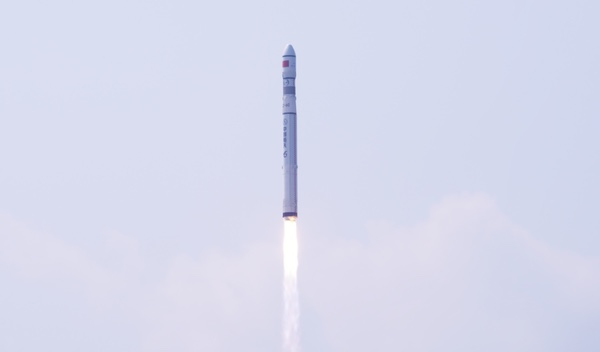
The August 2026 Long March 6C breakup followed deployment of a seven-satellite rideshare mission. Debris was distributed across approximately 396 to 482 kilometers, again within an orbital regime heavily utilized by Starlink and other spacecraft.
| It may be creating—or exploiting—conditions in which debris looks accidental, its effects incidental, attribution uncertain, and strategic costs accumulate over time. |
The September 2026 breakup involved Yaogan-50 (02), a Chinese reconnaissance/remote-sensing satellite launched in March 2026. It operated at approximately 952 kilometers in a highly retrograde, 142-degree inclination orbit. In early September, the spacecraft fragmented, with tracking identifying at least 43 associated debris objects distributed across approximately 600 to 1,100 kilometers, in a high-altitude, highly retrograde regime where debris can persist substantially longer.
A debris population does not need to produce a collision to produce military effects. It can increase conjunction assessments, require avoidance maneuvers, consume propellant, impose workload on operators, complicate orbital planning, increase uncertainty, and potentially reduce spacecraft lifetime. The effect can therefore be cumulative rather than spectacular—and remain politically ambiguous.
China is building its Starlink competitor, the Thousand Sails constellation. However, its constellation’s orbital distribution does not yet mirror Starlink’s enormous presence across LEO. A debris field therefore does not necessarily impose equal immediate costs on both sides. A minefield does not have to sink a ship to affect naval operations. Its existence changes routing, speed, caution, and resource allocation. Likewise, an orbital debris field does not have to destroy a satellite to affect a constellation. It can make operations more cautious, less predictable, or less operationally efficient.
A different way to think about the events
This begs a question: “If these events were accidental, did they nevertheless produce strategically significant effects—and could a sophisticated counterspace strategist recognize and exploit those effects?” The answer may ultimately be no. Engineering failures happen. Upper stages fail. Satellites malfunction. Space is increasingly congested. But if repeated Chinese launch and spacecraft failures produce debris in orbital regimes disproportionately occupied by US commercial, military, or intelligence systems; if those events impose greater operational burdens on the United States than China; and if Chinese military literature simultaneously demonstrates an interest in defeating Starlink at the system level, then the recent events deserve examination as more than isolated technical accidents.
The most sophisticated application of “Cross the Sea by Deceiving the Sky” may therefore not be deliberately destroying an adversary’s satellites. It may be creating—or exploiting—conditions in which debris looks accidental, its effects incidental, attribution uncertain, and strategic costs accumulate over time.
Note: we are now moderating comments. There will be a delay in posting comments and no guarantee that all submitted comments will be posted.