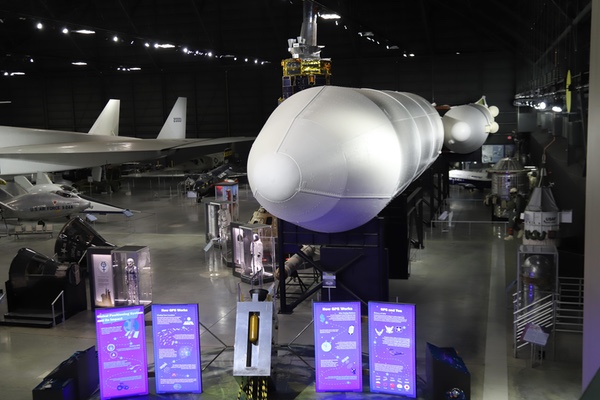
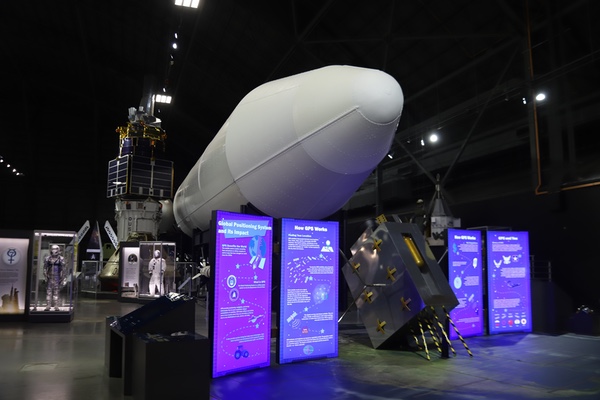
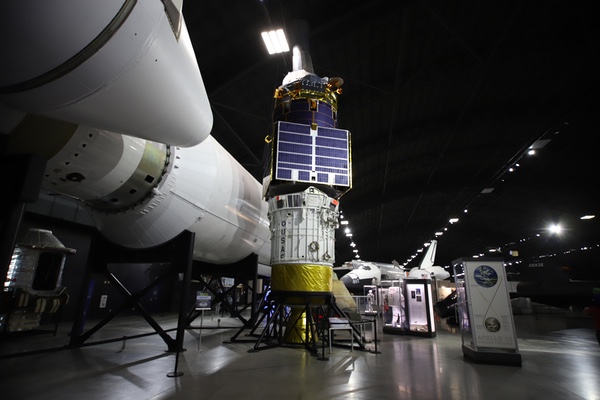
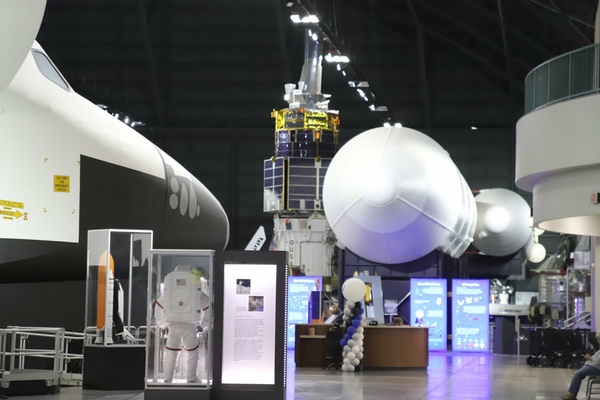
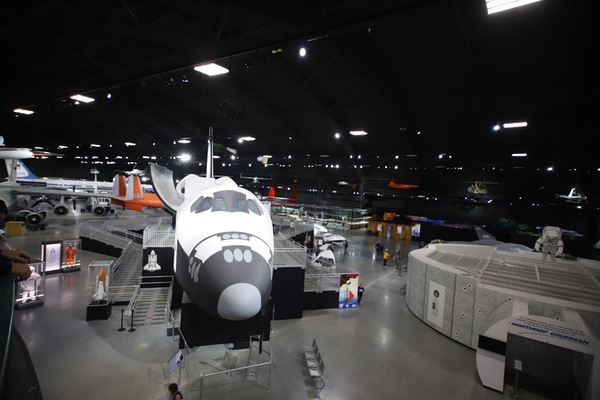
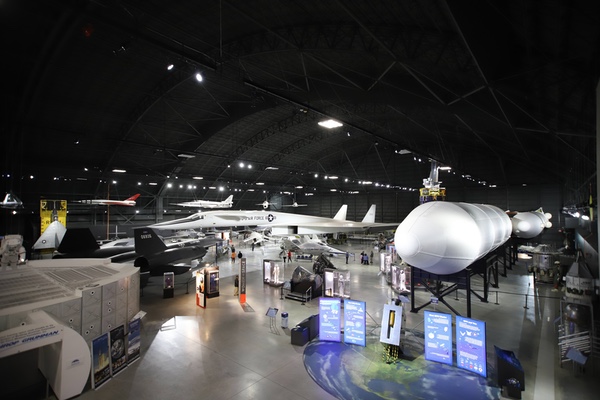
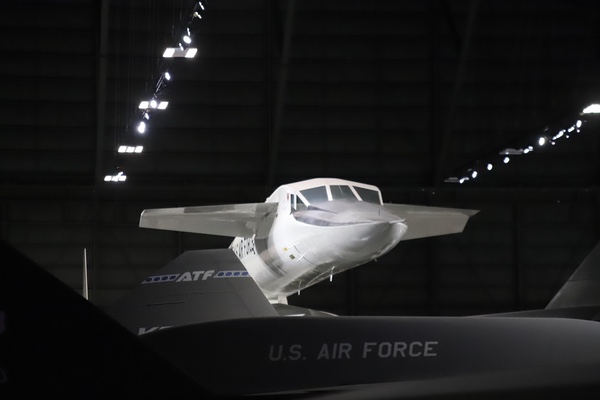
The National Museum of the United States Air Force opened its new space gallery in 2016. With the creation of the Space Force, does the museum have any incentive to continue to display the Air Force’s space history? (credit: All photos by Dwayne Day)
Military space museum, quo vadis?
by Dwayne A. Day Monday, October 5, 2026
For decades, the National Museum of the United States Air Force had very little space history on display. A decade ago, the museum, located next to Wright-Patterson Air Force Base near Dayton, Ohio, opened a new military space gallery, raising the hope that the subject was about to get greater attention. However, during a recent visit, I realized that this hope is apparently fading.
In June 2016, the museum opened its fourth building, which was intended to house four galleries: the museum’s impressive collection of presidential aircraft, a “global reach” gallery of transport aircraft, its research and development aircraft, and its space artifacts. The presidential aircraft and research and development aircraft had long been kept in hangars on base that were only accessible by limited bus tours. The museum’s leadership had long ago made the decision that fighter planes and bombers were more important to display than these other aircraft like the X-15 and XB-70 and X-3.
The new building was supposed to rectify that. It cost $40.8 million, covered 224,000 square feet, and was privately financed by the Air Force Museum Foundation. If you have never been to the museum, you have little idea of just how incredibly big it is. Having spent multiple visits there, I have concluded that to adequately see all the exhibits you need one and a half days, and you will be exhausted by the end of your visit.
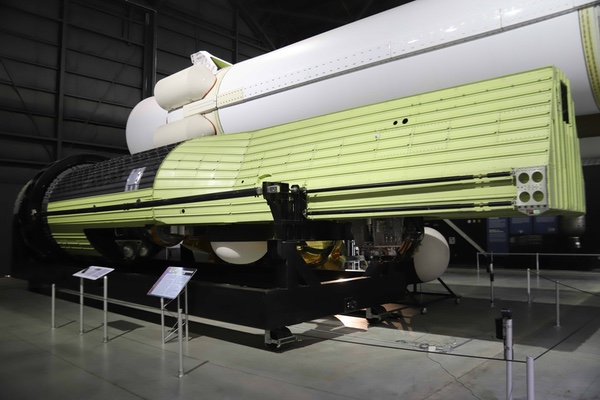
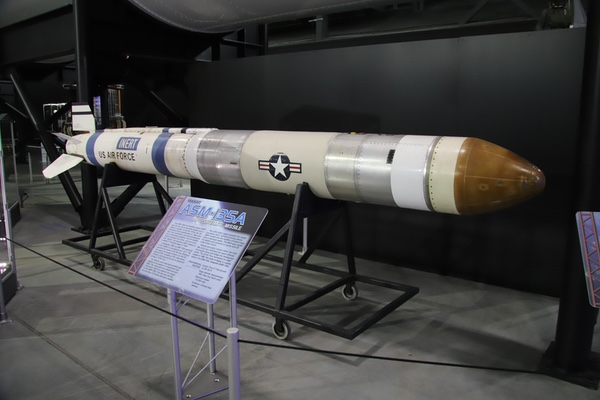
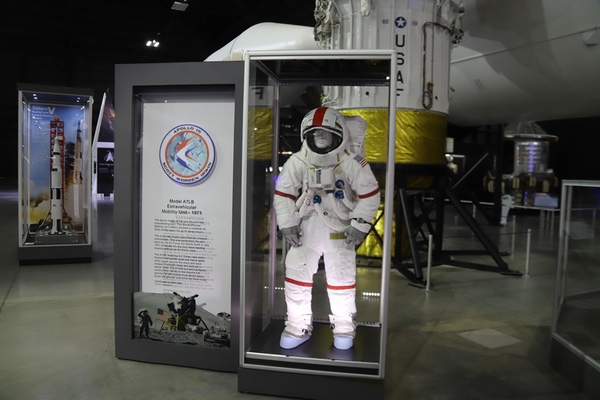
Like all museums, only a small portion of the museum’s collection is on display, and because its artifacts are often airplane-sized, that means that even with a big new building, there was always going to be a struggle for room for artifacts. The space exhibits that appeared in 2016 included a space shuttle Crew Compartment Trainer along with the once-notorious Teal Ruby infrared spacecraft inside, the Apollo 15 Command Module, a massive Titan IVB rocket, a DSP missile warning satellite, and an X-15 experimental rocketplane. Some smaller items were also scattered around the gallery. Also included were several artifacts from the “black” space program: a HEXAGON reconnaissance satellite engineering test item, a GAMBIT-1 reconnaissance satellite, and the shell of a GAMBIT-3 reconnaissance satellite mockup (never adequately explained when it was first put on display). Along with several rockets in a nearby connecting room, it was a decent display of military space history, although it lacked much explanatory text.
In December 2019, the Space Force was created, spinning off many former Air Force space assets, and also creating a bit of a dilemma for the museum. The museum added a display about the creation of the Space Force, but considering that the Air Force leadership—run primarily by the so-called “fighter mafia”—never really cared about space, they now had even less reason to care about space.
The National Reconnaissance Office, which provided the reconnaissance satellites, has done a better job of recording its history than the Air Force has done recording its space history, so putting those artifacts on display at the Air Force’s museum was a bit of a risk, one that has not really paid off. After a few years, the GAMBIT-3 mockup was removed and has not returned. The HEXAGON, which once was prominently positioned, was moved underneath the Titan IVB rocket. Without having actually measured the “space gallery,” after my multiple visits over the last decade, it feels like the space gallery now has less floor space than it had when the new building was first opened.
Some space artifacts that were previously on display have now disappeared. The museum has been pulling aircraft out of storage and putting them on display in the main museum, and of course it’s not possible to display everything, but why must the space gallery retreat while other galleries seem to be expanding? Is there nothing left to display in the space gallery? Where are the DSCS satellites and the IUS and Agena upper stages and the Milstar and WGS and A-EHF mockups? Where is the text that explains how and why the Air Force started its space program and how it has evolved over the years?
During my visit last weekend, it was hard not to get the impression that the National Museum of the United States Air Force is (once again) neglecting its space heritage. After a promising start in 2016, they’re pushing the space artifacts off to the side. They have no reason to respect the National Reconnaissance Office history, and now have no reason to respect the Space Force’s history.
There are other museums around the United States that cover the Air Force and now Space Force and even NRO space history. Vandenberg and Cape Canaveral Space Force Bases both have small museums. The Smithsonian’s National Air and Space Museum in Washington has some artifacts as well. None of them tells an institutional and comprehensive history of American military space. Now that the Space Force has a massive budget, maybe it will devote some attention and money to establishing a proper museum. The National Museum of the United States Air Force would probably be glad to hand over its space artifacts and bring in more fighter planes.