Starship’s real test may begin after launchby Inna Galinger
|
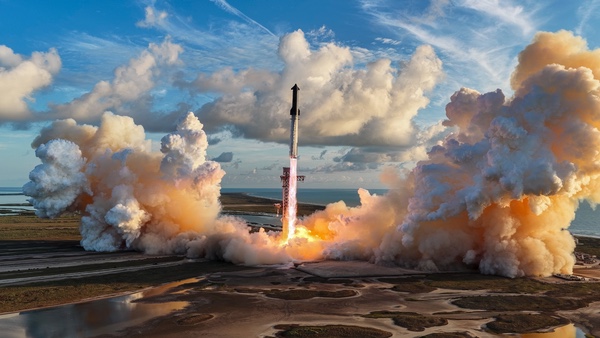
| As moving people and cargo got cheaper and easier, a lot more businesses started to make sense. Starship could be a similar moment for space. |
The vehicle is designed to carry more than 100 tonnes to orbit. If SpaceX gets the reusability and flight cadence it’s aiming for, the industry will have a transportation system unlike anything it has had before. Still, what I keep thinking about isn’t the rocket, but what happens to the economy around it.
The Boeing 707 lesson
Aviation went through something similar. On October 26, 1958, Pan Am began regular Boeing 707 service between New York and Paris. The 707 wasn’t just a new airplane; jet aviation changed the economics of long-distance travel. Larger aircraft followed, and in 1978 the United States deregulated its airlines. Real fares fell by roughly 45%, and passenger numbers more than doubled.
Here’s the part I find most interesting as an investor: much of the value created by cheaper air travel never went to the airlines. According to IATA, airlines earned about $979 billion in revenue in 2025 but only $36 billion in net profit, a 3.7% margin, or roughly $7 per passenger. Travel and tourism, meanwhile, contributed $11.6 trillion to the global economy, almost 10% of world GDP, according to the World Travel & Tourism Council.
Cheap flights made room for hotels and resorts, global logistics, mass tourism, and international business travel. None of those industries would have reached their current size without affordable air transport.
Then came the Boeing 747. If the 707 made jet travel mainstream, the 747 showed how scale in transportation changes the economics around it. As moving people and cargo got cheaper and easier, a lot more businesses started to make sense. Starship could be a similar moment for space.
Space has already had its 707
In a way, space has already been through the first stage. Falcon 9’s reusable first stage cut the cost of reaching orbit from about $54,500 per kilogram in the Space Shuttle era to about $2,700. That’s a big part of why constellations of thousands of satellites became possible, and why satellite communications look so different today.
Starship goes further. It lowers the price, yes, but more importantly it changes how much you can deliver in a single flight. I suspect that difference will end up mattering more than the price per kilogram.
When every kilogram is expensive, engineers shave off every gram they can. When you can put tens of tonnes, or over 100, into orbit at a fraction of today’s cost, that logic starts to break down. Systems don’t have to be as small or as intricate. Engineers can start thinking about larger, modular structures that can be serviced and upgraded. That isn’t just a change in launch economics; it changes how we design space infrastructure itself.
What happens after launch?
So which businesses actually benefit if launch gets much cheaper? A few come to mind: large constellations, defense systems, commercial stations, orbital computing, in-orbit servicing, and, further out, lunar infrastructure. I don’t want to turn this into another list of space markets, though, because all of them run into the same problem. Cheaper launch is only the first step.
| Starship may make some of these businesses physically possible without making them profitable. |
Each of them needs far more than a ride to orbit. A data center has to be powered and cooled; a station has to find paying customers; in-space manufacturing has to prove that microgravity actually makes a better product; a lunar base needs a whole supply chain, from power and communications to robotics and regular logistics. Getting there is becoming the easy part. Making it work once it’s there is not.
Starship may make some of these businesses physically possible without making them profitable. Which raises a harder question for investors: if launch stops being the main constraint, what becomes the next one? Power, infrastructure, regulation, or plain old demand are all possibilities. My bet is that the next big layer of the space economy will form around whatever that constraint turns out to be, rather than around the rockets.
The risk of too much success
There’s a less obvious risk here. The space industry has been short of launch capacity for so long that it’s easy to assume more launches automatically mean more business, but they don’t. Infrastructure can grow faster than demand.
If Starship really can put huge amounts of mass into orbit cheaply, companies will be able to build systems that never penciled out before. But being able to build something cheaply doesn’t mean anyone is waiting to buy it. The question may slowly shift from “What can we send to space?” to “What’s actually worth sending?” For a venture investor, that’s an important distinction.
That’s why Starship’s potential impact shouldn’t be confused with a proven business model. The first issue is reusability. A fully reusable system flying at high cadence has yet to prove itself in real operations, and until it does, every forecast of future launch costs is a just a scenario.
The second issue is that cost isn’t price. Even if SpaceX drives its cost per flight way down, there’s no guarantee customers will see prices fall by the same amount.
The third issue is concentration. The company building the biggest new launch system is also a major satellite operator with its own infrastructure plans. For some future businesses, depending on your launch provider could mean depending on a competitor.
None of this is an argument against Starship. If the capacity materializes, it could create markets that are hard to imagine today. But it does mean investors will have to look past the launch price.
What happened after the Boeing 707
Neither the 707 nor the 747 created global tourism. What they did was make air travel accessible enough for a whole new economy to grow around it. Something similar could happen with Starship.
The biggest value Starship creates may not come from selling rides, or even from how cheaply SpaceX can get a kilogram to orbit. It may come from companies that don’t exist yet, because under the old economics of access to space their business models simply couldn’t work.
Starship has shown it can reach orbit. Now it has to do it again, and again, and again, cheaply enough to change not only the launch market but everything on the other side of it. That’s why I think Starship’s real test may begin after launch.
Note: we are now moderating comments. There will be a delay in posting comments and no guarantee that all submitted comments will be posted.