Two commons, one pattern: the ethical kinship of the ocean and outer spaceby Stephen P. Wood
|
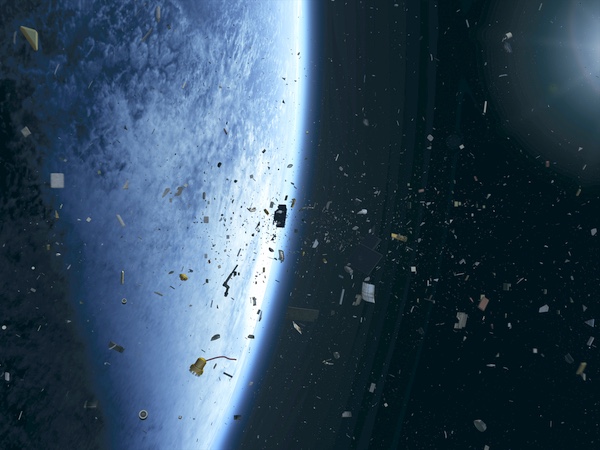
| The ocean is a largely completed experiment in what happens when a commons is used without adequate governance. Space is the same experiment in its opening stages. |
The ocean and outer space are humanity’s two great global commons, and the resemblance runs far deeper than legal status. Both were long imagined as infinite. Both have been used as dumping grounds on the assumption that sheer size would dilute any harm. Both are now contested between those who would preserve them and those who would extract value from them. In both, the technology to exploit has consistently outpaced the institutions meant to restrain it.
What separates them is chronology. The ocean is a largely completed experiment in what happens when a commons is used without adequate governance. Space is the same experiment in its opening stages. This essay argues that the ethical lessons of the first must govern the second, and that the window to apply them is closing faster than most policymakers appreciate.
The myth of the infinite
For most of human history, the ocean’s size was its presumed defense. Waste dumped offshore was expected to disappear, and fish were expected to replenish themselves without limit. At the 1883 International Fisheries Exhibition in London, Thomas Henry Huxley, among the most respected biologists of his age, told his audience that he believed the great sea fisheries were inexhaustible and that nothing humans did could seriously affect the number of fish.[3] He was wrong, and the century that followed demonstrated just how wrong.
Spaceflight inherited a version of the same faith, known informally among orbital engineers as the “big sky” assumption: space is so vast and spacecraft so small that collisions would be vanishingly rare. In 1978, NASA scientists Donald Kessler and Burton Cour-Palais showed why that assumption would eventually fail. Once the density of objects in low Earth orbit passed a critical threshold, collisions would generate fragments that caused further collisions, producing a self-sustaining cascade now known as the Kessler syndrome.[4] The ocean’s equivalent was never given a name, but its structure is identical: a resource treated as limitless until the moment its limits become catastrophically obvious.
Littering both commons
The ocean has served as humanity’s sink for centuries. Nations dumped radioactive waste at sea for decades before 1993 amendments to the London Convention banned the practice.[5] After the Second World War, large stockpiles of chemical munitions were sunk in coastal waters. Today, the dominant pollutant is plastic. An estimated 19 to 23 million metric tons of plastic waste entered the world’s rivers, lakes, and oceans in 2016 alone, and the trajectory is upward.[6] The Great Pacific Garbage Patch holds roughly 79,000 metric tons of floating plastic spread across 1.6 million square kilometers, and at least 46% of its mass is discarded fishing gear.[7] A plastic bag has been recorded at nearly 11,000 meters in the Mariana Trench, the deepest place on Earth.[8] Negotiations toward a binding global plastics treaty ended in Geneva in August 2025 without agreement and remain unresolved.[9]
The abandoned net deserves a moment of attention, because it has a precise analog in orbit. A ghost net continues to catch and kill long after the vessel that set it has gone. A derelict satellite or spent rocket stage continues to threaten every working spacecraft that shares its orbit for years, decades, or centuries after its mission has ended. In both cases the harm outlives the purpose, and the cost is transferred from the party that created it to everyone who comes after.
| If pollution is the slow injury of a commons, overexploitation is its acute one, and the ocean’s record is grim and strikingly consistent. |
The orbital environment is now accumulating debris on a trajectory the European Space Agency (ESA) describes in increasingly urgent terms. According to its 2026 Space Environment Report, more than 300 launches placed over 4,000 new payloads into orbit in 2025—roughly ten every day—while the debris population grew even faster.[10] ESA’s Space Environment Health Index, which compares current behavior against a sustainable benchmark set in 2014, rose from about 4 to about 50 in a single year, an order-of-magnitude deterioration.[10] The agency’s long-term projections now show such rapid growth in objects and collisions that the modeling horizon was cut from 200 years to 100, and ESA states that even if no further satellites were launched, fragmentation would continue to drive the debris population upward.[10] Some of this damage was deliberate. China’s 2007 anti-satellite test against its own Fengyun-1C weather satellite generated more than 3,000 trackable fragments, and Russia’s 2021 test against Kosmos 1408 generated more than 1,500 more.[11] Meanwhile, a single commercial constellation, SpaceX’s Starlink, now has roughly 11,000 satellites in orbit,[12] and regulatory filings propose constellations numbering in the tens of thousands.
Nor does orbital debris stay in orbit. Spacecraft that reenter the atmosphere vaporize into metallic particulates; aluminum and other metals from reentering hardware have already been detected in about 10% of sampled stratospheric aerosol particles, with consequences for ozone chemistry and climate that are not yet understood.[13] Spacecraft too large to burn up are steered toward Point Nemo, the place in the South Pacific farthest from any land, where hundreds of vehicles have been deliberately sunk since the 1970s. The International Space Station is slated to follow them at the end of its operational life around 2030.[14] The two commons are thus not merely analogous; they are physically connected, because we dispose of our orbital waste in the ocean. Even the Moon has not been spared: more than 180 metric tons of human hardware and refuse lie on its surface, including 96 bags of human waste left behind during the Apollo missions.[15] The debris keeps arriving: in August 2026 a spent Falcon 9 upper stage, stranded in a high Earth orbit after a January 2025 lunar launch, struck the Moon near Einstein crater and left a new crater roughly 18 meters across.[16]
Exploited to the brink: the ocean’s record
If pollution is the slow injury of a commons, overexploitation is its acute one, and the ocean’s record is grim and strikingly consistent. Steller’s sea cow, a kelp-grazing relative of the manatee that may have reached eight meters in length, was described by Western naturalists in 1741. Hunted for meat by fur-trading expeditions, it was extinct by 1768, within 27 years of its scientific discovery.[17] Twentieth-century industrial whaling killed nearly 2.9 million great whales.[18] Antarctic blue whales, the largest animals ever known to have lived, were reduced from an estimated 239,000 to roughly 360 individuals by 1973, about 0.15% of their former abundance.[19] The northern cod of Newfoundland’s Grand Banks, which had supported fisheries for nearly five centuries, collapsed in the early 1990s; Canada’s 1992 moratorium eliminated tens of thousands of jobs at a stroke, and the stock has never fully recovered.[20] Globally, fleets have progressively “fished down” marine food webs, depleting large predators and turning to smaller species lower in the chain.[21] Today, the Food and Agriculture Organization’s State of World Fisheries and Aquaculture 2026 classifies 37.6% of assessed marine stocks as overfished, and the share of biologically sustainable stocks has fallen from 64.5% to 62.4% since the previous report.[22]
The sequence is nearly identical in each case: an open-access resource; a technological leap such as steam-powered catcher boats, explosive harpoons, factory trawlers, or sonar; a race to capture value before competitors do; scientific warnings dismissed as alarmist or economically naïve; collapse; and, finally, regulation enacted after the damage has been done. The International Whaling Commission did not adopt its moratorium on commercial whaling until 1982, decades after many populations had been driven to the edge of extinction.
The pattern is now repeating on the deep seafloor. The Clarion-Clipperton Zone, a vast abyssal plain in the Pacific between Hawaii and Mexico, is scattered with polymetallic nodules rich in nickel, cobalt, manganese, and copper. It is also home to an extraordinary and largely unknown fauna: a 2023 synthesis recorded 5,578 species there and estimated that 88% to 92% of them are new to science.[23] A 2024 study reported that the nodules themselves may generate oxygen on the lightless seafloor.[24] That finding remains contested, but the controversy itself shows how little we understand of the ecosystem we propose to strip-mine.
| A “safety zone” around a lunar ice deposit is functionally similar to an exclusive fishing ground. It need not be called ownership to operate as ownership. |
The International Seabed Authority (ISA) has spent more than a decade drafting an exploitation code without finalizing it. In April 2025, the United States issued Executive Order 14285, directing expedited permitting under the Deep Seabed Hard Mineral Resources Act of 1980, a Cold War-era statute that treats seabed mining in international waters as a freedom of the high seas.[25] NOAA finalized a consolidated permitting rule in January 2026,[26] and in August 2026 NOAA found The Metals Company’s consolidated application to mine the zone fully compliant and opened it for public comment, a path that bypasses the ISA and has drawn objections from its member states and from environmental scientists.[27] Dozens of nations have called for a moratorium or precautionary pause. We are preparing to industrialize an ecosystem we have not yet catalogued.
The same script, rewritten for space
The legal history of space resources tracks the deep seabed with uncanny fidelity. In November 1967, the year the Outer Space Treaty entered into force, Malta’s ambassador to the United Nations, Arvid Pardo, asked the General Assembly to declare the seabed beyond national jurisdiction the “common heritage of mankind,” to be managed internationally for the benefit of all nations, with particular regard for developing ones.[28] The principle was written into Part XI of the 1982 UN Convention on the Law of the Sea (UNCLOS). Industrialized nations objected to its redistributive provisions, and a 1994 Implementation Agreement substantially weakened them; the United States has never ratified the convention at all.[29]
Space has followed the same arc, step for step. The 1979 Moon Agreement declared the Moon and its natural resources the common heritage of mankind and called for an international regime to govern their exploitation.[30] No major spacefaring nation joined it, and only 17 states are parties today.[31] In 2015, the United States enacted the Commercial Space Launch Competitiveness Act, recognizing its citizens’ rights to own space resources they extract.[32] Luxembourg, the United Arab Emirates, and Japan followed with similar laws. The Artemis Accords, a non-binding set of principles first signed in 2020, state that extracting space resources does not in itself constitute national appropriation and introduce “safety zones” around signatories’ operations.[33] More than 70 nations have now signed,[34] while China and Russia advance a competing framework, the International Lunar Research Station.
The parallel is exact: an ambitious common-heritage principle, rejected by the states with the capacity to exploit; a unilateral domestic statute asserting a right to extract; and a coalition of the willing that substitutes voluntary principles for binding international governance (Table 1).
The resources at stake are increasingly concrete. NASA has announced plans for a sustained Moon Base,[34, 35] and the most valuable lunar real estate is remarkably small: the permanently shadowed craters near the south pole where water ice is concentrated, and a handful of crater rims bathed in near-continuous sunlight. Commercial ventures have announced plans to harvest helium-3 from lunar regolith and return it to Earth beginning in the 2030s,[36] and asteroid-mining companies continue to attract investment. Orbits themselves are a finite resource; the most useful altitude shells in low Earth orbit are occupied largely on a first-come basis, and the constellations that fill them first constrain everyone who follows. A “safety zone” around a lunar ice deposit is functionally similar to an exclusive fishing ground. It need not be called ownership to operate as ownership.
Table 1. Parallel histories of two global commons
| Dimension | The Ocean | Outer Space |
|---|---|---|
| Founding doctrine | Freedom of the seas (Grotius, 1609) | Province of all mankind; non-appropriation (Outer Space Treaty, 1967) |
| Myth of limitlessness | Fisheries judged “inexhaustible” (Huxley, 1883); waste assumed to dilute | “Big sky” assumption that collisions would be vanishingly rare |
| Accumulating waste | 19–23 million metric tons of plastic entering waters per year; ghost gear ≥46% of Pacific garbage patch mass | Debris growth outpacing removal; ESA Health Index rose from ~4 to ~50 in one year |
| Harm that outlives its purpose | Ghost nets that keep fishing | Derelict satellites and rocket bodies; Kessler cascade |
| Overexploitation | Steller’s sea cow, great whales, Grand Banks cod; 37.6% of assessed stocks overfished | Orbital shells, lunar polar ice, helium-3, asteroids (prospective) |
| Common-heritage principle | UNCLOS Part XI (1982), weakened in 1994 | Moon Agreement (1979), rejected by major spacefaring states |
| Unilateral workaround | Deep Seabed Hard Mineral Resources Act (1980); Executive Order 14285 (2025) | Commercial Space Launch Competitiveness Act (2015); Artemis Accords (2020–) |
| Recent governance progress | High Seas Treaty in force (January 2026) | 5-year LEO disposal guideline; Zero Debris Charter (voluntary) |
Sources as cited in the text. LEO, low Earth orbit; UNCLOS, United Nations Convention on the Law of the Sea.
Where the analogy strains, and why it still holds
The strongest objection to this comparison deserves a direct answer. The ocean is alive; as far as we know, the Moon, the asteroids, and orbital space are not. A whale can suffer and a fishery can collapse, but lunar regolith has no ecosystem to destroy. If moral concern rests on harm to living beings, perhaps space is simply a quarry, and the ethics of the sea do not transfer.
I would argue that they transfer for four reasons. First, harm to human beings is sufficient. Orbital debris threatens the weather forecasting, navigation, communications, climate monitoring, and satellite-aided search and rescue on which modern life, and many lives at sea, depend, and reentry pollution reaches the living atmosphere. Second, scientific value is irreplaceable. The Moon’s polar ice may preserve a record of the early solar system spanning billions of years, and once excavated it cannot be restored. The planetary protection policy of the Committee on Space Research (COSPAR) exists precisely because careless exploration of Mars, Europa, or Enceladus could contaminate or destroy evidence of extraterrestrial life before we are capable of detecting it,[37] a risk that mirrors the prospect of erasing undescribed abyssal species before they are named. Third, cultural value is real. The night sky is the oldest shared heritage of every human culture; astronomers now contend with satellite streaks across their images, and in January 2024 the Navajo Nation formally objected to a commercial mission carrying human remains to the Moon, calling it a desecration of a celestial body that many Diné regard as sacred.[38] Fourth, irreversibility carries moral weight independent of whether the thing harmed is alive. We rightly treat the destruction of an ancient monument as a wrong even though stone does not suffer.
The case for use
Fairness requires acknowledging that those who favor extraction are not simply villains. The global energy transition requires nickel, cobalt, and copper in enormous quantities, and terrestrial mining of these metals has been linked to tropical deforestation, contaminated watersheds, and exploitative labor. Proponents of seabed mining argue, not unreasonably, that nodules lying loose on the seafloor may carry a smaller human and terrestrial footprint than an open-pit mine. Satellite broadband reaches remote, rural, and disaster-stricken communities that terrestrial networks have never served. Lunar water could supply drinking water, oxygen, and rocket propellant, reducing the need to launch everything from Earth. ESA itself reports genuine progress: the shift from a 25-year to a 5-year disposal guideline in low Earth orbit is shortening satellite lifetimes, and controlled reentries of rocket bodies have outnumbered uncontrolled ones for the second straight year.[10] Critics of strict precaution also warn, with some justification, that it can entrench the nations and companies already in orbit while denying latecomers the benefits that early movers enjoyed.
These arguments are serious, and they reframe the central question. The choice is rarely between preservation and use. It is between use governed in advance and use governed only after collapse. The ocean’s history shows that the second option has a predictable outcome, and that its costs fall most heavily on those who had the least say in the decisions.
An Ethical Lens from the Bedside
Clinical ethics offers a familiar vocabulary for problems of this kind. Nonmaleficence asks us first to avoid harm, and above all irreversible harm. Beneficence asks that the use of shared resources produce genuine good rather than private gain alone. Justice asks how benefits and burdens are distributed: across nations, including those in the Global South whose coastal fisheries have been depleted by distant-water fleets and who will inherit crowded orbits they did not fill, and across generations. Respect for persons is the most difficult principle to apply, because the people most affected by today’s decisions have not yet been born. In the clinic, when a patient cannot speak for themselves, a surrogate is obligated to act in that patient’s best interest. In the commons, the present generation is the surrogate for every generation that follows, and we are held to the same standard. ESA’s report reaches the same conclusion in plainer language, warning that without faster and more reliable mitigation we are “saddling future generations with a high price to pay.”[10]
| In medicine, we do not wait for a patient to arrest before responding to the warning signs. The ocean is the case we learned from too late; space is the patient still in front of us, and the warning signs are already on the monitor. |
Three further traditions sharpen the point. Garrett Hardin’s “tragedy of the commons” predicted that shared resources would inevitably be ruined by individual self-interest.[39] Elinor Ostrom’s Nobel Prize-winning work showed that the tragedy is not inevitable: commons can be sustained when users establish clear boundaries, monitor use, apply graduated sanctions, and participate in making the rules.[40] The collapse of so many fisheries was therefore a failure of governance, not a law of nature. Hans Jonas, writing on the ethics of technological civilization, argued that when our power to act extends far into the future, our responsibility must extend just as far.[41] And the precautionary principle, articulated in the 1992 Rio Declaration, holds that a lack of full scientific certainty should not be used as a reason to postpone measures that would prevent serious or irreversible environmental damage.[42]
What the ocean teaches
If the ocean is the case we learned from too late, it nonetheless yields concrete lessons for space.
Govern before the rush. Nearly every major fishery collapse was followed by regulation; almost none were preceded by it. Rules for lunar resource extraction, orbital carrying capacity, and debris liability should be negotiated now, while the number of actors is still small and the stakes are still largely prospective, rather than after a lunar ice deposit has been contested or a key orbital shell has become unusable.
Make the polluter pay. The ocean has long allowed vessels to externalize the costs of lost gear and discharged waste, and orbit currently does the same. Economists have estimated that an internationally harmonized orbital-use fee could more than quadruple the long-run value of the satellite industry by curbing collision risk.[43] Debris-removal bonds, end-of-life performance deposits, and dedicated funding for active debris removal, which ESA now describes as necessary rather than optional, would align private incentives with the public interest.[10]
Bind, do not merely pledge. The 1946 International Convention for the Regulation of Whaling relied for decades on industry-friendly quotas while whale populations continued to fall. Voluntary instruments such as the Artemis Accords and ESA’s Zero Debris Charter are valuable starting points, but the history of the sea suggests that good intentions without enforcement rarely survive a profitable opportunity.
Share the benefits. The common-heritage principle faltered at sea in part because nations with the capacity to act saw it as all burden and no reward. The new High Seas Treaty offers a more workable model, pairing access to marine genetic resources with monetary and non-monetary benefit-sharing, capacity building, and technology transfer.[44] A comparable framework for space resources would give the Global South a stake in the system rather than a seat outside it.
Protect some places entirely. Marine protected areas, and the international commitment to protect 30% of the ocean by 2030, rest on the recognition that some places should be left alone. The same logic supports scientific reserves in lunar polar craters, protection of the radio-quiet far side of the Moon for astronomy, and preservation of historic landing sites, which the United States began to address in the One Small Step to Protect Human Heritage in Space Act of 2020.[45] It also supports a precautionary pause on deep-sea mining until baseline science can tell us what would be lost.
Conclusion
None of this is utopian. On January 17, 2026, after nearly two decades of negotiation, the High Seas Treaty entered into force with more than 80 ratifications, establishing for the first time a legal mechanism to create protected areas and require environmental impact assessments in the waters beyond national jurisdiction, which cover nearly two-thirds of the ocean.[44] Many great whale populations, humpbacks prominent among them, have rebounded since the commercial whaling moratorium. The Montreal Protocol, the first treaty to achieve universal ratification, set the ozone layer on a path to recovery through binding and enforceable commitments. Commons can be governed. The only question is whether we govern them in time.
The sea and the sky are two chapters of the same story. In the first, we believed the resource was infinite, treated it as a sink, raced one another to extract its wealth, dismissed the scientists who warned us, and legislated only after the collapse. We are now writing the second chapter, and its early pages read almost word for word like the first. What is different is that this time we have the first chapter in hand.
In medicine, we do not wait for a patient to arrest before responding to the warning signs. The ocean is the case we learned from too late; space is the patient still in front of us, and the warning signs are already on the monitor. We are the first generation able to see the whole arc, from Grotius’s free sea to the bottom-trawled seamount, from the Outer Space Treaty to the debris cascade. We may also be the last generation able to change how the second arc ends.
Endnotes
- Grotius H. Mare Liberum [The Free Sea]. Leiden: Elzevir; 1609.
- United Nations. Treaty on Principles Governing the Activities of States in the Exploration and Use of Outer Space, including the Moon and Other Celestial Bodies. 610 UNTS 205. Opened for signature January 27, 1967; entered into force October 10, 1967.
- Huxley TH. Inaugural address. In: The Fisheries Exhibition Literature. Vol 4. London: William Clowes and Sons; 1884:1-19.
- Kessler DJ, Cour-Palais BG. Collision frequency of artificial satellites: the creation of a debris belt. J Geophys Res. 1978;83(A6):2637-2646.
- International Maritime Organization. Convention on the Prevention of Marine Pollution by Dumping of Wastes and Other Matter, 1972 (1993 amendments, resolution LC.51(16), in force February 20, 1994). Accessed October 4, 2026.
- Borrelle SB, Ringma J, Law KL, et al. Predicted growth in plastic waste exceeds efforts to mitigate plastic pollution. Science. 2020;369(6510):1515-1518.
- Lebreton L, Slat B, Ferrari F, et al. Evidence that the Great Pacific Garbage Patch is rapidly accumulating plastic. Sci Rep. 2018;8:4666.
- Chiba S, Saito H, Fletcher R, et al. Human footprint in the abyss: 30 year records of deep-sea plastic debris. Mar Policy. 2018;96:204-212.
- Einhäupl P, Del Savio L, Bergmann M, Jahnke A. The global plastics treaty can be saved — here’s how to break the deadlock. Nature. 2026;650. doi:10.1038/d41586-026-00314-4
- European Space Agency Space Debris Office. ESA’s Annual Space Environment Report 2026. Darmstadt, Germany: ESA/ESOC; September 8, 2026. Accessed October 4, 2026.
- Samson V, ed. Global Counterspace Capabilities: An Open Source Assessment. Secure World Foundation; April 2025. Accessed October 4, 2026.
- McDowell J. Starlink statistics. Jonathan’s Space Report. Accessed September 2026.
- Murphy DM, Abou-Ghanem M, Cziczo DJ, et al. Metals from spacecraft reentry in stratospheric aerosol particles. Proc Natl Acad Sci U S A. 2023;120(43):e2313374120.
- NASA. NASA selects International Space Station US deorbit vehicle [press release]. June 26, 2024. Accessed October 4, 2026.
- Royal Museums Greenwich. The strange things humans have left on the Moon. Accessed October 4, 2026.
- NASA images reveal 60-foot-wide crater on moon left by SpaceX rocket. Scientific American. August 2026. Accessed October 4, 2026.
- Turvey ST, Risley CL. Modelling the extinction of Steller’s sea cow. Biol Lett. 2006;2(1):94-97.
- Rocha RC Jr, Clapham PJ, Ivashchenko YV. Emptying the oceans: a summary of industrial whaling catches in the 20th century. Mar Fish Rev. 2014;76(4):37-48.
- Branch TA, Matsuoka K, Miyashita T. Evidence for increases in Antarctic blue whales based on Bayesian modelling. Mar Mamm Sci. 2004;20(4):726-754.
- Myers RA, Hutchings JA, Barrowman NJ. Why do fish stocks collapse? The example of cod in Atlantic Canada. Ecol Appl. 1997;7(1):91-106.
- Pauly D, Christensen V, Dalsgaard J, Froese R, Torres F Jr. Fishing down marine food webs. Science. 1998;279(5352):860-863.
- Food and Agriculture Organization of the United Nations. The State of World Fisheries and Aquaculture 2026. Rome: FAO; 2026.
- Rabone M, Wiethase JH, Simon-Lledó E, et al. How many metazoan species live in the world’s largest mineral exploration region? Curr Biol. 2023;33(12):2383-2396.
- Sweetman AK, Smith AJ, de Jonge DSW, et al. Evidence of dark oxygen production at the abyssal seafloor. Nat Geosci. 2024;17:737-739.
- Executive Order 14285. Unleashing America’s Offshore Critical Minerals and Resources. Signed April 24, 2025.
- National Oceanic and Atmospheric Administration. Final rule revising regulations under the Deep Seabed Hard Mineral Resources Act (consolidated exploration license and commercial recovery permit). Issued January 21, 2026.
- National Oceanic and Atmospheric Administration. NOAA advances review of first-ever deep seabed mining commercial recovery application [press release]. August 19, 2026. Accessed October 4, 2026.
- Pardo A. Address to the First Committee of the United Nations General Assembly. UN Doc A/C.1/PV.1515–1516. November 1, 1967.
- United Nations Convention on the Law of the Sea. 1833 UNTS 3 (1982); Agreement Relating to the Implementation of Part XI. 1836 UNTS 3 (1994).
- United Nations. Agreement Governing the Activities of States on the Moon and Other Celestial Bodies. 1363 UNTS 3 (1979).
- United Nations Committee on the Peaceful Uses of Outer Space, Legal Subcommittee. Status of international agreements relating to activities in outer space as at 1 January 2025. UN Doc A/AC.105/C.2/2025/CRP.9. May 5, 2025.
- U.S. Commercial Space Launch Competitiveness Act. Pub L No. 114-90, 129 Stat 704 (2015).
- NASA, U.S. Department of State. The Artemis Accords: Principles for Cooperation in the Civil Exploration and Use of the Moon, Mars, Comets, and Asteroids for Peaceful Purposes. October 13, 2020.
- NASA. NASA welcomes Türkiye as newest Artemis Accords signatory [press release]. August 31, 2026. Accessed October 4, 2026./
- NASA. NASA joins Artemis Accords workshop as global signings rise [press release]. May 2026. Accessed October 4, 2026.
- Interlune raises $5M for initiatives that go beyond mining the moon. GeekWire. 2026. Accessed October 4, 2026.
- COSPAR Panel on Planetary Protection. COSPAR policy on planetary protection. Space Res Today. 2026;224:17-39.
- Navajo Nation opposes plans to send human remains to the moon. UPI. January 6, 2024. Accessed October 4, 2026.
- Hardin G. The tragedy of the commons. Science. 1968;162(3859):1243-1248.
- Ostrom E. Governing the Commons: The Evolution of Institutions for Collective Action. Cambridge: Cambridge University Press; 1990.
- Jonas H. The Imperative of Responsibility: In Search of an Ethics for the Technological Age. Chicago: University of Chicago Press; 1984.
- United Nations. Rio Declaration on Environment and Development, Principle 15. UN Doc A/CONF.151/26 (Vol. I); 1992.
- Rao A, Burgess MG, Kaffine D. Orbital-use fees could more than quadruple the value of the space industry. Proc Natl Acad Sci U S A. 2020;117(23):12756-12762.
- United Nations. Agreement under the United Nations Convention on the Law of the Sea on the Conservation and Sustainable Use of Marine Biological Diversity of Areas beyond National Jurisdiction. Adopted June 19, 2023; entered into force January 17, 2026.
- One Small Step to Protect Human Heritage in Space Act. Pub L No. 116-275 (2020).
Note: we are now moderating comments. There will be a delay in posting comments and no guarantee that all submitted comments will be posted.