You cannot jam your way to space superiorityby Christopher Stone
|
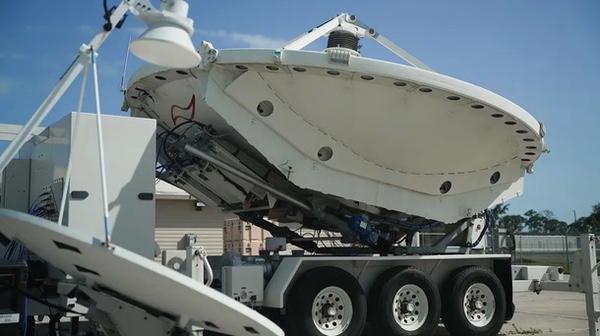
| Electronic warfare enhances combat power in every domain; it does not replace the weapons needed to destroy an enemy’s ability to fight. |
The Space Force must stop treating electronic warfare as a substitute for the combat power needed to achieve space superiority. Jamming and spoofing can disrupt adversary operations, but they cannot physically defeat hostile spacecraft or prevent an enemy from attacking American systems. The Space Force needs an arsenal that integrates electronic warfare with kinetic weapons, cyber operations, intelligence, and maneuver. Without it, the service risks entering a war with a force incapable of escalation dominance-based space superiority against adversaries prepared to do just that.
EW enhances combat power
Electronic warfare (EW) can disrupt communications, deny signals, and suppress enemy defenses. But adversaries can change frequencies, employ alternative sensors, restore communications, maneuver spacecraft, or exploit redundant systems. Russia’s efforts to jam Starlink in Ukraine and Ukraine’s efforts to destroy Russian jamming systems demonstrate this reciprocal contest: Each side adapts and counters the other’s capabilities.[2] Electronic attack creates opportunities; it does not eliminate the need to defeat opposing forces.
No serious military planner would expect an army to defeat tanks with jammers alone, a navy to sink a fleet by jamming its radars, or an air force to establish air superiority while leaving hostile aircraft unopposed. Electronic warfare enhances combat power in every domain; it does not replace the weapons needed to destroy an enemy’s ability to fight.
Space is no exception. China and Russia possess counterspace capabilities spanning electronic warfare, direct-ascent anti-satellite missiles, directed-energy weapons, and orbital systems with counterspace applications.[3] An American force focused primarily on electronic disruption risks an asymmetric contest in which adversaries can physically attack US infrastructure while the United States lacks credible options to physically defeat hostile spacecraft.
Doctrine without weapons is a wish list
The Space Force’s Space Warfighting: A Framework for Planners correctly recognizes that space superiority requires coordinated offensive and defensive operations across orbital, link, and terrestrial segments.[4] But a framework’s value depends on whether the service fields the capabilities needed to execute it against a resisting enemy.
| Progress must be measured by combat power delivered to the warfighter, not organizational constructs, doctrinal terminology, or acquisition plans that perpetually promise decisive capabilities in the future. |
What weapons can American forces employ to defeat hostile spacecraft when disruption is insufficient? What capabilities hold adversary counterspace forces at risk? How quickly can those systems be deployed, and how long can the force sustain combat against an opponent employing electronic warfare, cyberattacks, maneuver, and kinetic weapons simultaneously? These are questions of weapons, readiness, force structure, and operational planning—not doctrinal terminology.
Survivability remains essential. Proliferated constellations, maneuverability, redundancy, and rapid reconstitution make American systems harder to target and destroy. But surviving an attack is not the same as preventing one, and absorbing punishment is not the same as imposing it. A force designed only to endure enemy attacks leaves the initiative with the adversary.
Build a Space Force that can win
The Space Force needs a balanced arsenal integrating electronic warfare, cyber operations, intelligence, fires, maneuver, and kinetic options. Electronic warfare should disrupt enemy systems; cyber operations should exploit vulnerabilities; intelligence and space domain awareness should identify threats and support targeting; maneuver should preserve friendly options; and kinetic capabilities should physically defeat hostile spacecraft when necessary.
This arsenal is also essential to deterrence. An adversary contemplating an attack must consider more than the prospect of being jammed in return; it must recognize that its own military space capabilities could be physically defeated. Deterrence requires actual capabilities, operational readiness, and the ability to employ weapons when authorized. A declaration of intent is not a weapon. A doctrinal concept is not a weapon. Nor can a future acquisition objective deter an adversary prepared to fight today.
There is reason for optimism. At the Air, Space & Cyber Conference in September, Chief of Space Operations Gen. Douglas Schiess identified “arm and grow the Guardian force” as one of his three priorities. He acknowledged the accelerating counterspace capabilities of China and Russia, highlighted existing on-orbit “space control” weapons, and emphasized the importance of credible combat power and the resolve to employ it.[5]
Now the Space Force must translate that commitment into combat capability. “Arm the Guardian” must mean fielding weapons, developing targeting capabilities, training warriors, and sustaining the capacity to defeat hostile space forces when deterrence fails. Progress must be measured by combat power delivered to the warfighter, not organizational constructs, doctrinal terminology, or acquisition plans that perpetually promise decisive capabilities in the future.
General Schiess has an opportunity to move the service beyond the status quo. The test is whether “arm and grow the Guardian force” produces the capabilities needed to seize and maintain the initiative against a determined, technologically sophisticated enemy. The Space Force has spent years explaining why space is a warfighting domain. It must now ensure its Guardians are armed and equipped to win the fight that follows.
Endnotes
- Shelby Holliday, “The Space Force Showed Us Its Weapons Used in Iran and Venezuela,” The Wall Street Journal. The article describes Space Force electromagnetic warfare capabilities and their operational employment. The specific operational details and characterizations in the article should be consulted in the original report.
- Reuters, “Russia Tries to Jam Musk’s Starlink Systems to Counter Ukrainian Drones,” July 8, 2026. The report describes Russian electronic warfare efforts against Starlink-supported Ukrainian operations and Ukrainian efforts to counter Russian jamming systems.
- U.S. Department of Defense, “Department of Defense Authorization Request for Appropriations for Fiscal Year 2025 and the Future Years Defense Program,” congressional testimony on the counterspace capabilities being developed by China and Russia. See also U.S. Space Force, “Space Threats,” which describes electronic warfare, kinetic-energy weapons, directed-energy weapons, and orbital attacks as distinct threats to space systems.
- U.S. Space Force, Space Warfighting: A Framework for Planners, 2025. The framework identifies space superiority as a joint-force priority and emphasizes coordinated offensive and defensive operations across orbital, link, and terrestrial segments. See also U.S. Department of Defense, “Space Force’s Fundamental Role: Space Superiority,” March 5, 2025, for the Space Force leadership’s description of space control as encompassing disruption, degradation, and destruction when necessary.
- Gen. Douglas Schiess, “Remarks by CSO Gen. Douglas Schiess at the Air and Space Forces Association’s 2026 Air, Space and Cyber Conference,” September 15, 2026. See also U.S. Space Force, “Chief of Space Operations Schiess Outlines Priorities to Strengthen Space Force Combat Power,”, September 2026.
Note: we are now moderating comments. There will be a delay in posting comments and no guarantee that all submitted comments will be posted.