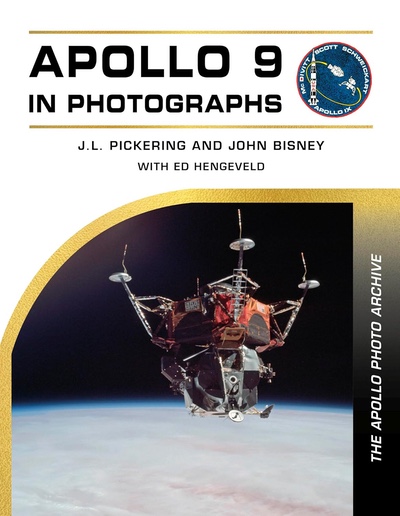
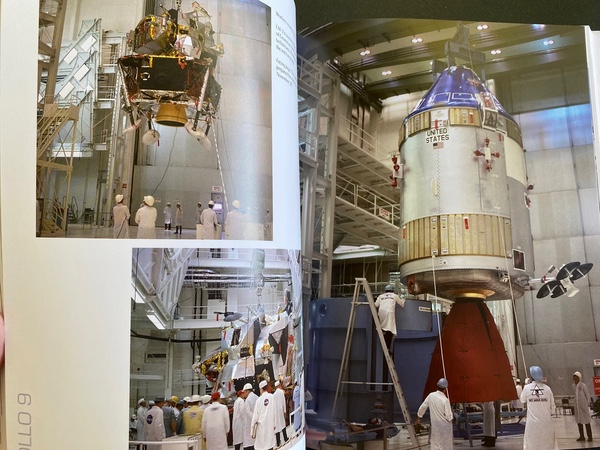
If things go to plan, next year NASA will conduct a complicated and difficult ballet in Earth orbit, testing out the lunar landers during the Artemis 3 mission. This complex mission has been compared by many to NASA’s mostly forgotten Apollo 9 mission of March 1969, when astronauts for the first time tested out an entirely new kind of flying vehicle, the first true spaceship. Now a new book of photographs has been published, and it probably devotes more attention to Apollo 9 than this mission has ever received before.
Apollo 9 in Photographs is by J.L. Pickering, John Bisney, with Ed Hengeveld. It follows three previous books on Apollos 1, 7 and 8, and the authors intend to keep producing them as long as they sell. We can only hope so. They’re great books (see “Apollos anew,” The Space Review, January 19, 2026.)
Apollo 9 carried astronauts James McDivitt, David Scott, and Russell “Rusty” Schweickart into orbit atop a Saturn V rocket less than four months after Apollo 8’s famous Christmas mission orbiting the Moon. Apollo 9 seemed to lack much of that excitement and symbolism. What Apollo 9 did have was a Lunar Module to test out, the first astronaut-piloted vehicle designed to operate only in space, never in the atmosphere. The crew put it through an extensive test program in Earth orbit.
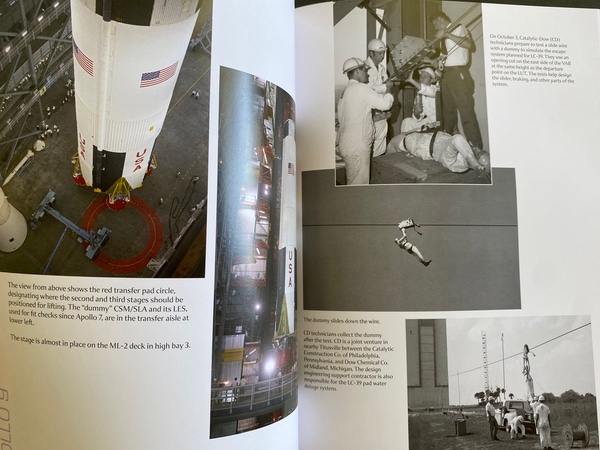
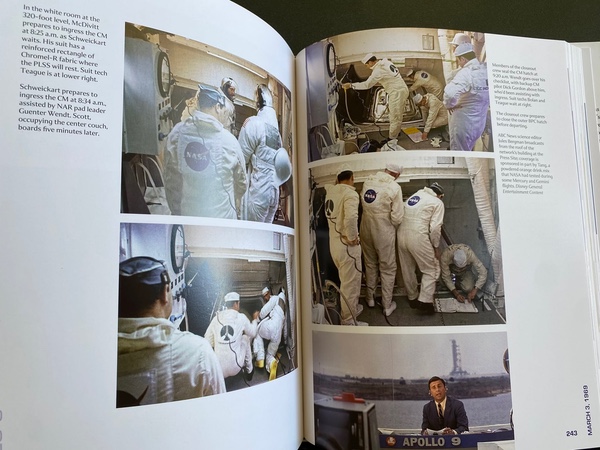
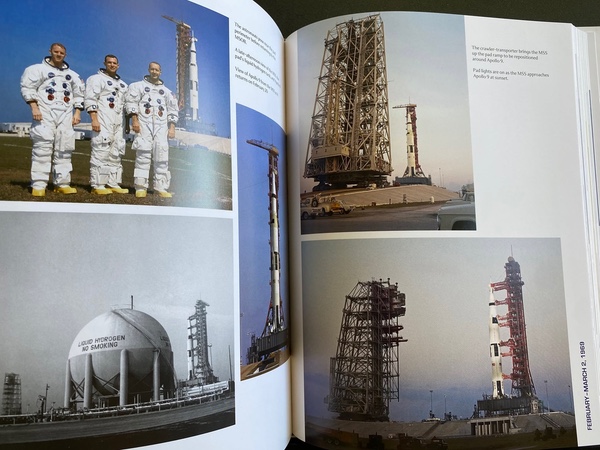
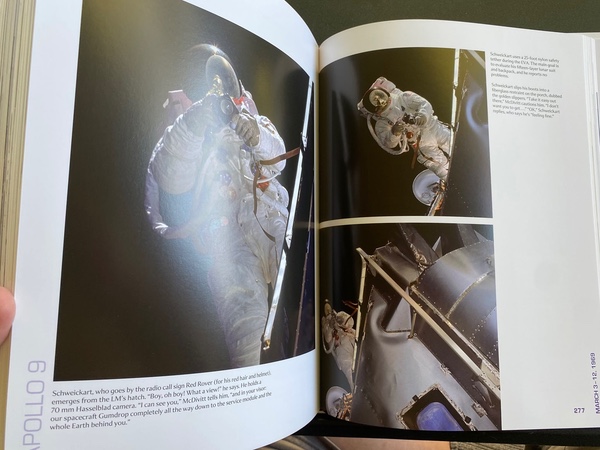
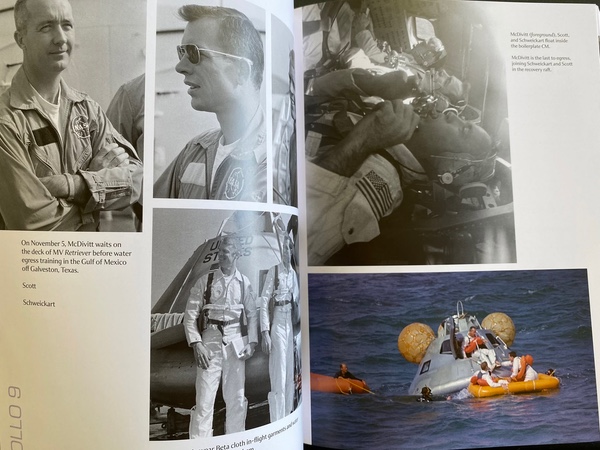
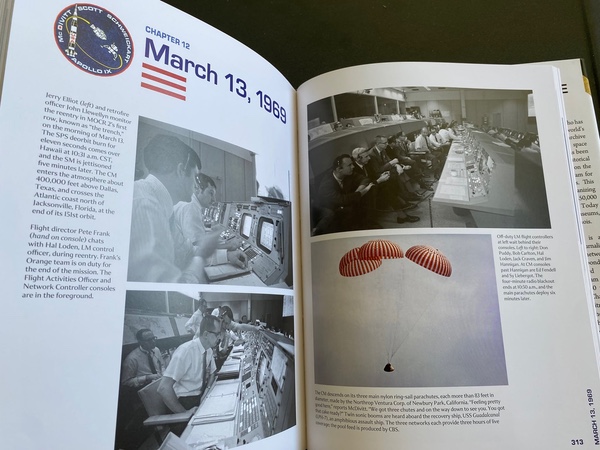
That testing resulted in a lot of spectacular photographs as the astronauts maneuvered the two craft together and apart, often against the blue backdrop of the Earth. The book has more than 800 photographs, many of them taken during the mission. But like the earlier books, the majority of the images are rare or previously unpublished photos of pre- and post-launch activities, like crew training, vehicle assembly, launch operations, and the recovery at sea. One of my favorites is a photo of the third stages of both Apollos 8 and 9 sitting vertically next to each other in the cavernous Vehicle Assembly Building. It’s photos like this that remind us of the work that went on every day leading up to the missions, before everybody started paying attention just before launch. The book is once again a reminder that while the public back in 1969 may have seen the same photo published in different newspapers and magazines, the photographer who took that photo probably took dozens or maybe hundreds more at the time that never got printed and were immediately filed away and forgotten.
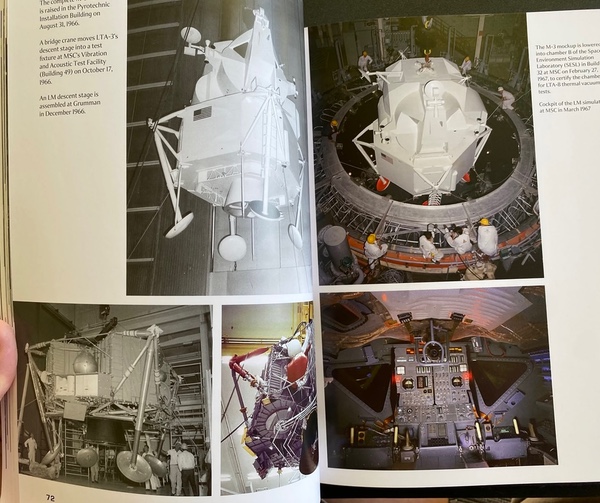
After the tragedy of Apollo 1, Apollos 7 and 8 had worked out any remaining issues with the heavily redesigned Apollo Command Module. What made Apollo 9 unique was the Lunar Module. The LM was not ready for Apollo 8. Several early versions, which were incomplete and too heavy, were tested in Earth orbit without crews. Apollo 9 took an LM to space and ran it through its paces. The book has many photographs showing early artwork depicting Lunar Module concepts and prototypes, as well as the hardware that was eventually built for the mission. Several surprising photos show the LM mockups used for fit checks and ground crew training. They almost look like paper models.
Both the Apollo 9 Lunar Module, nicknamed “Spider,” and the later Apollo 10 Lunar Module, were still too heavy for an actual lunar landing. The stories of how Grumman engineers shaved off every ounce of weight on the Lunar Module have now been well-documented in books such as the 1989 Apollo: Missions to the Moon, and more comically in the 1990s HBO TV series From the Earth to the Moon. The first things to go in the early design were the fifth landing leg, the crews’ chairs, and the big windows. That was the easy stuff. By the mid-later 1960s, Grumman engineers were cutting even tiny parts out of the spacecraft with tin snips and weighing them on a scale—every gram counted.
Apollo 9’s mission lasted ten days and the Command Module “Gumdrop” splashed down in the Atlantic Ocean, near the helicopter carrier USS Guadalcanal. The mission was successful in testing both spacecraft and their joint operation, allowing NASA to cancel a planned additional high-Earth orbit test of the Lunar Module. The next mission, Apollo 10, would take everything to lunar orbit and run through a simulated landing mission. That is the subject of a future book.
Dave Scott would go on to command Apollo 15, but neither McDivitt or Schweickart flew again. McDivitt expected to be given command of the Apollo 17 mission, but that job went to Gene Cernan instead. In one of many twists of fate, if Gene Cernan’s flying shenanigans had been better known, McDivitt probably would have commanded Apollo 17 and gained the title of “last man on the Moon.”
Apollo 9 in Photographs is a fine addition to the series, and stands by itself as a fascinating and insightful look into a mission that will be echoed again soon when Artemis 3 flies next year—fingers crossed.
Note: Special thanks to Steve Schultz for the gift.