
What is The Space Review?The Space Review is an online publication devoted to in-depth articles, commentary, and reviews regarding all aspects of space exploration: science, technology, policy, business, and more. more info Write for us!Interested in contributing an article to The Space Review? Please read our submission guidelines. RSS Follow @tsrAdvertise here!Related sitesspacetoday.net |
This week in The Space Review…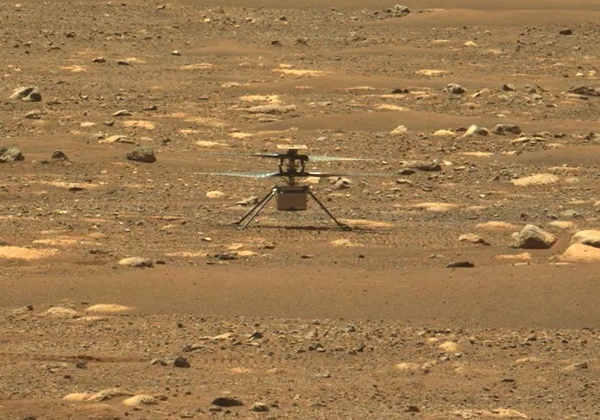 The ongoing triumph of IngenuityNASA sent its final commands to the Ingenuity Mars helicopter last week, three months after the helicopter’s final flight. Will Pomerantz describes the remarkable achievements of Ingenuity and its influence on future missions. NASA’s strategy for space sustainabilityEarlier this month NASA announced a new Space Sustainability Strategy that outlines how the agency would address the growing threats posed by orbital debris. Jeff Foust reports on the strategy, which initially emphasizes getting a grasp on the problem rather than technological solutions. Tintin, the first man in space and on the MoonYears before Yuri Gagarin went into orbit or Neil Armstrong walked on the Moon, the Belgian cartoon character Tintin did the same. Anusuya Datta looks at Tintin’s exploits and how the cartoonist Hergé was able to make the journey realistic.
Review: Still As BrightThe Moon continues to compel our interest, both individually and as a society, even as our knowledge of it changes. Jeff Foust reviews a book that offers a history of our studies of the Moon intertwined with the author’s own experiences with our celestial neighbor. Previous articles:Lunar rover racingAstronauts on the first Artemis landing missions will be on foot, but later on could have their choice of vehicles to roam across the lunar terrain. Jeff Foust reports on the latest milestones in the development of lunar rovers with commercial and international partners. FARRAH, the superstar satelliteDecades ago, FARRAH was not just the name of a famous actress but also of a classified satellite program. Dwayne Day examines what is known about FARRAH (the satellite) after a model of it appeared at a museum. Zero-gravity regulationsA “learning period” that has restricted regulation of commercial human spaceflight in the US for nearly two decades could soon be ending. David Gillette and Emma Rohrbach argue that the learning period supported innovation in ways that could be extended to other fields. Nukes in space: a bad idea in the 1960s and an even worse one nowIn the early 1960s, the United States and Soviet Union tested nuclear weapons in space, with disastrous results for many satellites in orbit at the time. Michael Mulvihill discusses those tests and why they show the perils of a potential Russian nuclear ASAT weapon. GAMBIT vs KENNEN: The persistence of film reconnaissance in the digital ageWhile the US started operating electro-optical reconnaissance satellites in the mid-1970s, it continued to launch film-return satellites for another decade. Dwayne Day examines why those systems overlapped based on newly declassified documents. A North Korean satellite starts showing signs of life (part 2)Recent observations showed a North Korean satellite launched last year has changed its orbit, demonstrating it is operational. Marco Langbroek shows how those observations indicate that the maneuvers are being commanded by a specific facility in North Korea. Strategic implications of China winning the space rescue race (part 2)In the concluding part of their examination of space rescue capabilities, Benjamin Johnis and Peter Garretson offer some space rescue scenarios and policy recommendations to ensure US leadership in this emerging area. Review: The Music of SpaceSound may not travel through the vacuum of space, but music is at the heart of many movies and shows about spaceflight. Jeff Foust reviews a book that examines the history of space soundtracks as well as real music in space. A space telescope’s cloudy futureNASA’s fiscal year 2025 budget request released last month proposed delays and cutbacks for a number of science missions, including the long-running Chandra and Hubble space telescopes. Jeff Foust reports on how astronomers are worried that the proposed cuts to Chandra in particular could threaten the future of both the telescope and X-ray astronomy. Touching spaceEurope’s Euclid space telescope launched last year includes an artwork featuring the literal fingerprints of hundreds who worked on the mission. Artist Lisa Pettibone describes the creation of that piece and the value of combining art and science. Strategic implications of China winning the space rescue race (part 1)As human activities grow in space, there will be requirements to rescue personnel just as on Earth. Benjamin Johnis and Peter Garretson describe why it is vital for the US military to start examining its roles in space rescue now before China establishes its rules. Review: Our MoonNext week, millions across North America will watch a total solar eclipse, which means they’ll be watching the Moon. Jeff Foust review a book that offers an expansive exploration of the Moon and its effects on our planet and ourselves. Lessons from the first CLPS lunar landing missionsWith the first two commercial lunar lander missions by US companies in the books, NASA and industry are taking stock of what worked and what didn’t. Jeff Foust reports on those analyses as NASA charts the future of the Commercial Lunar Payload Services program. “A rose, by any other name”: Proposing a national naming competition for our lunar exploration program (part 2)In the concluding portion of his two-part essay, Cody Knipfer examines the potential benefits, and drawbacks, of a naming competition for elements of NASA’s Artemis lunar exploration campaign. Preventing a “Space Pearl Harbor”: Rep. Turner leads the chargeComments last month by the chairman of the House Intelligence Committee led to revelations that Russia was developing some kind of nuclear antisatellite weapon. Brian Chow argues similar awareness is needed among policymakers about growing Chinese antisatellite capabilities. “For All Mankind”: space drama’s alternate history constructs a better vision of NASAThrough four seasons, the television show “For All Mankind” has crafted a very different history of NASA and space exploration. Val Nolan describes how it also serves as a vehicle for telling very personal stories. Accelerating StarshipSpaceX conducted the third integrated test flight of its Starship/Super Heavy vehicle last week, going further and faster than before. Jeff Foust reports on the company’s progress on the vehicle but also its need to move even faster in its development. Texas Space Commissions, from Conestoga to StarshipThe Texas state government has reestablished a space commission more than two decades after the previous one was shut down. Thomas Matula argues that a priority for the new commission should be to establish a launch site for the state’s growing space industry. “A rose, by any other name”: Proposing a national naming competition for our lunar exploration program (part 1)Names carry with them meanings, be they for people or spaceflight programs. In the first of two-part essay, Cody Knipfer looks at the history of how NASA has named its various programs and missions. Review: Space: The Longest GoodbyeNASA and others have studied the effects of isolation and confinement in long-duration spaceflight. Jeff Foust reviews a documentary that examines the subject from the perspectives of astronauts and others interested in eventually going to Mars. The difficult early life of the Centaur upper stageThe Centaur upper stage has become a key element for a series of launch vehicles, most recently the Vulcan. But as Trevor Williams describes, it suffered problems during its origins more than six decades ago. India unveils its first set of Gaganyaan astronautsThe Indian government last month revealed the identities of the four test pilots who have been training for the Gaganyaan human spaceflight program. Jatan Mehta provides an update on the state of that program. The psychological challenges of a long voyage to MarsGoing to Mars involves many technical challenges, but another set of issues involves how crews will work together in confined spaces far from Earth for years at a time. Nick Kanas examines some of those problems and potential solutions. Review: The New World on MarsSpaceX is developing Starship with the long-term goal of transporting people to Mars, but what happens once they get there? Jeff Foust reviews a book by a long-time Mars settlement advocate that tries to explain how and why people would live on Mars. A North Korean satellite starts showing signs of lifeMany in the West had written off a North Korean reconnaissance satellite launched last November as a failure. Marco Langbroek describes how the satellite appears to be alive after recent maneuvers. Squinting at the universeWhile current telescopes, on the ground and in space, are revealing new insights about the universe, astronomers have plans for even more ambitious observatories. Jeff Foust reports on the progress and problems those efforts face. Taking stock of the US space programThe United States has by far the largest government space program, but is not without its challenges. Namrata Goswami examines the current states of government space policies and strategies, as well as problems and missed opportunities. Ode to Engle and TrulyRichard Truly, a former NASA astronaut and, later, administrator, passed away last week. Emily Carney recalls his life from the perspective of seeing his first shuttle launch. The phases of lunar lander success, revisitedLast week Intuitive Machines became the first company to land a spacecraft on the surface of the Moon, but the spacecraft ended up on its side with limited power and communications. Jeff Foust reports on the landing and in what ways it can be considered a success. The middle of No and Where: Johnston Island and the US Air Force’s nuclear anti-satellite weaponDuring much of the Cold War a US Air Force unit operated a nuclear ASAT installation on distant Johnston Island. Dwayne Day examines the history of that facility as revealed in a newly uncovered set of images. Cybersecurity for satellites is a growing challengeAs society makes greater use of space-based capabilities, those satellites become increasingly vulnerable to cyberattacks. Sylvester Kaczmarek discusses evolving space cyber threats and the need for global cooperation to address them. Review: The Battle BeyondConcerns about the prospects of space warfare grew earlier this month amid reports that Russia was developing some kind of nuclear ASAT. Jeff Foust reviews a book that examines the concepts of war in space using an approach likely best appreciated by those in the military. Delivering a business case for rocket cargoSome in the space industry have long believed that reusable rockets could tap a large market for high-speed point-to-point transportation. Jeff Foust reports on how the US military is exploring a “Rocket Cargo” program that could do just that, if it can overcome technical and other obstacles. From Southwest Regional Spaceport to Spaceport AmericaNew Mexico’s Spaceport America is facing a lull in activity when Virgin Galactic stops VSS Unity flights later this year while developing a new line of suborbital spaceplanes. Thomas Matula argues this shows the flaws in the approach the state took to develop the spaceport as compared to the original visions for the site. The evolution of India’s weather satellite programsOn Saturday, India launched its latest geosynchronous orbit weather satellite. Ajey Lele describes the evolution of India’s weather satellites over the last several decades and whether the country’s current capabilities are sufficient. Review: The Space RaceIt’s been more than 40 years since Guy Bluford became the first Black American in space, the culmination of efforts dating back more than two decades. Jeff Foust reviews a new documentary that profiles some of the first Black men who sought to become NASA astronauts. MSR at serious riskConcerns about the budget and plans for NASA’s Mars Sample Return (MSR) program came to a head last week when JPL laid off more than 500 employees, citing budget uncertainty about the program. Jeff Foust reports on the issues that have put the future of MSR into question for some. Nuclear Transit: nuclear-powered navigation satellites in the early 1960sA precursor to GPS was the Transit series of navigation satellites, dating back more than 60 years. Dwayne Day discusses some of the early Transit satellites that used nuclear rather than solar power. Lunar science is entering a new active phase with commercial launches of landersThe first lunar lander by Intuitive Machines is scheduled to launch this week, carrying NASA and commercial payloads. Jack Burns describes one of the NASA instruments on the IM-1 lander and the value of commercial access to the lunar surface. Review: Dark StarThe Space Shuttle was the biggest effort to develop a spaceplane that sough to make spaceflight as routine as aviation. Jeff Foust reviews a new history of the shuttle program that puts the vehicle into that broader context. Did a NASA study pull the plug on space solar power?NASA released last month a long-awaited economic assessment of space-based solar power, concluding that it would be far more expensive than terrestrial alternatives. Jeff Foust reports on how some in space solar power community are pushing back against those conclusions, concerned it will have a chilling effect on the field. The Missing Link: FoundJodrell Bank Observatory in England has been used for radio astronomy and, on occasion, listening for Soviet spacecraft. Dwayne Day describes how it was also used to help search for a “missing link” in Soviet spacecraft communications. The case for a fleet of Martian helicoptersIngenuity, whose mission ended last month, was a first-of-its-kind Mars helicopter with no guarantees more will follow soon. Ari Allyn-Feuer discusses how sending a large number of similar helicopters could advance Martian exploration in novel ways. Review: NASA’s Discovery ProgramNASA started its Discovery program more than three decades ago to fund a line of lower cost, higher risk planetary science missions. Jeff Foust reviews a NASA history of the program’s origins and how, over time, its missions became more expensive and risk-averse. The sacred Moon: Navigating diverse cultural beliefs in lunar missionsThe presence of cremated remains on the Peregrine lunar lander sparked controversy after the Navajo Nation expressed its objections. Deana Weibel examines the varying beliefs regarding the Moon and the challenges navigating them that entities planning lunar missions face. The ingenuity of technology demosNASA announced last week the the Ingenuity Mars helicopter’s mission had come to an end after it was damaged on a flight earlier this month. Jeff Foust reports on the success of Ingenuity and its implications for Mars exploration and future technology demonstrations. Space-related incidents during Taiwan’s electionsA Chinese launch earlier this month had repercussions for an ongoing election in Taiwan. Ajey Lele discusses that incident and related ones in a contentious part of the world. Review: Good Luck Have FunRelativity Space launched its first Terran 1 rocket last year, then promptly retired it to focus on a larger vehicle. Jeff Foust reviews a book where the company offers a look at the development of both the startup and the rocket. The phases of lunar lander successOn Friday, Japan landed its SLIM spacecraft on the Moon, a day after Astrobotic bid farewell to its Peregrine lander. Jeff Foust reports on how the two missions have measured varying degrees of success amid problems they encountered. Turnover and retention: an unspoken cost center affecting space companiesMany space companies struggle to fill open positions as the best workers seek new opportunities. Joseph Horvath argues that companies should instead look to other industries to find new employees. What do Australians think about space?Australia has established a space agency and is working to build up a space industry in the country, but what does the public there think about space? Four researchers describe the results of the first-of-its-kind opinion survey on space in Australia. Review: Things That Go Bump in the UniverseThe universe, once thought to be fairly static, is instead turning out to be dynamic and violent, with supernova explosions and gamma-ray bursts, among other phenomena. Jeff Foust reviews a book that tries to make sense of a chaotic cosmos. Twenty years of chasing the MoonIn January 2004, President George W. Bush announced the Vision for Space Exploration, which included a goal of landing humans back on the Moon by 2020. Jeff Foust reports on how, despite missing that deadline and recent setbacks, the effort to return to the Moon may be on firmer ground than at any time in the last two decades. How we’re searching for alien life at previously unexplored frequenciesMany of the efforts in the search for extraterrestrial intelligence over the years have focused on radio searches in specific frequency bands. Owen Johnson describes a new project focused at much lower frequencies. A unified theory of suborbital docking and refuelingPast studies have looked at doing suborbital refueling or docking for reusable launch vehicles. Francis Chastaing puts those studies together to offer a new approach. Review: The Little Book of AliensThe search for evidence of life beyond Earth has taken many paths of varying degrees of scientific rigor. Jeff Foust reviews a book by an astrophysicist who examines those approaches, from looking for biosignatures on other planets to observations of UAPs. Success and setbacksThe first launch of a new rocket carried the first lunar lander developed by a startup. Jeff Foust reports on how ULA’s Vulcan finally soared while Astrobotic’s Peregrine unfortunately stumbled. India’s mission for understanding the dynamics of the SunAn Indian spacecraft, Aditya-L1, reached its orbit around the Earth-Sun L1 point over the weekend to carry out a mission of observing the Sun. Ajey Lele discusses the importance of the mission for both space science and India. NewSpace, satcom, and heavy rocketsLast week, the commercial arm of India’s space agency ISRO announced it would launch a communications satellite not on one of India’s own rockets but instead with SpaceX. Aditya Chaturvedi examines the implications of that decision. Review: OrbitalThe International Space Station has been the setting for movies featuring conflicts and disasters. Jeff Foust reviews a novel that instead offers a day in the life of a fictional crew on the station. Diamonds and DORIANS: program troubles, operations, cancellation, and legacy (part 3)In the concluding part of their examination of American and Soviet military space station programs, Bart Hendrickx and Dwayne A. Day examine the factors that led to their downfall and the legacies of each effort. The year new launch vehicles finally lift offA new year brings with it new hopes for new launch vehicles. Jeff Foust reports on the launch vehicles making the first (or second) flights this year after extended delays. The longstanding mystery of the moons of Mars and the mission that could solve itWere the moons of Mars captured by the planet or created from collisions? Ben Rider-Stokes discusses that mystery and a Japanese mission that could provide a way to solve it. Review: Inside the Star FactoryFor the last year and a half, the James Webb Space Telescope has provided stunning images of the universe. Jeff Foust review a book that features stunning images of JWST taken during its long development. Diamonds and DORIANS: MOL and Almaz enter active development (part 2)In the second part of their study of military space station programs, Dwayne Day and Bart Hendrickx examine the progress the US made on MOL and the USSR on Almaz in the late 1960s. An extended mission for authorizationIndustry and government in the US have been working for years to develop a procedure for “mission authorization” or the oversight of commercial spacecraft not currently licensed. Jeff Foust reports that dueling proposals from Congress and the White House may mean that debate is far from over. SpaceX Starship in lunar developmentEBesides serving as a launch vehicle, SpaceX is working on a lunar lander version of Starship. Thomas Matula discusses how Starship will be valuable not just for transporting large amounts of cargo to the Moon but also through providing infrastructure. Space sensemaking and space domain understanding: enabling data-centric AI for space flight safetyThe growing population of objects in Earth orbit, along with increasing threats, has become a major issue for satellite operators. Brien Flewelling discusses how automation and artificial intelligence can respond more quickly to a dynamic environment. Review: MoonshotAstronauts may seem like the closest people to perfection, but even they make mistakes. Jeff Foust reviews a book that offers life lessons based on the mistakes and setbacks experienced by one former astronaut. Diamonds and DORIANS: The Soviet Union’s Almaz and the United States’ Manned Orbiting Laboratory military space stations (part 1)In the 1960s the Soviet Union and the United States embarked on efforts to develop military space stations. Bart Hendrickx and Dwayne Day examine the origins of both the Manned Orbiting Laboratory and Almaz programs. Creating a Venus exploration programExternal budget pressures and problems with some missions have put new pressures on NASA’s planetary science program. Despite those difficulties, Jeff Foust reports on how advocates for Venus exploration are seeking to build support for a long-term series of missions there. Four key points regarding Saudi Arabia’s withdrawal from the Moon AgreementSaudi Arabia announced early this year it would withdraw from the Moon Treaty, only about a decade after acceding to it. Michael Listner explores the reasons why an emerging space nation would seek to back out of that treaty. Review: The Future of GeographyMany people argue that there is a new “space race” underway among the US, China, and others to control the Moon. Jeff Foust reviews a book that tried to make that argument but suffers from serious flaws. Europe’s tentative step towards human spaceflightAfter months of discussion, ESA member states agreed last month to start a commercial cargo program as a prelude to a potential human spaceflight effort. Jeff Foust reports on the new initiative and the challenges it faces. All-UK astronaut mission shows that private enterprise is vital to the future of space explorationThe UK government announced this fall an agreement with Axiom Space that could lead to a private mission flown entirely by British astronauts. Simonetta Di Pippo discusses why this is an important milestone in the role of companies in human spaceflight in Europe and beyond. Enter India, the fifth great space powerSuccessfully landing a spacecraft on the Moon helped raise the profile of India’s space capabilities. Daniel Duchaine argues that it also made India a global space power, and brings with it potential geopolitical ramifications. Review: DreamlandThe secret aircraft testing base known as Area 51 has been the subject of fascination, and of conspiracies, for decades. Dwayne Day reviews a new book that offers the most authoritative look yet at the work performed at Groom Lake. Europe turns to competition to improve its launch industry’s competitivenessAt a European Space Summit earlier this month, ESA member states agreed to both support existing launch vehicles and open the door to future competition. Jeff Foust reports on how government and industry officials in Europe are viewing the prospects for new competition for launch services. Olimp and Yenisei-2: Russia’s secretive eavesdropping satellites (part 2)Russia has two GEO satellites that are eavesdropping on commercial communications satellites. Bart Hendrickx examines who in Russia is operating those satellites and what their future plans might be. Searching for the ice hidden on the MoonIndia’s Chandryaan-3 lander marked the beginning of a new wave of missions focused on studying the Moon’s south polar region, thought to contain water ice. Paul Hayne describes how future missions will help better identify the presence and accessibility of that ice. Oxygen for MarsAny proposal for the terraforming of Mars requires the production of huge volumes of oxygen. John Strickland examines just how much effort would be required to create that oxygen. Olimp and Yenisei-2: Russia’s secretive eavesdropping satellites (part 1)A Russian satellite known as Luch has been drifting in the GEO belt for nearly a decade, eavesdropping on commercial communications satellites. Bart Hendrickx discusses what is known about that spacecraft and a similar satellite launched earlier this year. Starship flies againOn Saturday, SpaceX launched its Starship/Super Heavy vehicle for a second time. Jeff Foust reports on the progress the company demonstrated with that launch and NASA’s concerns about the rate of that progress towards returning humans to the Moon. Why you should care about life beyond EarthOne argument for space settlement has been to make life multiplanetary. Tyler Bender examines the threats to life on Earth that make it necessary to expand life beyond Earth to ensure its survival. My suborbital life, part 10: Looking Up, WAY UpIn his final essay about his suborbital spaceflight, Alan Stern reflects on his accomplishment and what it means for the future of commercial spaceflight. Something goes boom in the night: the explosion of a Cold War secretA Soviet crewed launch to the Salyut-7 space station suffered a launch failure in the fall of 1983, with the launch abort system on the Soyuz spacecraft saving the crew. Dwayne Day and Asif Siddiqi describe what is now known about that failure and how the United States discovered it happened. A small step forward for space-based solar power technologySpace-based solar power has been a topic of debate for decades without much progress on the feasibility of the technology required. Jeff Foust reports on a Caltech project that is wrapping up testing in orbit of three specific technologies needed for it. Review: A City on MarsThere are plenty of books that have taken an optimistic view of the prospects of humans living and working permanently in space, but far fewer critical assessments. Jeff Foust reviews a book that does take a more skeptical view of space settlements based on the reasons for building them and the challenges they face. My suborbital life, part 9: Anticipation, revealedBefore his suborbital spaceflight last week, Alan Stern had a number of questions about the experience. He returns with answers to them. Big rockets for big science?There is a growing push among developers of large science missions to make use of new heavy-lift launch vehicles that offer increased mass and volume at potentially lower costs. Jeff Foust reports on the benefits of that approach as well as its challenges. The FCC’s authority in regulating orbital debrisThe FCC last month issued its first-ever fine to a company for failing to properly dispose of a satellite after the end of its life. Leighton Brown and Paul Stimers discuss the FCC’s action and the agency’s legal basis for regulating orbital debris. My suborbital life, part 8: Welcome to space!On Thursday, Alan Stern successfully completed his first suborbital spaceflight with Virgin Galactic. He describes some of important, but little-discussed, aspects of the experience. My suborbital life, part 7: Of risk and rewardSome final thoughts from Alan Stern about risk and reward before he goes on his suborbital spaceflight. My suborbital life, part 6: AnticipationWith a day to go before his suborbital spaceflight, Alan Stern ponders what the experience will be like. My suborbital life, part 5: Hi Five!Alan Stern describes the symbolism behind the patches associated with his upcoming suborbital spaceflight as well as what mementos he is taking with him on the trip. Roads not taken in satellite photo-reconnaissance: Part 2, the 1970sThe 1970s saw a new wave of proposals for satellite photo-reconnaissance that didn’t advance beyond the drawing board. Dwayne Day examines what is known about those concepts, from “crisis reconnaissance” to systems that took advantage of the shuttle. Shaking up the commercial space station industryWhile it is still years before commercial space stations start operations, there are already changes in the relationships of the companies involved in those efforts. Jeff Foust reports on the formation and potential breaking up of partnerships as those companies face new fiscal pressures. Review: Deep SkyGiven the success of the mission and the stunning images it is producing, it’s little surprise the James Webb Space Telescope is the subject of an IMAX documentary. Jeff Foust reviews the film and compares it to another recent documentary about the mission. My suborbital life, part 4: My research spaceflight training countdown to launchTraining for a suborbital research mission is different from what space tourists go through, as Alan Stern explains in his latest essay about his upcoming Virgin Galactic flight. My suborbital life, part 3: The suborbital revolution is hereIn the third of his series of essays about his upcoming suborbital flight, Alan Stern describes how commercial suborbital vehicles can revolutionize research and education. The launch industry strains launch licensingAs commercial launch activity increases, it puts pressure on regulators to keep up while maintaining safety. Jeff Foust reports on those tensions between companies and the US government that came up at a recent congressional hearing. My suborbital life, part 2: Objectives, timeline, trainingIn the second of his essays about his upcoming suborbital flight, Alan Stern outlines the objectives of the mission and its second-by-second research timeline. My suborbital life, part 1: Childhood’s end, perseverance paysAfter decades of dreaming and striving to go to space, Alan Stern will go on a Virgin Galactic suborbital research flight next week. In a first in a series of essays, he describes his lifelong ambitions about spaceflight. ISRO develops its agenda for the futureIn the days before the Gaganyaan abort test, India’s prime minister announced ambitious new goals for the country, including landing an Indian astronaut on the Moon by 2040. Ajey Lele examines those goals and their feasibility. ISRO prepares for human spaceflightIndia’s space agency successfully tested a launch escape system for its Gaganyaan crewed spacecraft program on Saturday. Gurbir Singh discusses the importance of that test in the context of India’s human spaceflight ambitions. Phil PresselPhil Pressel, who helped design the cameras used on the HEXAGON reconnaissance satellites, passed away last week at the age of 86. Dwayne Day offers an obituary of Pressel. Roads not taken in satellite photo-reconnaissance: Part 1, the 1960sDuring the 1960s there were many proposals for reconnaissance satellites that never got much beyond the concept stage. Dwayne Day examines what is known about some of those ideas for photo-reconnaissance space systems. Commercial lunar landers prepare for liftoffAfter years of development, the first commercial landers developed as part of a NASA program are finally ready for launch. Jeff Foust reports on the progress of those landers and whether they can beat the odds. The brave new world of spaceThe new space race emerging among countries and companies draws comparisons to the original space race of the 1960s. Aditya Chaturvedi examines changing geopolitics amid the growing importance of space.. Maybe space shouldn’t be for allSpace advocates have long attempted to attract as wide an audience as possible to their positions. A.J. Mackenzie argues that approach should have some limits, as demonstrated by two recent events. Getting a new civil space traffic management system on trackIt’s been more than five years since a space policy document directed a transfer of US civil space traffic management work from the Defense Department to the Commerce Department. Jeff Foust reports that, after a slow start, Commerce is making progress on establishing its own space traffic management capability. NASA’s Mars rovers could inspire a more ethical future for AIThe rise of artificial intelligence has stoked fears about the impact of the technology on the society. Janet Vertesi argues that an example of how NASA uses AI shows the future need not be dystopian. With a tweet, America has joined the race to develop astroelectricity—hopefully!A social media post last month from the Secretary of Energy appeared to show support for space solar power. Mike Snead argues it’s time for the US to get serious about this technology. Review: A Million Miles AwayMany astronauts have written memoirs, but few have become movies. Jeff Foust reviews one such film that dramatizes the rise of a son of migrant farmworkers to shuttle astronaut. Crisis in space: The 1973 Yom Kippur War and “crisis reconnaissance”This month marks the 50th anniversary of the Yom Kippur War, whose start took both the United States and Israel by surprise. Dwayne Day notes that surprise was exacerbated by decisions made years earlier that limited the ability of the US to obtain satellite reconnaissance of the region. Secrets of ExoMarsJust a few days after Russia’s invasion of Ukraine in February 2022, ESA announced it was cancelling its partnership with Roscosmos on the ExoMars mission. Brian Harvey describes how ESA, and its member states, have offered little explanation about how they reached that decision, and so quickly. An ambitious decadal survey for research in spaceThe National Academies published last month a new decadal survey for biological and physical sciences research in space. Jeff Foust reports on the study, which has an ambitious goal of increasing NASA funding of such work by a factor of ten. How orbital refueling will unlock humanity’s potential in spaceSeveral companies are pursuing technologies to enable satellites to be refueled in orbit. Manny Shar discusses why that technology is worth the effort. Review: Elon MuskMost people know of the founder of SpaceX, but how well do people know Elon Musk? Jeff Foust reviews a new biography that attempts to not just recount Musk’s life but also what makes him tick. A capsule’s fall marks the start of Asteroid AutumnOn Sunday, NASA’s OSIRIS-REx spacecraft returned to Earth, dropping off a capsule containing samples collected from the asteroid Bennu. Jeff Foust reports on the success of the first part of NASA’s “Asteroid Autumn” that includes a launch and a flyby. Honoring and dishonoring the dead in outer spaceOne of the customers on a Virgin Galactic suborbital flight earlier this month took with him fossils from two potential ancestor species to humanity, sparking outrage among some anthropologists. Deana Weibel explores the incident as well as the relationships between the living and the dead when it comes to spaceflight. Hiding in plain sight: Is China’s spaceplane a co-orbital ASAT in disguise?China has tested a spaceplane similar in concept to the American X-37B. Carlos Alatorre examines if that vehicle could be, or support the development of, an anti-satellite weapon. Security dimensions of space economics and financeThe growing space economy creates new opportunities for financing companies, but also new risks. Jana Robinson warns how some Western funds may be helping finance Chinese and Russian space efforts. Live, from orbit: the Manned Orbiting Laboratory’s top-secret film-readout systemThe Air Force’s Manned Orbiting Laboratory (MOL) program in the 1960s would take high-resolution images, but how could those images be quickly returned to Earth? Dwayne Day examines proposals to include film-readout systems on MOL. SpaceX launches a debate on monopoliesAt a major space industry conference last week, much of the discussion was about the dominance SpaceX has in the launch industry today. Jeff Foust report on perceptions that SpaceX has a monopoly on commercial launch and implications for other companies developing competing satellite systems. How to land a space gigHow do you get your foot in the door in the space industry if you’re not seeking a technical position? Daniel Duchaine describes his experience networking across companies, think tanks, and Capitol Hill trying to find a job. Review: The SixThe first women to become NASA astronauts have been the subject of many books, articles, and other accounts over the 45 years since their selection. Jeff Foust reviews a book that offers a group portrait of those six women, who were more “trusted coworkers” than friends or rivals. China, Article V, Starlink, and hybrid warfare: An assessment of a lawfare operationNearly two years ago, China complained about close approaches of Starlink satellites to its space station, claims that the US denied. Michael Listner argues that the format of a complaint was a “lawfare” maneuver by China as part of great power competition. Putting the private into private spaceflightA Virgin Galactic suborbital launch last week was remarkable not for what happened but what didn’t: a lot of publicity. Jeff Foust discusses how the low profile of the flight is a step on the long road to more routine spaceflight. Key issues for the Japanese government regarding exploration and development of space resourcesJapan is one of a few countries with a space resources law on the books and is planning a mission to prospect for water ice on the Moon. Akira Saito outlines some of the issues facing the Japanese government as it considers using lunar ice resources. Review: InterstellarLast month, a paper claimed to have found evidence for interstellar meteorites at the bottom of the Pacific, a claim other scientists have treated skeptically. Jeff Foust review a book by the scientist who is the lead author of that study and other efforts using science to look for interstellar visitors. Soviet television reconnaissance satellitesThe Soviet Union attempted to develop reconnaissance satellites that could electronically transmit images using television technologies starting in the 1960s. Bart Hendrickx examines those efforts and the setbacks they faced over the decades. India is on the Moon, but needs to avoid the “Moon Race” trapIndia successfully landed on the Moon for the first time last month with the Chandrayaan-3 mission. Ajey Lele says the mission is a major milestone for India’s space program, but should not be seen as part of a race with other nations. The opportunities and challenges for science at NASA and ESAEarlier this year, NASA and ESA selected new leaders of their respective science programs. Jeff Foust talked with those two people about their first few months on the job and their top issues. It’s not easy being a MartianThe Fox reality TV series “Stars on Mars” wrapped up recently with one “celebronaut” crowned as winner. The series, Dwayne Day explains, also provided useful lessons for real missions to the Red Planet. The international community is not prepared for a future in spaceAs more countries and companies undertake space activities, existing international agreements are put to the test. Austin Albin describes those challenges and proposes potential solutions. Despite the Luna-25 failure, Russia is not a declining space powerRussia’s first mission to the Moon in nearly half a century crashed over the weekend, days before its scheduled landing, prompting a new wave of commentary abut the state of Russia’s space program. Daniel Duchaine cautions that, even with the failure of Luna-25, other, more worrisome aspects of its space activities continue to grow. For smallsats, two ways to orbitIn some respects, it’s never been easier to get smallsats into orbit, even though the options for doing so are limited. Jeff Foust reports that, for most smallsat operators today, it’s a choice between hitching a ride with SpaceX or buying a launch from Rocket Lab. The fault in our Mars settlement plansSome in the space community say we’re ready to send humans to Mars now. Isabella Cisneros argues it’s time for a Red Planet reality check because of serious, often overlooked technical, societal, and other challenges such efforts face. 1569 and 2023Space advocates have used a wide range of historical analogies over the years to justify their support for space development. Bob Werb offers a new one to explain what the public needs to know to better appreciate and support space activities. Review: How Space Physics Really WorksFor some people, inaccurate science can ruin a science fiction story. Jeff Foust reviews a book that used good examples from sci-fi to teach concepts associated with spaceflight. Minding the space station gapEven as the International Space Station is reaching its peak potential as a research outpost, its retirement is becoming a key issue. Jeff Foust reports on the issues discussed at a recent meeting about transferring work done on the ISS to future commercial space stations. Debate and hopes for consensus at UN space resource meetingsThe United Nations’ Committee on the Peaceful Uses of Outer Space has started discussions about setting up frameworks for the use of space resources. Dennis O’Brien examines what is known about those closed-door meetings and prospects for reaching consensus. Effect of upgrades to Starlink Generation 2 satellites on visual brightnessSpaceX has been working to reduce the brightness of its Starlink satellites to mitigate their effect on astronomers, but how effective has that effort been? Brad Young and Jay Respler discuss observations of newer Starlink satellites to see how those larger spacecraft compare to smaller versions. Meanwhile, on Mars…The show of the summer, at least for space enthusiasts, has been Fox’s “Stars on Mars” reality TV series. Dwayne Day updates the progress of the show and how, in some respects, it offers better drama than some dramatic series set on Mars. Review: Cosmonaut: A Cultural HistoryThe cultural impact of astronauts on American society is well documented, but how cosmonauts were treated in Soviet and Russian culture is less well known. Jeff Foust reviews a book that examines the public image of cosmonauts and “The Red Stuff.” Nuclear space gets hotThe value of nuclear systems to provide power and propulsion in space has been recognized for years, but until recently there has been little progress on new capabilities. Jeff Foust reports on new efforts to develop space nuclear technologies. The highs and lows of extreme tourism: The Titan accident and commercial expeditions to space and the deep seaWhile commercial deep-sea and space travel seems novel, they are just part of a long line of journeys that mix tourism and research. Deana Weibel examines the connections between the space and ocean travel, and between tourism and research expeditions. Should the loss of the Titan submersible impact space tourism?The loss of the Titan has prompted discussions about parallels with space tourism, which is also lightly regulated for passenger safety. Dale Skran argues against a rush to regulate commercial human spaceflight because of what happened in the depths of the oceans. Is China’s rise in space over? Indexing space power for the next space ageThe 21st century has been marked in space by the rise of China as a leading space power. Daniel Duchaine examines if that rise can continue at the expense of other leading space nations. Review: Unknown: Cosmic Time MachineThe James Webb Space Telescope continues to dazzle more than a year after the release of its first science images. Jeff Foust reviews a new documentary that reminds viewers of the technical obstacles that had to be overcome for it to become a scientific success. The new era of heavy launchWithin the next few years, heavy-lift vehicles like New Glenn, Starship, and Vulcan will enter service. Gary Oleson describes how the combination of price and performance of those rockets could reshape the space industry. The value of public interest in spaceflightA survey released last week provided mixed messages for advocates of NASA, particularly on the public’s priorities for the agency. Jeff Foust examines the survey and just how important public support for NASA is for the agency to achieve its goals. Another technique to identify “unknown” satellitesSome satellites are not listed in public catalogs, but there are ways to track and identify them. Charles Phillips describes one approach based on orbital elements to help identify some classes of satellites. Access to VenusThe thick, hot, toxic atmosphere of Venus rules out any kind of human exploration of the planet for the foreseeable future. John Strickland examines what could be done, someday, to make Venus a more tolerable world to visit. Smashing satellites as part of the Delta 180 Strategic Defense Initiative missionIn 1986, the Strategic Defense Initiative conducted an in-orbit test where two spacecraft collided with each other. Dwayne Day describes the development of that rapid, low-cost mission and the effect it could have had on arms control negotiations. For Mars Sample Return, more serious repercussionsA Senate appropriations bill released last week would slash funding for NASA’s Mars Sample Return program and threaten it with cancellation. Jeff Foust reports on the new fiscal challenges that efforts to return samples from Mars have encountered. The Chandrayaan-3 mission to the Moon is underwayIndia launched its second robotic lunar lander mission last week. Ajey Lele examines the mission and the lessons learned from India’s first, failed lunar lander mission. Could a 500-year-old treaty hold the key to peace in space?The growing number of countries involved in space exploration raises the risk of conflict among them. Daniel Duchaine explores some possible scenarios for avoiding conflict depending on how plentiful and valuable space resources turn out to be. A crisis and an opportunity for European space accessThe final Ariane 5 launched last week, temporarily depriving Europe of independent access to space because of launch failures and vehicle delays. Jeff Foust reports on how Europe reached that state and how it is turning to a commercial rival to get through a near-term crisis. Don’t jeopardize national security in the name of competitionThe Space Force is preparing for a new round of launch contracts that will open up opportunities for additional launch providers. Jonathan Ward, though, warns against one proposed congressional change to that approach that he fears could put key missions at risk. Reality is underrated: Fox’s “Stars on Mars” takes offExpectations were low about a reality TV series set on a fake Mars. However, Dwayne Day describes how he was pleasantly surprised by how the show and its cast of C-list celebrities have handled the challenges of life on “Mars”. Review: Matariki: The Star of the YearMany books about the night sky are written from the perspective of the Northern Hemisphere. Joseph T. Page II reviews a book that examines a familiar star cluster as perceived by the peoples of Oceana. Spinning towards the future: crisis response from spaceAmerican intelligence agencies studied several proposals for “crisis reconnaissance” satellites in the 1960s and 1970s, but never built any of them. Dwayne Day discusses new details about one such proposal that came closer to development than any other concept. Regulating a maturing commercial spaceflight industryVirgin Galactic performed its first commercial SpaceShipTwo suborbital flight last week as Blue Origin prepares to resume New Shepard launches. Jeff Foust reports that, as commercial human spaceflight activity finally ramps up, the industry is facing new regulatory challenges. What does the People’s Republic of China’s space program mean for Great Britain and the West?China’s space capabilities, in both military and civil realms, have grown significantly in recent years. Four experts examine the implications of those developments for Western nations and lessons it offers those countries. A subtle symphony of ripples in spacetimeAstronomers announced last week the discovery of a background of gravitational waves that pervades the cosmos. Chris Impey describes this discovery and its significance in understanding the evolution of the universe. Visit the Archive for additional articles. |
|